
How to evaluate an educational outing is key to ensuring that these activities don't remain just a one-off experience. Evaluating an educational outing allows us to verify whether students have learned, whether the objectives have been met, and whether the activity is well integrated into the teaching process.
Evaluating an educational field trip involves observing, analyzing, and reflecting before, during, and after the activity. This article explains what should be evaluated, how to do it, and what tools can be used to ensure the trip has real educational value. within the classroom programming.
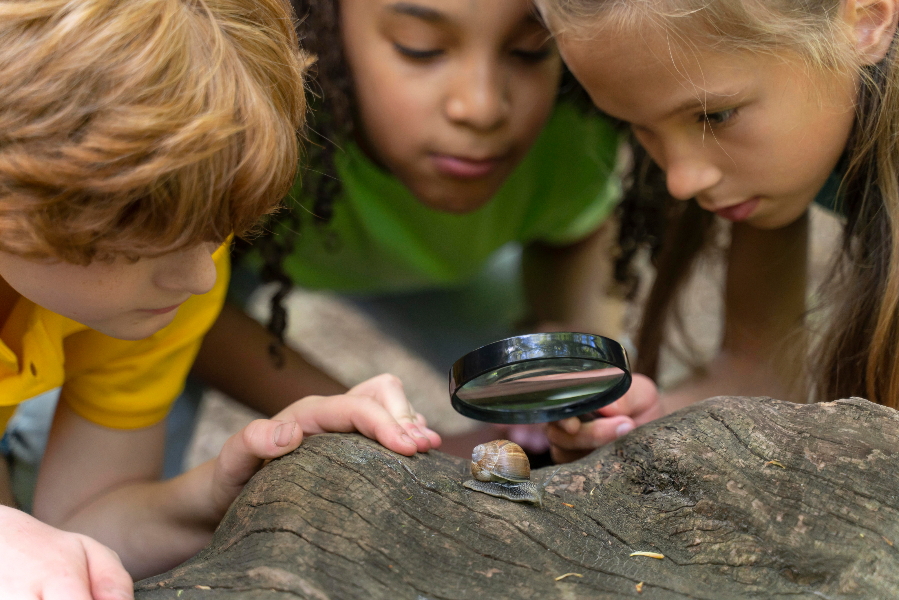
When the outing takes place in a natural environment, this assessment is especially useful for evaluating observation, participation, and respect for the environment. At Explora Natura, we design Environmental education outings for schools and institutes that can be integrated into classroom programming before, during and after the experience.
Why is it important to evaluate an educational path?
Evaluating an educational outing is important because it allows us to verify whether the activity has met its objective and whether the students have learned what was intended. The outing should not be just a one-off experience, but rather an integral part of the learning process.
Evaluating an educational outing allows us to assess learning outside the classroom and verify whether the activity fulfills its educational function within the program.
When evaluating an educational outing, teachers can assess how students participated, whether they understood the material covered, and whether they respected the rules and the environment. This helps to give meaning to the activity and integrate it into classroom work.
Furthermore, the evaluation allows for improvements in future outings. Analyzing what worked well and what can be improved facilitates better planning for future activities and helps make educational outings increasingly useful and aligned with educational objectives.
What should be evaluated on an educational outing
On an educational outing, assessment focuses not only on the final result but also on what happens during the activity. Teachers should observe how students act, participate, and apply the content in a real-world context.
Student participation
You can observe whether they pay attention to the explanations, whether they carry out the proposed tasks, whether they ask questions, or whether they are involved in the observation and recording activities.
Understanding the content
It's also important to assess whether they understand what they're working on. For example, whether they can identify elements in their surroundings, relate what they see to what was explained in class, or explain it in their own words after the outing.
Behavior and respect for the environment
Another key aspect is behavior during the activity. Following the rules, respecting the natural environment, taking care of the equipment, and maintaining an appropriate attitude are all part of the learning process and should be taken into account in the evaluation.
Direct observation as an assessment tool
Direct observation is a key tool in the evaluation of educational outings because it allows learning to be assessed in a real context.
During an educational outing, teachers can see in real time how each student acts and how they approach the proposed activities, without the need for formal tests.
Observation allows us to assess aspects that are not always easily noticeable in the classroom. For example, whether students follow the explanations, participate in observation tasks, collaborate with their classmates, or show interest in the environment they are working in.
It's also a good way to check if students are applying the material in real-life situations. Identifying elements in their environment, relating them to what they've learned in class, or explaining what they're seeing are all actions that clearly demonstrate whether learning is taking place.
For observation to be useful, teachers should clearly identify the aspects they need to focus on and record them simply, using brief notes or checklists. This way, the evaluation of the field trip is based on observable facts and not just general impressions.
Use of rubrics to evaluate educational outings
The rubrics for evaluation an educational outing They are a useful tool because they allow for the clear and organized assessment of specific aspects. The goal is not to create complex rubrics, but rather to use simple criteria that help observe and evaluate what happens during the activity.
On an educational outing, a rubric can be used to record how students participate, how they apply the content, and how they respect the rules and the environment. Having these criteria defined before the outing facilitates observation and avoids evaluation based solely on general impressions.
A simple rubric can include aspects such as participation in activities, attention to explanations, the ability to identify elements of the environment, or respect for the natural environment.
Furthermore, rubrics help students understand what will be considered in the assessment. When the criteria are clear, the activity runs more smoothly and students better understand what is expected of them during the field trip.
Students' reflections after an educational outing
Post-trip reflection is one of the clearest ways to evaluate an educational outing. Through it, teachers can check what students have understood and how they have applied the content covered during the activity outside the classroom.
Upon returning to class, it is advisable to dedicate some time to a guided discussion about the field trip. Students can explain what they observed in their surroundings, what activities they participated in, and how they connect what they saw with what they had previously learned in the classroom.
Reflection can also be recorded in writing through specific questions, short reports, or explanations in their own words.
For example, asking students to describe an element of the environment observed during the outing and explain why it is important allows you to check if they have understood the content and if they are able to express it meaningfully.
Evaluation before, during and after the departure
Evaluation before, during, and after an educational outing allows for the integration of the activity within the learning process and not treat it as an isolated action within the school year.
Before departure, the teachers can assess the students' preparedness by explaining the objectives, rules, and planned tasks.
During the outing, the evaluation is based primarily on direct observation: participation, application of content, respect for the rules and behavior.
After the field trip, the assessment is completed in the classroom through reflection activities and follow-up tasks that allow learning to be consolidated.
Educational value of evaluating an educational outing
Evaluating an educational outing allows us to give meaning to the activity and turn it into a real part of learning.
The evaluation provides useful information to teachers to improve future activities and adjust planning.
From the students' point of view, knowing that their participation and attitude are taken into account increases involvement and responsibility.
Frequently asked questions about how to evaluate an educational outing
Is it mandatory to evaluate an educational outing?
Yes. An educational outing is part of the teaching-learning process and should be evaluated just like any other activity carried out in the classroom.
What instruments can be used to evaluate an educational outing?
Direct observation, simple rubrics, oral and written reflection, and records of behavior and participation.
Is only learning assessed, or also the students' attitude?
Both aspects are evaluated: understanding of content, attitude, participation, respect for the rules and care of the environment.
To conclude
Evaluating an educational outing allows for meaningful learning outside the classroom and improves the quality of these activities. When the evaluation is planned before, during, and after the outing, the experience is integrated into the teaching and learning process and provides useful information for both teachers and students.

Antonio Pestana
Antonio Jesús Pestana Salido (Cabra, Córdoba, 1970) is an Andalusian ornithologist and nature photographer, specializing in birds and the interpretation of the Mediterranean landscape. From childhood, he has been involved in the study and observation of wildlife, and has spent decades exploring the natural areas of Andalusia, especially the Subbética region of Córdoba.
He is a nationally awarded nature photographer, winner of the first prize in the Carl Zeiss nature photography competition (4th edition) with a digiscoping image of a common crossbill, in addition to other recognitions in specialized bird photography competitions.
As a field ornithologist, he has participated in bird monitoring and conservation projects, especially for birds of prey and steppe birds, and has served as provincial coordinator in Córdoba for the Montagu's and hen harrier censuses. He is also president of the Abanto naturalist association, dedicated to the dissemination and conservation of natural heritage.
He is the author of several books on Iberian fauna and popular culture published by specialized publishers, including "Iberian birds in popular culture" and "Iberian diurnal birds of prey in popular culture," works that compile proverbs, beliefs and traditions related to birds in popular culture.
In addition to his work as an author and photographer, he develops outreach and environmental education activities, leading nature outings, giving bird photography workshops and collaborating with educational centers, associations and nature tourism projects.
She regularly works with schools, designing wildlife observation activities adapted for primary and secondary school students. She also collaborates with companies and associations on birdwatching tours, teaches nature photography courses, and participates in the design of natural areas.