

¿What is a bird park or wildlife observation area??
A birdwatching park or wildlife observation area is a space designed to facilitate the observation of birds and other animals in their natural environment without disturbing their behavior. These spaces allow visitors to approach biodiversity respectfully, creating suitable conditions for observing, learning, and better understanding how ecosystems function.
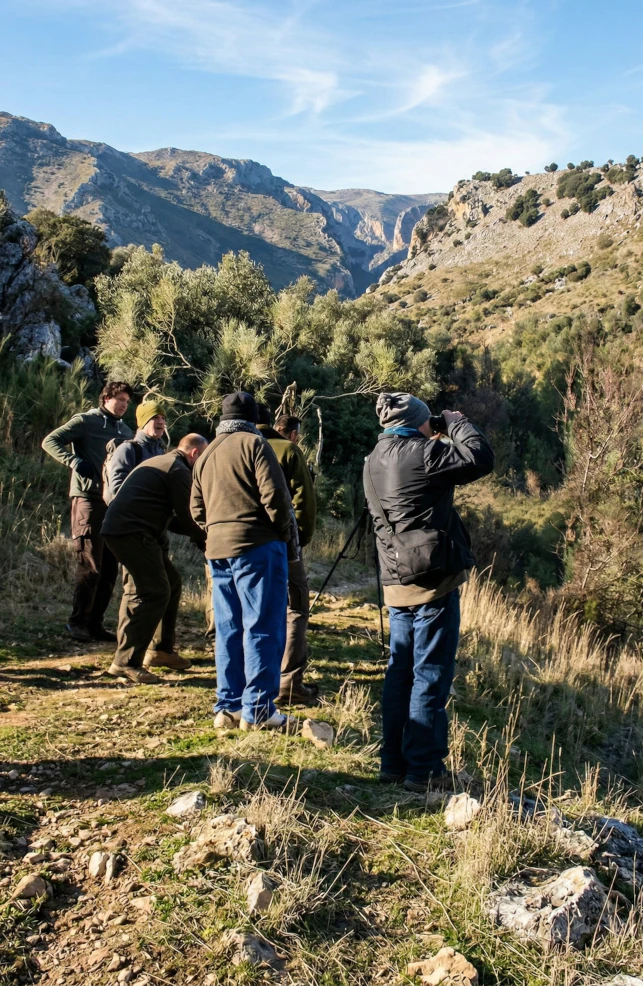
Unlike other tourist infrastructure, a bird park is not limited to simply offering observation points. Its design takes into account the presence of species, the characteristics of the habitat, and how people can interact with the environment without causing negative impacts. Therefore, they typically include observatories or hides, interpretive trails, viewpoints, and areas designed for observing birds and wildlife.
These spaces serve several functions. On the one hand, they promote bird and wildlife watching as an activity linked to knowledge of the natural environment. On the other hand, they become very useful tools for the environmental education, as they allow for the development of educational and outreach activities in direct contact with nature.
Furthermore, bird parks are part of the development of nature tourism, attracting visitors interested in biodiversity and helping to enhance the value of natural spaces. When properly designed, they can also contribute to conservation, as they help to raise awareness about the importance of protecting habitats and the species that inhabit them.
Overall, a bird park or wildlife observation area is an infrastructure that combines conservation, education and sustainable tourism, transforming the natural environment into a place to observe, learn about and appreciate biodiversity.
Types of projects we develop
We develop projects focused on wildlife observation and the interpretation of the natural environment. Each space is designed taking into account the characteristics of the location, the species present, and the project's objectives, whether educational, tourism-related, or conservation-oriented.
Our work focuses on creating infrastructures and routes that allow people to get closer to biodiversity without altering the balance of the ecosystem, promoting a respectful relationship between people and the natural environment.
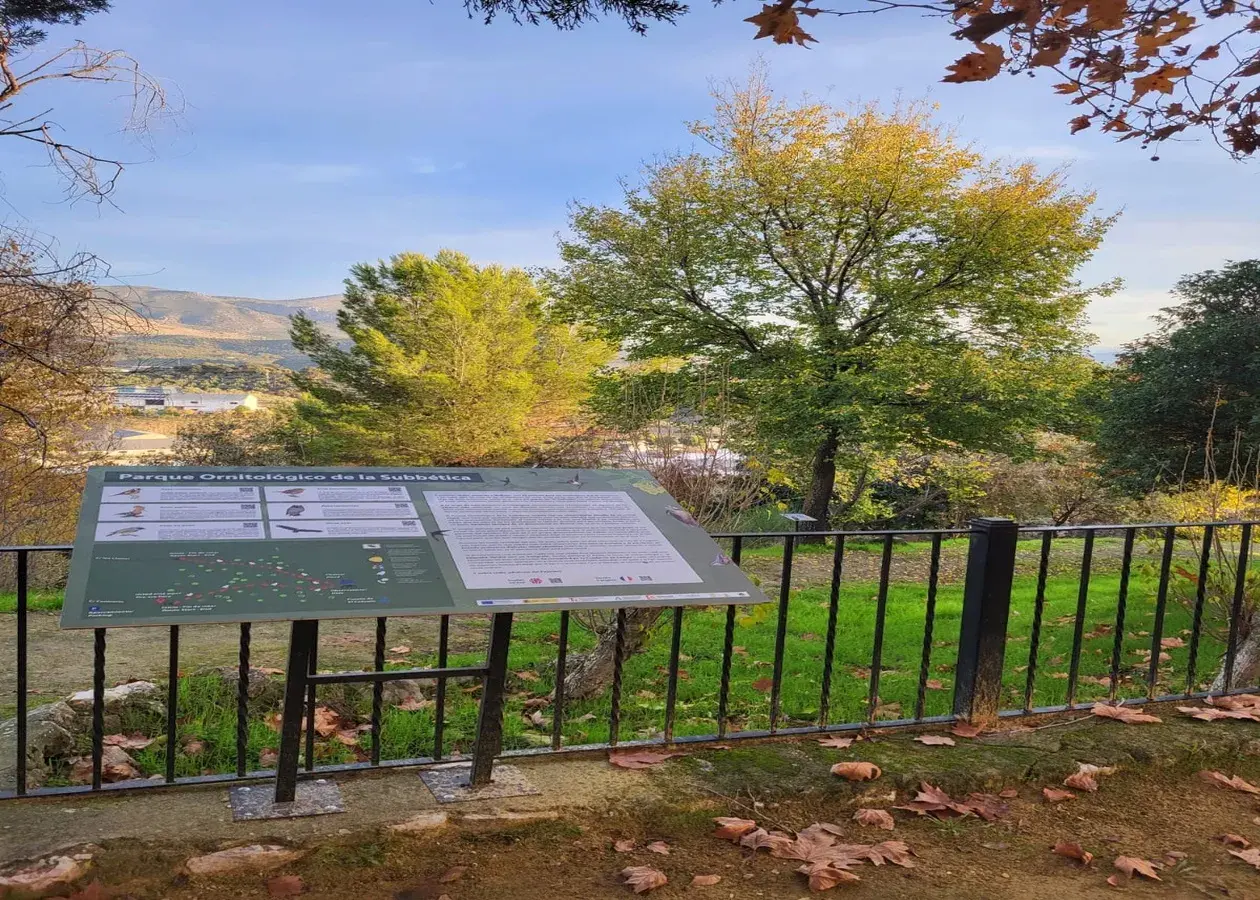
Bird parks
Our work focuses on creating infrastructures and routes that allow people to get closer to biodiversity without altering the balance of the ecosystem, promoting a respectful relationship between people and the natural environment.
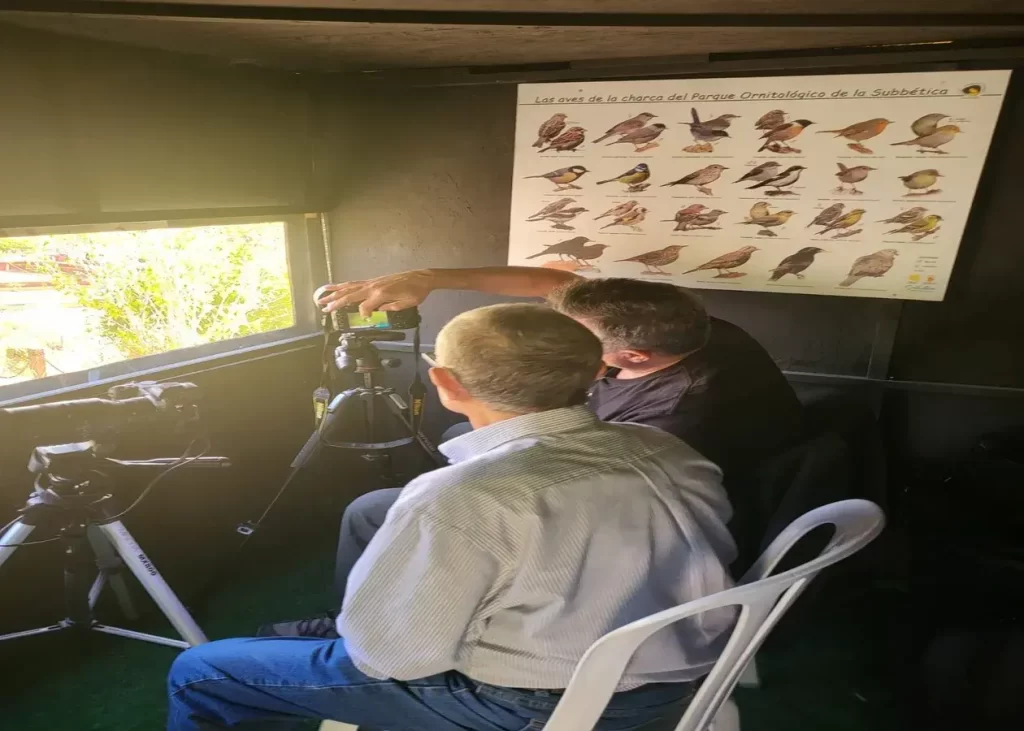
Photographic hides
Photographic hides allow you to observe and photograph wildlife from concealed vantage points, avoiding any interference with the animals' behavior. We design these spaces taking into account orientation, the landscape, and the presence of species, creating suitable conditions for both nature observation and photography.
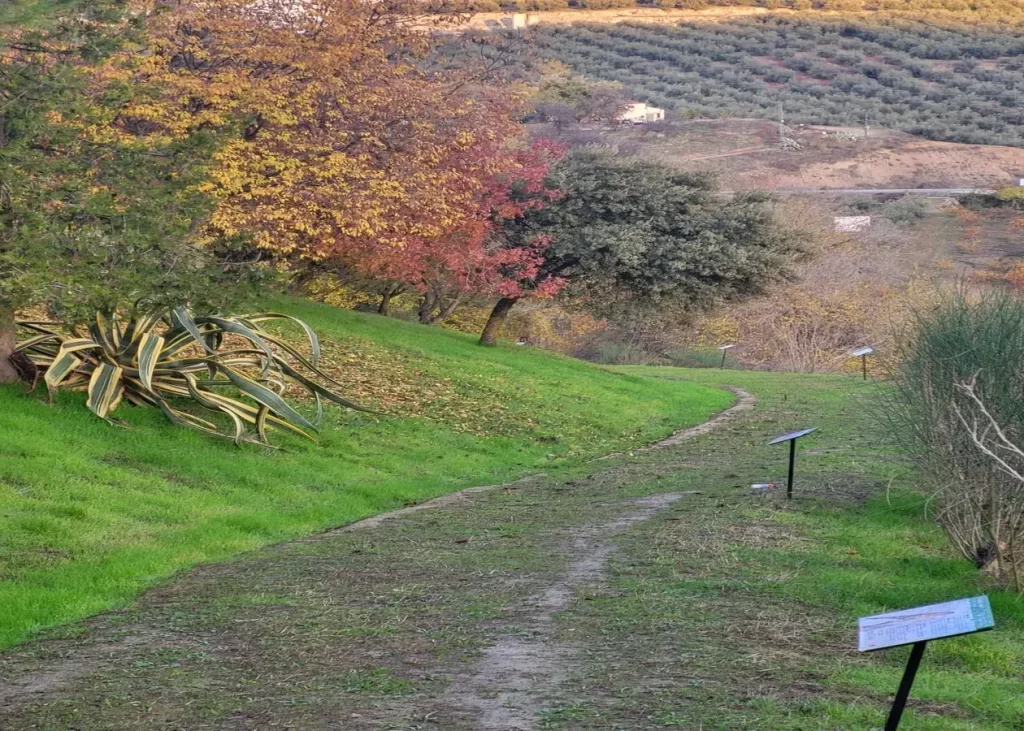
Wildlife observation itineraries
Interpretive trails allow visitors to explore a natural area by following strategic observation points. Through paths, viewpoints, and interpretive signage, the trails facilitate the discovery of local wildlife and encourage a leisurely and respectful observation experience.
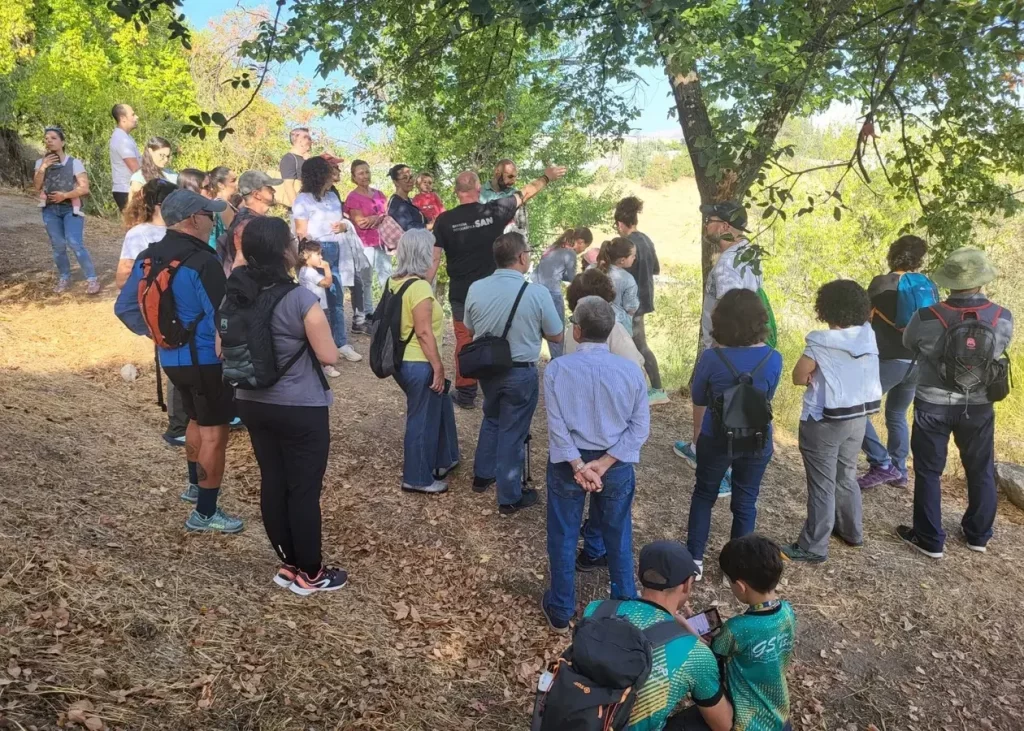
Environmental education spaces
We also develop spaces designed for educational activities related to biodiversity. These projects can include observation areas, interpretive resources, and materials that facilitate work with schools, groups, or visitors interested in learning about the natural environment.
Biodiversity interpretation areas
We design areas where wildlife observation is complemented by interpretive information about species, habitats, and ecological processes. These spaces help to better understand how ecosystems function and contribute to raising awareness about the importance of conserving biodiversity.
What does the design of a bird park include?
Designing a bird park or wildlife observation area requires a planning process that considers both the characteristics of the natural environment and the experience of its visitors. Each project is developed from a prior analysis of the area and the objectives to be achieved, whether it be birdwatching, environmental education, or nature tourism.
A project of this nature usually includes different phases of study, design and implementation that allow the infrastructure to be integrated in a way that is respectful of the landscape and the species present.
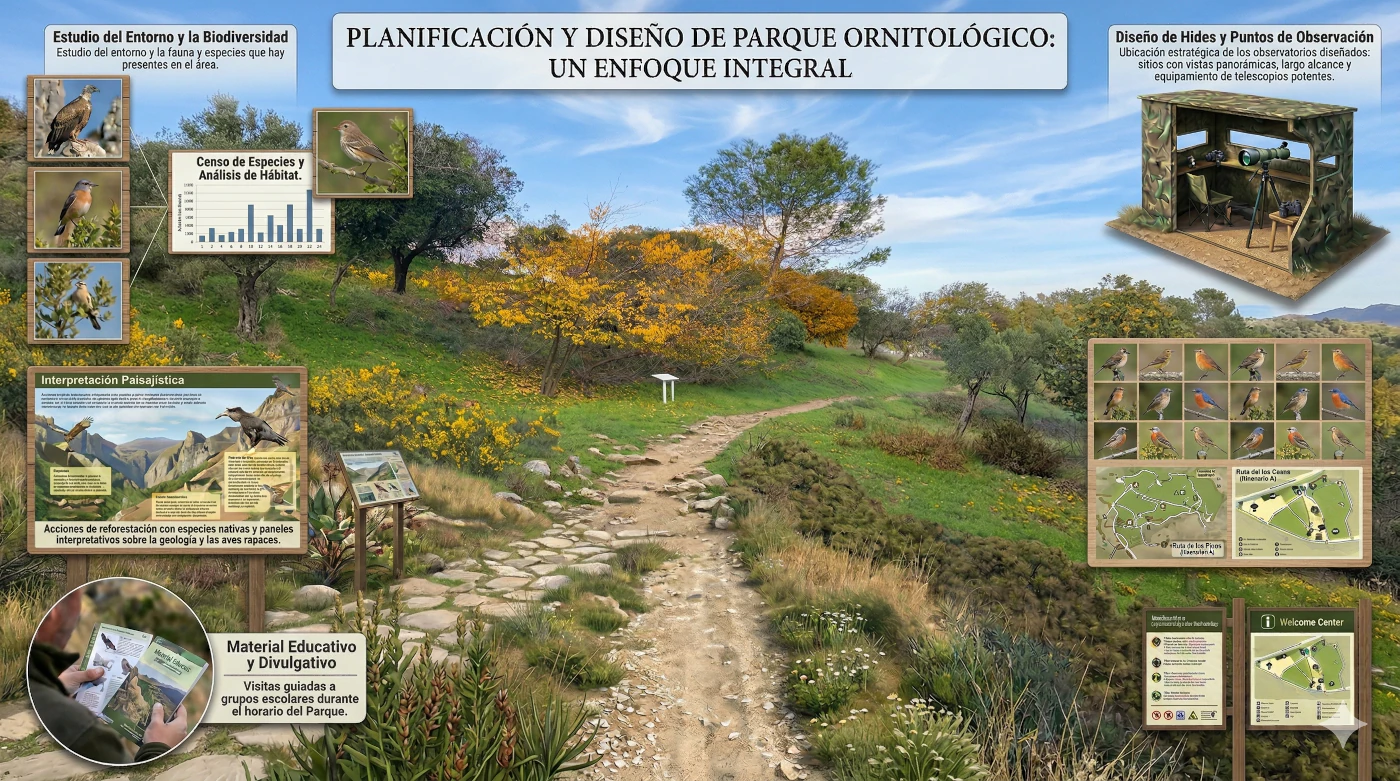
The elements that can be part of the design include the following:
Study of the environment and biodiversity
Analysis of the natural space, identification of habitats and species present, and evaluation of the conditions that allow observation activities to be carried out without generating negative impacts on the ecosystem.
Design of hides and observation points
Strategic placement of observatories and hides that facilitate the observation and photography of wildlife without interfering with the natural behavior of the animals.
Planning observation itineraries
Design of routes and trails that connect different observation points, allowing exploration of the space in an orderly and safe manner.
Interpretive design of space
Development of interpretive content that helps to understand the biodiversity of the place, the functioning of ecosystems and the relationship between species and habitats.
Landscape integration
Design of infrastructures that integrate naturally into the environment, using materials and solutions that respect the landscape and minimize visual impact.
Educational and informational material
Creation of resources that facilitate the performance of educational activities and the interpretation of the environment by visitors, educational centers or groups.
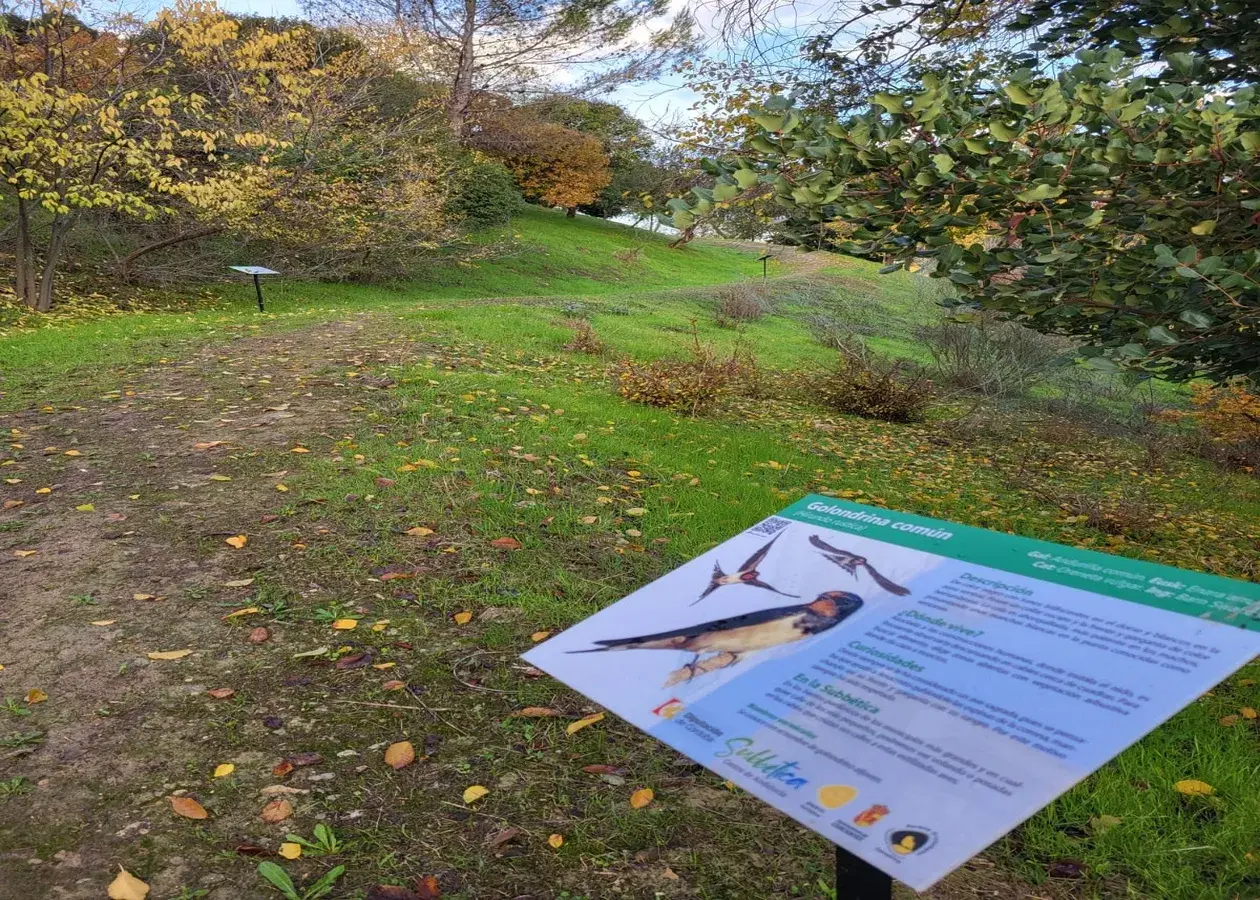
Signage and information for visitors
Installation of panels, signs and information materials to guide the route and help to understand the natural value of the space.
Overall, the design of an ornithological park seeks to create a space where wildlife observation, environmental education, and the conservation of the natural environment can be developed in a compatible and sustainable way.
Benefits of creating a birdwatching space
Creating a birdwatching or wildlife observation area offers benefits that extend far beyond simply installing infrastructure. When these projects are properly designed, they become valuable tools for revitalizing the region, promoting environmental education, and fostering biodiversity conservation.
These spaces allow us to value the natural heritage of a place and generate new opportunities linked to the knowledge and responsible enjoyment of nature.
Who are these projects aimed at?
Design projects for bird sanctuaries and wildlife observation areas can be developed in various types of territories and contexts. Their application is not limited to large natural spaces, but can also be adapted to rural environments, peri-urban areas, or private properties with interesting natural features.
These projects are specifically aimed at entities and organizations that wish to highlight the biodiversity of their environment and develop initiatives related to environmental education, conservation or nature tourism.