

1. What is a field notebook in environmental education?
The field notebook is a pedagogical tool used on school trips to record observations, collect data, formulate hypotheses, and reflect on experiences in direct contact with the environment. It is not simply an activity sheet or a document to be "filled out during the excursion," but rather a teaching instrument that organizes the experience and allows for recording the learning that takes place.
On a school trip, the field notebook functions as a recording system that transforms observation of the environment into data and reflections useful for classroom work.
In environmental education, the field notebook plays a key role: it focuses students' attention on what is relevant in the environment. Through guiding questions, diagrams, drawings, tables, or short texts, students learn to observe systematically, identify natural elements, and relate them to content previously covered in the classroom.
Unlike other materials, the field notebook is used at different times during the outing:
- Before departure, It serves to activate prior knowledge and set observation objectives.
- During the activity, focuses attention on specific aspects of the environment (flora, fauna, landscape, human impacts, etc.).
- After, It allows you to analyze the information collected, draw conclusions, and link the experience to the curriculum.
From a pedagogical perspective, the field notebook connects directly with active methodologies such as discovery learning or project-based learning. It facilitates the student's transition from being a spectator to an active participant: observing, recording, interpreting, and communicating.
A well-designed school field notebook becomes a working document that records the learning process. It allows teachers to assess skills, processes, and attitudes, and helps students become aware of how they learn. Therefore, in environmental education outings, it is a key tool for transforming a simple visit to the environment into a comprehensive educational experience.
2. Why use a field notebook on school trips?
Many school trips are experienced as an interesting but fleeting experience. Students observe, participate, and enjoy themselves… but upon returning to the classroom, little trace of that learning remains. The field notebook prevents precisely that: it provides educational continuity to the trip and organizes the work done during it.
Its main value lies in transforming observation into a guided and recordable activity. The natural environment is rich and complex, and without clear guidance, students tend to focus only on the most striking aspects. The field notebook directs attention to specific features (ecosystems, species, relationships, human impacts), helping to develop conscious and critical observation skills.
Furthermore, it allows for the integrated development of key skills:
- Scientific competence, in collecting data and formulating conclusions.
- Linguistic competence, in expressing ideas and describing what is observed.
- Learning to learn, by reflecting on one's own process.
- Social and civic competence, by analyzing the environment from a perspective of care and responsibility.
Another key aspect is that, unlike the typical field trip, which is difficult to assess, the field notebook provides a tangible record of the work done: notes, diagrams, drawings, reasoned answers, or small research projects. This allows teachers to evaluate not only results but also the processes involved.
From a methodological point of view, the field notebook connects direct experience with subsequent classroom work. The data collected can be used to:
- Prepare reports or murals.
- Develop interdisciplinary projects.
- Compare results between groups.
- To delve deeper into curricular content.
- Propose actions to improve the environment.
In environmental education, this continuity is essential. The goal is not just to become familiar with a natural space, but to understand it and build a connection with it. The field notebook helps students move from simply "having been there" to "having learned something relevant," fostering a more conscious relationship with their environment.
3. Educational objectives of the field notebook
The field notebook is not a decorative addition to the school trip: it is a tool with very specific educational objectives. Its design should always answer one key question:
What do I really want students to learn from this experience?
When well planned, it allows for simultaneous work on content, skills, and attitudes.
Encourage conscious observation of the environment
One of the primary objectives is to teach students how to observe intentionally. The field notebook guides students to move from superficial observation to structured observation: identifying elements, comparing, describing changes, and recognizing relationships between natural and human components.
This lays the foundation for scientific thinking from an early age.
Develop recording and analysis skills
Through simple tables, drawings, diagrams, or short notes, students learn to:
- Gather relevant information.
- Organize data.
- Interpret what has been observed.
- Draw basic conclusions.
It is not about training scientists, but about introducing rigorous work habits that can be transferred to other areas.
Connecting experience with resume
The field notebook allows the field trip to be aligned with the official curriculum: natural sciences, geography, language, values education, or even mathematics. In this way, the activity ceases to be an isolated event and becomes integrated into the educational program.
Furthermore, it facilitates interdisciplinary work, especially when the outing is part of a larger project.
To promote reflection and meaningful learning
Another key objective is for students to reflect on their experience: what they have learned, what surprised them, and what new questions arise. This process helps consolidate learning and give personal meaning to the experience.
The field notebook acts here as a space for metacognition.
Generate evidence for the evaluation
From a teaching perspective, the notebook provides real material for assessment:
- Content comprehension.
- Observational skills.
- Active participation.
- Quality of reasoning.
- Attitude towards the environment.
This allows for a richer evaluation than simply attending the departure.
Promote attitudes of respect and environmental care
Finally, in environmental education, the field notebook pursues a cross-cutting objective: to develop sensitivity towards the environment. By observing closely, recording impacts, and reflecting on solutions, students begin to build a more conscious and responsible relationship with nature.
4. Designing the field notebook: essential elements
For a field notebook to function as an educational tool—and not simply as an activity booklet—its design must follow a clear pedagogical logic. It's not about adding many pages, but about including just the right elements to guide observation, encourage reflection, and generate evidence of learning.
These are the basic blocks that any field notebook for school trips should contain:
4.1 Cover and identification
A simple but important section. It should include:
- Student's name
- Course or group
- Departure date
- Place visited
This reinforces the idea of personal work and facilitates its subsequent evaluation.
4.2 Contextualization of the output
Before starting to observe, it is helpful to situate the students:
- Where are we going?
- Why are we visiting this place?
- What are we going to investigate or discover?
This section may be brief, but it helps to activate prior knowledge and give meaning to what comes next.
4.3 Guiding Questions
They are the heart of the field notebook. They direct attention to specific aspects of the environment and prevent scattered observation.
Some examples:
- What types of plants appear?
- What signs of human activity do you find?
- What differences do you notice between areas?
These questions should always be adapted to the age and level of the group.
4.4 Observation Record
Here, students record what they see, hear, or perceive. This may include:
- Drawings of landscapes or species
- Lists of observed elements
- Simple diagrams
- Short descriptions
It is important to leave enough space to express oneself, not limit it to closed boxes.
4.5 Data collection
When the output allows, this section introduces a more scientific dimension:
- Simple counts
- Approximate measurements
- Basic tables
- Comparisons between areas
It does not seek absolute precision, but rather to introduce the habit of recording information in an organized manner.
4.6 Hypothesis and conclusions
A space for students to think:
- Why do you think this happens?
- What relationship do you see between these elements?
- What have you learned today?
This block promotes reasoning and helps transform observation into knowledge.
4.7 Follow-up activities in the classroom
The notebook doesn't end in the field. It should include suggestions for later:
- Summaries
- Personal reflections
- Short reports
- Connection to other content
5. Structure of the field notebook according to the educational stage
There is no single valid template for a field notebook. Its structure must be adapted to the students' developmental level, the learning objectives, and the type of school trip. Designing the same format for preschool and secondary school is one of the most common mistakes.
Practical guidelines for each educational stage are detailed below.
5.1 Early Childhood Education
In Early Childhood Education, the field notebook should be visual, simple, and highly guided. The main objective is not the rigorous collection of data, but rather to initiate conscious observation of the environment.
Recommended items:
- Large spaces for drawings.
- Oral questions that the teacher can record.
- Identification activities (colors, shapes, sounds).
- Stickers or pictograms to mark what has been observed.
Here, sensory experience takes precedence: touching, smelling, listening, and representing. The notebook acts as a structured record of the experience.
5.2 Primary Education
In primary school, greater systematization can be introduced. The students begin to describe more precisely already organizing basic information.
These may include:
- Simple observation tables.
- Lists of species or elements.
- Comparisons between areas.
- Short written conclusions.
In the upper grades of Primary school, it is possible to add questions that encourage cause-and-effect relationships or analysis of environmental impacts.
5.3 Secondary Education
In secondary school, the field notebook takes on a more scientific and reflective dimension. Students can:
- Formulate preliminary hypotheses.
- Design small research projects.
- Collect comparable data.
- Draw well-reasoned conclusions.
The record is no longer just descriptive, but analytical. It can include simple graphs, more complex diagrams, or references to content covered in class.
Furthermore, it can be directly linked to the assessment using clear rubrics.
5.4 High School and Vocational Training
At these levels, the field notebook can become a true technical instrument.
It is possible to work:
- Environmental indicators.
- Analysis of variables.
- Interpretation of real data.
- Relationship with environmental regulations or land management.
The format can be more open and less guided, fostering autonomy. It can even be offered in a digital format if the context allows.
6. How to work with the field notebook before, during and after the outing
One of the most common mistakes is handing out the field notebook upon arrival at the activity site and collecting it at the end. When used this way, it loses much of its educational potential.
For it to truly generate learning, it is advisable to work on it in three distinct moments.
Preliminary phase: preparing the gaze
Before leaving the classroom, the field notebook serves to activate prior knowledge and awaken curiosity.
At this stage it is advisable to:
- Introduce the place that will be visited.
- Explain what will be observed and why.
- Formulate initial questions or small hypotheses.
- Introduce basic vocabulary.
- Define the objectives of the outing in language that is understandable to the students.
This preparatory work helps students arrive at the environment with clear observation objectives. They no longer go "to see what's there," but to look for answers.
Even a few minutes of preparation make a huge difference in the quality of the subsequent observation.
Field phase: observe with purpose
During the outing, the notebook serves as a guide. It should not become a burden or disrupt the flow of the activity, but rather accompany it.
This is important:
- Alternate moments of free observation with more guided ones.
- Allow sufficient time to draw, write, or record data.
- To promote dialogue between students and teachers.
- Resolve doubts on the ground.
- Remember that not everything has to be completed at the moment.
The goal is not to complete for the sake of completing, but to record what is relevant.
At this point, the teacher's role is fundamental: to guide the gaze, ask questions, help to relate elements, and facilitate each student's construction of their own record.
Next phase: transforming experience into learning
It is after the outing that the field notebook acquires its full value.
In the classroom it can be used for:
- Analyze what was observed.
- Compare results between groups.
- Draw collective conclusions.
- Connecting the experience with curricular content.
- Develop derivative projects.
- Conduct formative assessments.
This phase allows the educational cycle to be completed: from the environment to the classroom and from the classroom to knowledge.
Furthermore, it encourages personal reflection: what I have learned, what has surprised me, what new questions I have now.
7. Evaluation of the field notebook
Evaluating a field notebook doesn't mean correcting mistakes or checking if it's "filled in." Its value lies in allowing us to observe processes: how students see things, how they organize information, and how they interpret their experiences.
Therefore, the evaluation should focus more on the learning than in the final result.
What exactly should be evaluated?
A good approach is to assess four main dimensions:
1. Observation
- Identify relevant elements of the environment.
- Record information consistently.
- Pay attention to significant details.
2. Registration
- Complete the proposed activities.
- Use drawings, diagrams, or text in an understandable way.
- Organize the data in a basic way.
3. Comprehension
- Relate what you observed to the content you have worked on.
- Draw simple conclusions.
- Formulate your own ideas based on experience.
4. Attitude
- Participate actively.
- Shows interest in the environment.
- Respect the natural space and the work of the group.
These dimensions allow for the evaluation of both cognitive skills and environmental attitudes.
Use of rubrics: clarity for students and teachers
The most effective way to evaluate a field notebook is with a simple rubric. It doesn't need to be complex: simply define 3 or 4 levels of achievement per criterion.
For example:
- beginner level
- Level in progress
- appropriate level
- Advanced level
This brings transparency and helps students understand what is expected of them.
Furthermore, it allows for a more objective and consistent evaluation between different groups or outputs.
Formative assessment, not just grading
The field notebook works particularly well as a formative assessment tool:
- Individual comments.
- Group discussions in class.
- Brief self-assessments.
- Final reflections.
This approach reinforces learning and prevents the outing from being perceived solely as a graded activity.
Convert the notebook into a graded instrument
If it is to be included in the quarterly evaluation, it can have a specific weight within the area or project (for example, between 10 % and 20 %).
The important thing is that the students know from the beginning:
- What will be evaluated.
- How will it be evaluated?.
- What is the notebook for?.
When this is clear, involvement increases and the quality of work improves significantly.
8. Common mistakes when using field notebooks
Although the field notebook is a very powerful tool, its educational impact depends entirely on how it is used. In practice, there are a number of common mistakes that cause it to lose its pedagogical value and become a mere formality.
Identifying them helps in designing better experiences.
Use it as a form to fill out
One of the most common mistakes is treating the notebook like an exercise sheet: closed questions, short answers, and little room to think.
When everything is overly directed, students simply fill in boxes without reflecting. The workbook should guide, not replace, thinking.
Not connecting it to classroom work
If the notebook is handed in during the outing and does not reappear afterwards, the learning is incomplete.
The true value emerges when it's revisited in the classroom: data is analyzed, observations are compared, conclusions are drawn, or derivative projects are developed. Without this follow-up phase, the experience loses depth.
Design the same model for all ages
A workbook that's too complex frustrates younger students; one that's too simple discourages older ones. Each stage needs its own approach, level of autonomy, and type of activities.
Adapting the design is not optional: it is essential.
Overwhelm with tasks
More pages don't necessarily mean more learning. Sometimes too many activities are included for fear of "having too much time," and the result is just the opposite: rushing, stress, and superficial observations.
It is preferable to work on a few aspects calmly rather than trying to cover everything.
Not explaining what will be evaluated
When students don't know what's expected of them, the notebook is seen as something secondary. Explaining the assessment criteria from the beginning increases engagement and significantly improves the quality of the work.
Forget the emotional component
Environmental education isn't all about recording data. Wonder, curiosity, and surprise are also part of the learning process. Allowing space to express personal feelings greatly enriches the notebook and strengthens the connection with the environment.
9. Practical example of a field notebook for an environmental outing
To understand how all this translates into practice, let's look at a simple example of a field notebook applied to an environmental education outing (forest, peri-urban park, river or environment close to the center).
The idea is not to offer a closed model, but a basic structure adaptable to different ages.
Example of basic structure (Primary – first years of Secondary)
Front page
- Student's name
- Course
- Date
- Departure point
- Qualification: We explore our natural environment
1. Before leaving
What do I think I'm going to find?
Space to write or draw preliminary ideas.
Objective of the outing
Short phrase explained by the teacher (for example: knowing the biodiversity of the environment and understanding how we people use it).
2. During the departure
We observed the landscape
- Drawing of the place
- What natural elements do you see?
- Are there any signs of human activity?
Plants and animals
Simple table:
| Living being observed | Where was it? | What was it doing? |
We measure or we count
Example:
- Number of trees in a specific area
- Different types of leaves
- Waste found
Guiding questions
- What surprised you the most?
- What differences do you see between areas?
- Why do you think that happens?
3. After the departure (in the classroom)
What I have learned
Short personal text.
Group conclusions
Space for collective synthesis.
What can we do to take care of this environment?
Action proposals.
Key aspects of the model
This type of notebook works because:
- It combines observation, recording, and reflection.
- It includes phases before, during, and after.
- Alternate open activities with guided ones.
- Generates real evaluable material.
- Leave room for personal experience.
It can be easily adapted:
- Simplifying texts and prioritizing drawings (Children's).
- Adding hypotheses and data analysis (Secondary).
- Incorporating environmental indicators or regulations (FP and Baccalaureate).
10. Frequently Asked Questions about the School Field Notebook (FAQ)
Is it mandatory to evaluate the field notebook?
It's not mandatory, but it's highly recommended. Evaluating it (even formatively) increases student engagement and gives meaning to the work done. It can be assessed as part of a project, a content unit, or as evidence of competence.
Should it be individual or in a group?
It depends on the educational objective.
- Individual: It encourages personal reflection and allows for the evaluation of one's own processes.
- Group: promotes cooperative work and consensus.
A very effective option is to combine both: individual registration and collective conclusions.
Digital or paper format?
Both are valid.
- Paper facilitates spontaneous drawing and direct contact with the environment.
- The digital format allows you to integrate photos, audio or video and work on digital skills.
The choice should be based on the context of the school and the age of the students, not on technological trends.
How much time should it occupy inside the exit?
The notebook should not dominate the experience. Ideally, periods of free observation should be alternated with brief periods of recording. Some of the work can be completed later in the classroom.
Is it only useful for science?
No. Although it is often associated with natural sciences, the field notebook is an interdisciplinary tool: language, geography, values education, mathematics, or global projects can be easily integrated.
11. Conclusion: turning the school trip into structured learning
A school trip is not automatically an educational experience. It becomes learning when there is pedagogical intent, reflection, and subsequent work in the classroom.
The field notebook acts as the guiding thread throughout this entire process. It directs observation, organizes the recording, and facilitates subsequent analysis. Thanks to it, students not only visit an environment: they understand it.
The field notebook is well designed:
- It encourages conscious observation.
- Develop key skills.
- It provides useful materials for assessing student work.
- It strengthens the bond with the environment.
- It gives coherence to environmental education.
It's not just another worksheet. It's a tool for learning from experience.
When integrated into a clear educational plan, it transforms a field trip into a comprehensive learning process. And that, precisely, is what any school trip should aim for.
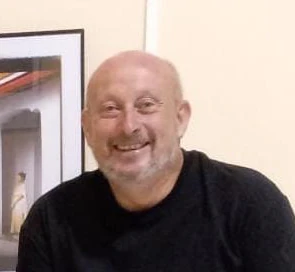
Antonio Pestana
Antonio Jesús Pestana Salido (Cabra, Córdoba, 1970) es ornitólogo y fotógrafo de naturaleza andaluz, especializado en aves y en la interpretación del paisaje mediterráneo. Desde niño ha estado vinculado al estudio y observación de la fauna, y lleva décadas recorriendo los espacios naturales de Andalucía, especialmente la Subbética cordobesa.
Es fotógrafo de naturaleza premiado a nivel nacional, ganador del primer premio del concurso de fotografía de naturaleza Carl Zeiss (IV edición) con una imagen de digiscoping de piquituerto común, además de otros reconocimientos en concursos especializados de fotografía de aves.
Como ornitólogo de campo ha participado en proyectos de seguimiento y conservación de aves, especialmente rapaces y aves esteparias, y ha sido coordinador provincial en Córdoba de los censos de aguilucho pálido y aguilucho cenizo. También es presidente de la asociación naturalista Abanto, dedicada a la divulgación y conservación del patrimonio natural.
Es autor de varios libros sobre fauna ibérica y cultura popular publicados por editoriales especializadas, entre ellos “Las aves ibéricas en la cultura popular” y “Las rapaces diurnas ibéricas en la cultura popular”, obras que recopilan refranes, creencias y tradiciones relacionadas con las aves en la cultura popular.
Además de su trabajo como autor y fotógrafo, desarrolla actividades de divulgación y educación ambiental, guiando salidas de naturaleza, impartiendo talleres de fotografía de aves y colaborando con centros educativos, asociaciones y proyectos de turismo de naturaleza.
She regularly works with schools, designing wildlife observation activities adapted for primary and secondary school students. She also collaborates with companies and associations on birdwatching tours, teaches nature photography courses, and participates in the design of natural areas.