

Hello and welcome. Today Explora Natura brings you another story of Andresín's adventures to share with your family.
The fair
February had arrived, and with it, the Livestock Fair. During the four days of festivities, livestock farmers from all over the region, and even from further afield, gathered with their animals to show them off—their appearance, their size, their weight…
The turkeys from the Vegas de Fontalba, a nearby and sometimes rival town, were famous, where they were raised with large thighs and generous breasts. Enormous pigs, known as "pata negra" (black hoof), arrived glossy and satiated with acorns from the pastures of northern Córdoba.
Geese, chickens, and ducks were renowned in the lands of Daimiel and Villarrubia, where the Guadiana River valley gave their white meat a special flavor. Donkeys, mules, horses, and both beef and dairy cattle completed the animal population at the Fair and Festivals in honor of the Virgin of Candelaria, patron saint of San Marcos de la Jara.
The fair itself didn't particularly appeal to Andresín. He'd often go to see the big bulls and the purebred horses, but he was actually quite bored. Lots of flies and not enough kids around to get up to any mischief. Even so, it was a daily must-see because who knows, something unexpected might happen when you least expect it.
After a morning of deals and sales, women and men from the region gathered next to the schoolyard, where the shooting galleries, makeshift bars, and fairground attractions, boats, and swings were located.
In the area, this period of time, which ran from just after noon until four or five in the afternoon, was known as the "vermouth session," and on a tractor trailer, there was a band playing versions of the latest hits to liven up the evening.
Boyfriends, married couples, and other female couples would dance one pasodoble after another. For some, it was a way to flirt; for others, a fun way to celebrate and break the routine; and for still others, something that made them forget that their husbands were boring or had already had their fill of Chinchón.
Above their heads, paper lanterns and pennants with the San Marcos coat of arms seemed to wave to the rhythm of Paquito el Chocolatero and La Conga.
In the center of the courtyard stood a tall pole, like a telegraph pole, which was used for the daily games. Andresín much preferred this, even though he never won a prize. Every year, he would prepare
mentally to achieve it even though the rest of his body, as his mother, Tomasa, said, did not accompany him.
The post was well coated with pig fat to make it difficult for the kids to climb, who were looking for the prize at its summit, a well-cured ham that they brought from the Trevélez mountains.
Just looking at it made Andresín choke on his own saliva, and the rumbling around him echoed like a serenade to a lover. But this year he was determined that one of the four hams would end up sleeping with him at home. Standing in line, waiting his turn, he watched as one after another fell by the wayside without ever getting past the halfway point. Andresín smiled at each failure of his predecessors because, with each participant, the fat was getting thinner.
His turn came and the crowd began to laugh. The scene was utterly comical. The pole must have been about five meters tall, and Andresín, perched at its base, stared intently at the prize that had been hoisted to the top with the help of a crane.
Calmly, he tucked the hems of his trousers into his socks and took off his jacket, leaving him in his shirt. The entire town cheered his every move with shouts and laughter.
–Ooooooleeeeeee!
–Come on Andresín, it's yours now!
The boy, oblivious to the shouting of the crowd, was focused on his goal. Red as a tomato, his clothes were so tight they were about to burst, his pants tucked into his socks, his white shirt sleeves rolled up above his elbows, and there was something in his pockets that looked unusually bulky.
He had his plan, and the rules said nothing to stop him. To everyone's astonishment—so much so that it left them speechless and wide-eyed—he took a couple of handfuls of plaster from his pockets and began spreading them around the pole. As soon as the greased plaster started to set, Andresín began to climb. Every so often, a small handful of plaster, and so he advanced slowly but surely. Now the people who had mocked him were chanting his name, applauding every time he gained a few centimeters on that pole.
"Hunger is clever, isn't it, Andresín?" some shouted at him.
The last meter was the hardest. His strength was waning. His arms had been pulling that heavy kid for too long, and the plaster cast had worn out. That's when he almost fell, slipping on one of the ledges.
–Ooh! –they all exclaimed.
Silence fell and you could almost hear Andresín's heart beating a thousand miles an hour.
When, after about twenty minutes, he finally managed to land his palm on the ham, applause, shouts, and whistles erupted in the schoolyard. Nobody had expected him to have climbed a meter, and with his tenacity and unusual intelligence, he was now practically a hero.
Once on the ground, he continued to be cheered and patted on the back.
–You're great, kid! Since you started working at the Town Hall, you've become smarter than many people in town.
Tomasa's eyes overflowed with tears and happiness. Her little boy—as she called him—was finally having a day of glory. It seemed everyone wanted to be his friend, and that filled her with pride.
Don Antonio, the mayor, had been watching the whole thing from the bar of one of the booths and, with a broad smile almost as big as Andresín's, approached to shake his hand. "Congratulations! You acted wisely, and there's the result. That's what I like to see!"
Andresín had blushed several times, although it wasn't noticeable because he was always red-faced, and even more so after the effort he had made climbing the pole.
The afternoon passed with several attempts for the other three hams. They even had to impose and improvise new rules when they saw that all the young boys had gone home to fill their pockets with plaster. From Andresín onwards, it was no longer permitted to throw plaster or sand on the post, which, incidentally, they greased again after a good while of scraping.
At the end of the day, the ham distribution began. The four lucky winners wore well-deserved smiles, which they were about to exchange for the four generous hams from the pigs.
Andresín, when he took his amidst applause and joyful whistles, pulled a switchblade from his pocket. "Tra tra tra tra…" protested its seven steps until it was fully open. "We have to try this now! Lest it be bad and you make up some excuse later," said the boy.
And tucking the ham under his arm, he sliced it so hard that streaks of bacon mingled with a good chunk of lean meat. The aroma that wafted out as he withdrew the knife from that beautiful leg filled the room and made everyone around him salivate. Andresín, with his boundless generosity and a smile as wide as a dental display, said: "I bet you all want a slice, don't you? Well, then. This leg has to be finished right here!" And with that, he began to coax delicious chords from that precious, cellar-aged guitar.
Needless to say, Andresín was simple-minded, but not stupid, and for every slice he gave away, he'd devour two without even tasting them. And of course, the ones he gave away were small, while his own were quite large. Because no matter how much he heard the knowledgeable gentlemen, like Don Antonio, say that ham had to be sliced thinly, he thought that was nonsense. The important thing was to eat it, and the thicker the slice, the more food.
Little by little, that leg lost its rigor mortis, and mobility returned to its salty joint. Seven kilos of lean cured ham from Trevélez had been divided up in less than twenty minutes until they gave up hope of getting another bite. A man from the group of ham-eaters approached Andresín with a bag to take it to the trash.
–Andresín, throw the bones there, no dog gains weight by licking, that leg doesn't even have a sliver of meat left.
"Get that bag away!" protested the boy, hiding the leg behind his back. "Do you know how much broth a ham bone makes?"
"Ha, ha, ha." They all laughed. That boy was hopeless; he was a real glutton.
If you enjoyed this story, remember that at exploranatura.es/ we continue to publish more of Andresín's adventures for you.
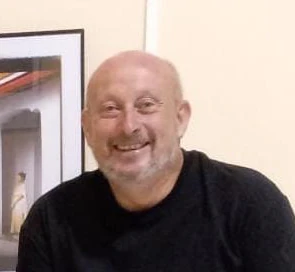
Antonio Pestana
Antonio Jesús Pestana Salido (Cabra, Córdoba, 1970) es ornitólogo y fotógrafo de naturaleza andaluz, especializado en aves y en la interpretación del paisaje mediterráneo. Desde niño ha estado vinculado al estudio y observación de la fauna, y lleva décadas recorriendo los espacios naturales de Andalucía, especialmente la Subbética cordobesa.
Es fotógrafo de naturaleza premiado a nivel nacional, ganador del primer premio del concurso de fotografía de naturaleza Carl Zeiss (IV edición) con una imagen de digiscoping de piquituerto común, además de otros reconocimientos en concursos especializados de fotografía de aves.
Como ornitólogo de campo ha participado en proyectos de seguimiento y conservación de aves, especialmente rapaces y aves esteparias, y ha sido coordinador provincial en Córdoba de los censos de aguilucho pálido y aguilucho cenizo. También es presidente de la asociación naturalista Abanto, dedicada a la divulgación y conservación del patrimonio natural.
Es autor de varios libros sobre fauna ibérica y cultura popular publicados por editoriales especializadas, entre ellos “Las aves ibéricas en la cultura popular” y “Las rapaces diurnas ibéricas en la cultura popular”, obras que recopilan refranes, creencias y tradiciones relacionadas con las aves en la cultura popular.
Además de su trabajo como autor y fotógrafo, desarrolla actividades de divulgación y educación ambiental, guiando salidas de naturaleza, impartiendo talleres de fotografía de aves y colaborando con centros educativos, asociaciones y proyectos de turismo de naturaleza.
She regularly works with schools, designing wildlife observation activities adapted for primary and secondary school students. She also collaborates with companies and associations on birdwatching tours, teaches nature photography courses, and participates in the design of natural areas.