
Observing wildlife in the classroom is an educational strategy that allows students to work on curriculum content by analyzing animals and their behaviors. This practice develops skills such as attention, curiosity, and scientific thinking in a real-world learning context.
In a school setting, wildlife observation doesn't require extensive resources or complex outings. The schoolyard, the surrounding area, or the use of audiovisual materials can become learning opportunities when planned with a specific educational purpose.
Integrating wildlife observation into the classroom facilitates the work on curricular content related to natural sciences and environmental education, and allows connecting learning with the students' immediate environment in a practical and contextualized way.
When this practice is planned and linked to content and evaluation criteria, wildlife observation becomes a didactic tool integrated into classroom programming.
1. What is wildlife observation in the classroom and how to apply it in the educational context
Wildlife observation in the classroom involves students observing animals and their behaviors with a specific learning purpose. It is not about conducting experiments or handling living beings, but about observing carefully, describing what is seen, and reflecting on animal behavior.
In the classroom, wildlife observation can be done directly, for example, in the schoolyard or the surrounding area, or indirectly through videos, images, cameras, or digital resources. These options allow the activity to be adapted to the students' age and the resources of the school.
Working with wildlife observation involves teaching students to respect animals and their environment. Observing without interfering, not altering natural behavior, and understanding that living beings are not teaching resources but part of an ecosystem, are all part of the learning process.
When approached with a clear educational purpose, wildlife observation helps develop skills such as attention, objective description, and questioning, and is easily integrated into daily classroom work.
The observation of wildlife in the classroom can be assessed based on the records made by the students and their ability to describe behaviors objectively.
2. Educational benefits of wildlife observation for learning
Observing wildlife in the classroom improves students' attention and concentration skills, as it requires them to observe calmly, identify changes, and maintain focus on what is happening. These activities allow them to develop sustained attention and analytical skills within a real-world context.
In terms of learning, observing animals and their behaviors fosters the development of scientific thinking. Students learn to describe what they see, to differentiate between facts and opinions, and to formulate questions based on direct or indirect observation.
Wildlife observation is also an effective tool for environmental education. Learning about the animals in the local environment helps children understand the relationship between living beings and their habitat, and fosters attitudes of respect and care for the natural environment from an early age.
From a curricular perspective, wildlife observation allows for working on natural science content and developing key skills such as linguistic competence, by expressing observations in writing or orally, and learning to learn, by reflecting on the observation process itself, facilitating its integration into classroom programming.
These benefits are easily integrated into the teaching program when the activity is linked to specific objectives of the area.
3. How to introduce wildlife observation in the classroom step by step
The first step To introduce wildlife observation in the classroom, it's essential to define the learning objectives of the activity. Simply observing without a clear goal is insufficient. Students need to know whether the activity focuses on identifying animals, describing behaviors, recognizing habits, or relating the animal to its environment. This prior planning gives the observation educational meaning.
Next, The observation context is chosen based on the age of the students and the educational center. In many cases, the schoolyard is sufficient for observing insects, birds, or small invertebrates. When direct observation is not possible, short videos, wildlife cameras, or recordings that allow for the analysis of real-life behaviors can be used.
During the observation, The teacher should guide the students' attention towards specific aspects. For example: how the animal moves, what it does during a period of time, or how it reacts to its environment. These prompts prevent the activity from becoming simply mindless observation.
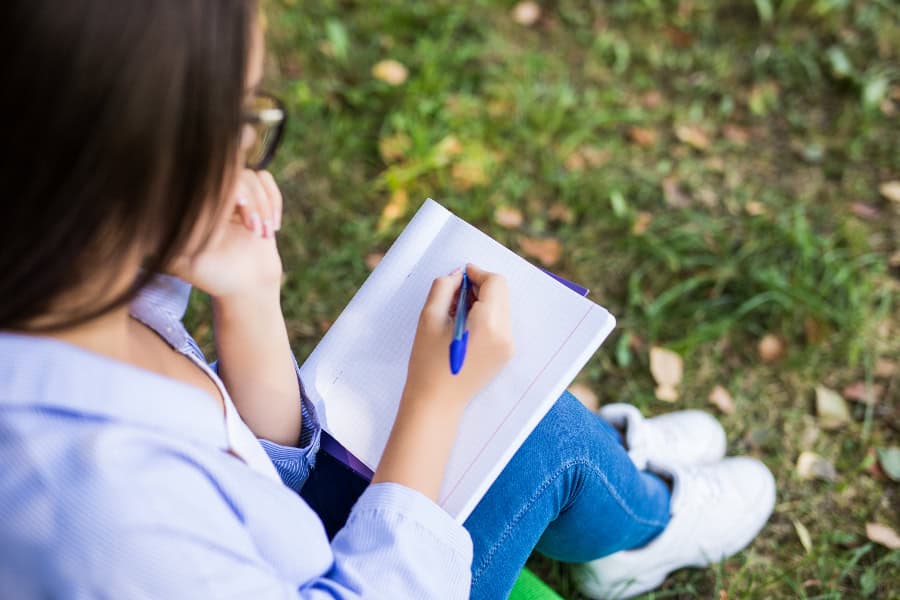
The process is completed with a record of the observation. Drawings, short phrases, lists of observed behaviors, or oral comments allow for reflection and verification of the students' understanding. This phase is essential for transforming observation into learning.
The record made can be used as evidence to assess the students' ability to describe and analyze, in accordance with the planned evaluation criteria.
4. Practical ideas for working on wildlife observation in the classroom
Wildlife observation can be integrated into the classroom through simple activities that require neither complex materials nor specialized knowledge. One of the most common options is observing insects and small animals in the immediate vicinity of the school, such as ants, snails, or birds that frequent the schoolyard. These observations allow for the analysis of routines and behavioral patterns based on real-life examples observed in the school environment.
For example, students can observe an insect's behavior in the playground for five minutes and note what it does, how it moves, or if it interacts with other animals. This type of short, focused activity facilitates concentration and the recording of relevant information.
When direct observation is not possible, the use of audiovisual resources is especially useful. Short wildlife videos, recordings from wildlife cameras, or live streams from bird nests allow for the analysis of real behaviors without interfering with the animal's environment. In these cases, students can pause the video, repeat scenes, and discuss their observations in greater detail.
Another practical suggestion is to carry out small follow-up projects. For example, observing the presence of the same animal in the yard over several days, recording when it appears and what it does, or comparing behaviors at different times of day. Monitoring over several days allows for comparing behaviors and detecting changes over time.
It can also be worked on wildlife observation Through guided classroom activities, such as classifying animals according to their movement, relating animals to their habitat, or describing behaviors based on images, observation can be adapted to different ages and educational levels without leaving the classroom.
5. Wildlife observation according to educational stage
Wildlife observation should be adapted to the educational stage so that learning is appropriate to the students' cognitive development. It's not just the animal being observed that changes, but also the educational purpose and the level of analysis proposed at each stage.
In early childhood education
Wildlife observation focuses on recognition and attention. Students observe nearby animals and orally describe what they are doing or how they move. The goal is not to memorize information, but to learn to observe, name what they see, and express simple ideas. Activities should be short, guided, and centered on direct experience.
In primary education
Observing wildlife allows for the introduction of systematic description. Students can record simple behaviors, compare animals, and relate them to their environment. At this stage, observation begins to be used as a tool for gathering information, employing drawings, short phrases, or simple tables.
In secondary and higher education
Wildlife observation is linked to analysis. Students observe behavioral patterns, identify changes over time, and relate the data obtained to scientific concepts. At these stages, observation ceases to be merely descriptive and becomes a tool for scientific analysis.
At each stage, the observation must be adapted to the level of analysis provided for in the corresponding evaluation criteria.
6. Integrate wildlife observation into different curricular areas
Wildlife observation can be effectively integrated into various curricular areas when linked to specific learning objectives. It's not about adding extra activities, but rather using observation as a resource to work on content already present in the curriculum.
In natural sciences
Observing wildlife allows for a practical approach to studying living things. Observing behaviors, identifying characteristics, and relating animals to their environment facilitates the understanding of concepts such as... habitat, adaptation or relationships between species, providing a more meaningful learning experience than purely theoretical work.
In language and communication
Wildlife observation serves as a foundation for oral and written expression activities. Describing what is observed, explaining behaviors, or creating short informational texts helps develop specific vocabulary, coherence in expression, and the ability to communicate ideas based on real experiences.
In mathematics
Wildlife observation allows for the practical introduction of data processing. Counting observed animals, recording frequencies, comparing results, and representing information in tables and graphs connects observation with mathematical concepts and gives practical meaning to the use of numbers and records.
In art education
Observing wildlife fosters visual perception and representation skills. Drawing observed animals, reproducing movements, or creating compositions inspired by the shapes and colors of the natural environment helps develop students' attention to detail, creativity, and personal expression.
Integrating wildlife observation into different curricular areas allows for the cross-curricular development of key competencies.
For the activity to have educational value, it must be linked to specific objectives and evaluation criteria.
Conclusion:
Observing wildlife in the classroom is an effective teaching resource when it is integrated into the curriculum in a planned way and linked to specific subject matter. It's not about observing out of curiosity, but about analyzing behaviors, recording information, and using that data to explore concepts related to living things and their environment.
When applied in a structured way, wildlife observation allows students to develop skills in objective description, comparison, and analysis, and facilitates the understanding of natural science content through real-life situations. The immediate environment ceases to be a mere space and becomes an object of study within the classroom.
The observation record provides evidence that can be used to assess students' ability to identify behaviors, express them accurately, and relate them to previously studied content. In this way, the activity is integrated into the evaluation process and is not reduced to a one-off experience.
When wildlife observation in the classroom is planned, recorded, and subsequently analyzed, it becomes a coherent methodology aligned with assessment criteria and curricular objectives. In this way, working with animals from the local environment adds practical meaning to learning and reinforces understanding of the natural world through a structured and assessable approach, while also helping students to see their surroundings in a new light.
Frequently asked questions about wildlife observation in the classroom
Observing wildlife in the classroom is an educational resource that allows students to work on curriculum content by analyzing animals and their behaviors, without intervening in or altering their environment. It is based on observing, recording, and reflecting on what happens in order to transform the experience into structured learning.
No. Wildlife observation can be done in the center's courtyard, in the nearby environment, or through audiovisual resources such as videos and nature cameras when direct observation is not possible.
The most suitable animals are those that appear naturally in the school environment, such as insects, birds or small invertebrates, since they allow real behaviors to be observed without the need for manipulation.
Wildlife observation can be incorporated into all educational stages. In preschool, the focus is on observation and oral description; in primary school, on recording and comparison; and in secondary school, on data analysis and interpretation.
The observation of fauna in the classroom can be evaluated based on the records made, the descriptive accuracy and the analytical ability of the students, ensuring consistency with the established evaluation criteria.
No specific materials are necessary. The key is that the activity is well-planned and that students have simple tools to record and analyze their observations.
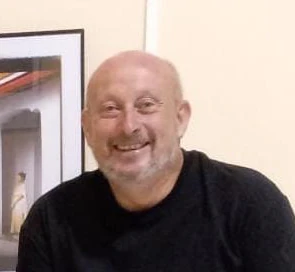
Antonio Pestana
Antonio Jesús Pestana Salido (Cabra, Córdoba, 1970) es ornitólogo y fotógrafo de naturaleza andaluz, especializado en aves y en la interpretación del paisaje mediterráneo. Desde niño ha estado vinculado al estudio y observación de la fauna, y lleva décadas recorriendo los espacios naturales de Andalucía, especialmente la Subbética cordobesa.
Es fotógrafo de naturaleza premiado a nivel nacional, ganador del primer premio del concurso de fotografía de naturaleza Carl Zeiss (IV edición) con una imagen de digiscoping de piquituerto común, además de otros reconocimientos en concursos especializados de fotografía de aves.
Como ornitólogo de campo ha participado en proyectos de seguimiento y conservación de aves, especialmente rapaces y aves esteparias, y ha sido coordinador provincial en Córdoba de los censos de aguilucho pálido y aguilucho cenizo. También es presidente de la asociación naturalista Abanto, dedicada a la divulgación y conservación del patrimonio natural.
Es autor de varios libros sobre fauna ibérica y cultura popular publicados por editoriales especializadas, entre ellos “Las aves ibéricas en la cultura popular” y “Las rapaces diurnas ibéricas en la cultura popular”, obras que recopilan refranes, creencias y tradiciones relacionadas con las aves en la cultura popular.
Además de su trabajo como autor y fotógrafo, desarrolla actividades de divulgación y educación ambiental, guiando salidas de naturaleza, impartiendo talleres de fotografía de aves y colaborando con centros educativos, asociaciones y proyectos de turismo de naturaleza.
She regularly works with schools, designing wildlife observation activities adapted for primary and secondary school students. She also collaborates with companies and associations on birdwatching tours, teaches nature photography courses, and participates in the design of natural areas.