
When you enter a photographic hide with a group of students, the first thing that changes is the pace. Suddenly, everyone lowers their voices, moves slowly, and begins to notice details that previously went unnoticed. An educational outing to a photographic hide is a perfect activity to introduce students to the world of nature observation.
From the very first moment, it's clear that the dynamic is different. The group quickly understands that they're not here to run or speak loudly, but to wait, observe, and respect what's happening outside.
It's not just about seeing animals here. It's also about learning to be quiet, understanding that nature moves at a different pace, and discovering that very close to the school there are birds and small animals that almost no one notices.
For many students, it is the first time they have observed wildlife without disturbing it, simply by being still and attentive.
What is a photographic hide?
A birdwatching hide It is a small, camouflaged structure that allows us to observe animals without them realizing we are there.
From inside, students can see what is happening outside just a few meters away: birds that land, look for food or interact with each other, without noise or screens in between.
You don't need to know about species or have any prior experience. The goal isn't to "get names right," but to learn to look calmly, to wait, and then to realize what happens when we go unnoticed.
It is common for the first animal to appear after a few minutes and completely change the group's attention.
Depending on the environment, common birds, insects, or small mammals may appear. Animals that are there every day, but that usually go unnoticed.
In the end, the hide becomes something very simple: a place from which to observe without disturbing.
Why take students to a photographic hide?
Sitting quietly and observing what's happening in front of you isn't a common occurrence in the classroom. And that's precisely why it works.
In a photographic hide, students learn almost without realizing it: they wait, respect turns, remain silent, and begin to notice details that would normally go unnoticed. It's not a quick activity, and that's the key.
Within minutes, questions begin to arise: why does a bird land in one place and not another, why do some come closer, what are they looking for on the ground? It's a curiosity that appears on its own, without needing to be forced.
This change is also noticeable in their concentration. Even students who struggle to stay focused end up paying attention to any movement outside the hide.
The idea of respect ceases to be theoretical. They quickly understand that they are in the space of other living beings and that any noise or sudden movement could make them disappear. Experiencing it this way has a much greater impact than explaining it in class.
Beyond the content of Biology or environmental education, what they take away is the experience: the shared silence, the attention and the feeling of having seen something that normally goes unnoticed.
What do students learn during the activity?
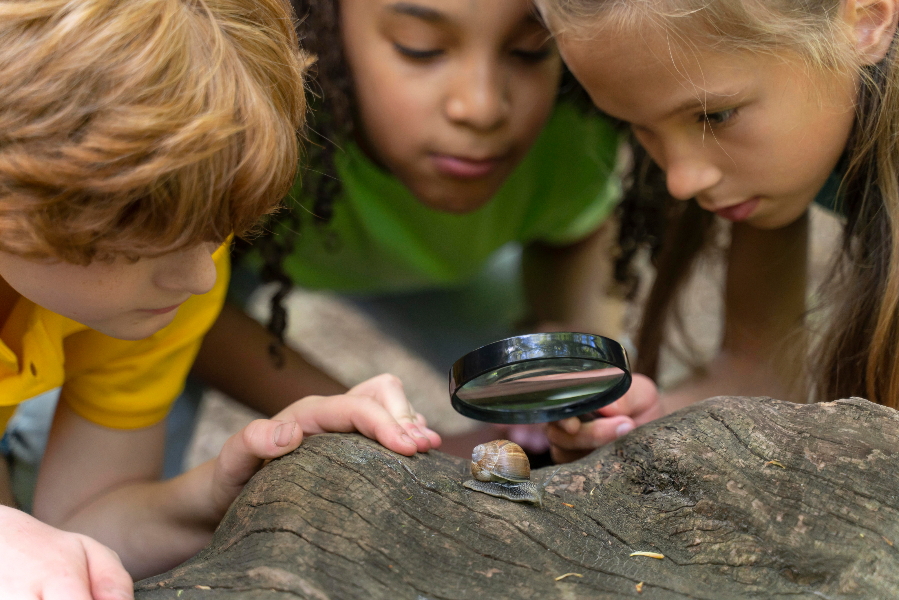
Each student experiences it in their own way. Some immediately notice the birds, others the sounds, and still others the smallest movements. Little by little, they discover that observing is not just looking, but paying attention to what is happening.
During the activity They learn to identify simple species, recognizing basic behaviors and record what you see in a notebook or field sheet. It's not about memorizing names, but about describing what happens: where the animal was, what it was doing, or how long it stayed there.
Respect ceases to be a theoretical idea. From the very first moment, they realize that they are in the space of other living beings and that any noise or movement could make them disappear.
Group work arises naturally. They share what they see, compare observations, and help each other so as not to miss a detail. Even the quietest students tend to participate because everyone is focused on the same thing.
From there, they begin to understand how a small ecosystem works: what each species does, how they relate to each other, and why that balance is important. It's not just biology content; it's something they're seeing right in front of them.
Learning from observation: a small scientific experiment
In the hide, the students follow a process very similar to the scientific method: they observe, record what happens, formulate questions, and share what they have seen.
They work with what's in front of them. There are no prepared examples or simulated situations, and that makes the learning much more meaningful.
From there, several key skills develop. Scientific skills, by observing and drawing conclusions. Personal and social skills, by respecting turns and sharing space. Communication skills, when they explain what they have seen. And autonomy, by recording their own observations.
When a photographic hide is well integrated into the environment, it becomes a valuable educational resource, especially if it is part of a larger project. design of wildlife observation spaces designed for educational centers, municipalities or environmental facilities.
How to develop an educational outing to a photographic hide
The experience begins before arriving at the hide. A short time is dedicated in the classroom to explaining what the activity involves, why it's important to remain silent, and how to behave during observation. Some of the most common species can also be introduced to give students an initial point of reference.
There's not much preparation required. It's enough for them to understand that this isn't just another field trip and that they're going to enter a space where other living beings live.
Upon arriving at the hide, the pace changes completely. Everyone enters slowly, each finding their place, and the wait begins. At first, it's difficult to stay still, but as soon as the first animal appears, the whole group focuses without anyone having to say a word.
During the observation, each student takes notes on what they see: which animals appear, where they position themselves, what they do, and how long they stay. Some prefer to draw, others to write. Both methods help to solidify the experience.
The role of the teacher or monitor is to accompany without directing too much: to resolve specific doubts and encourage them to notice small details, such as a movement, a sound, or a shadow that passes quickly.
At the end, there is a brief group discussion. They share what they have seen and compare observations. It is common for them to be surprised to discover everything that happened while they were focused on a single point.
Back in the classroom, the activity can be concluded by organizing notes, completing a worksheet, or discussing what stood out most. This helps to make sense of the entire experience.
Materials needed for an educational trip to a photographic hide
You don't need to bring a lot of equipment. What's important is how you approach the experience.
Each student can bring a notebook or observation sheet and a pencil to write down what they see. Some prefer to draw instead of writing, and that's also part of the process.
In our case, the hide itself provides binoculars, so all the students can observe the birds in detail, even when they are farther away. Later, back in the classroom, a simple guide to local birds or wildlife helps identify some of the species they saw.
Beyond that, comfortable clothing appropriate for the weather is all you need. The hide already provides a prepared space, so no further resources are required for the activity to work.
What age group is this activity recommended for?
A trip to a photographic hide can be easily adapted to different ages by adjusting the observation time and the type of accompaniment.
In primary school, it works best with shorter sessions and as a first contact with local wildlife. Observing, drawing, and discussing what they see is usually enough.
In secondary school, students can go a step further: recording observations, comparing behaviors, and relating what they've seen to biology content. Students become more engaged when they understand they are investigating something real.
In higher courses, the activity allows for further exploration of ecosystems, food chains or human impact, using the field trip as a starting point for broader work.
The key is to adapt the pace to the group and respect the observation times, without rushing.
How to evaluate an educational outing to a hide
The assessment focuses not only on what students remember, but also on how they participate and what they are able to observe.
During the activity, the teacher can focus on aspects such as attitude, respect for the environment, the ability to remain silent, or the way in which they record what they see.
Afterwards, you can review the notebook or observation sheet to check if they were able to describe what they observed and if they paid attention to the behaviors.
It's also helpful to gather a brief reflection on how they felt. Often, this provides more information than a written test.
In this type of activity, it makes more sense to evaluate:
- participation
- the quality of the observations
- attitude towards the environment
- the capacity for reflection
Environmental education through direct experience
Spending time in silence inside a hide changes the way students relate to nature. It's not the same to talk about respect as it is to have to remain silent while a bird approaches within a few meters.
At that moment they understand that they are not the only ones occupying that space and that any noise can make everything disappear.
From there, curiosity arises on its own. They start asking questions, commenting, and wanting to know more.
That experience is a much more solid foundation for working on environmental education in the classroom, because it is based on something they have lived through.
How to integrate this outing into a broader educational project
The visit to the hide can be the starting point for broader work in the classroom.
Based on their observations, students can explore topics such as ecosystems, food chains, and local biodiversity. They can also conduct small research projects on the species they observed or document their experiences in texts, presentations, or murals.
Furthermore, it can be connected with other areas: writing a field diary in Language, making illustrations in Art, or analyzing simple data in Mathematics.
In this way, the outing ceases to be an isolated activity and becomes the axis of several learning experiences.
Observation sheet – Educational trip to a photographic hide
Student's name: ___________________________
Course: ____________ Date: ____________
Observation site
(Write where you are: hide, park, natural environment…)
______________________________________________________________
What animal or plant have you observed?
______________________________________________________________
Where was I?
(In a tree, on the ground, flying, near water…)
______________________________________________________________
What was he doing?
(Eating, moving, resting, looking for food…)
______________________________________________________________
Describe what you have seen
(You can write or draw a picture)
______________________________________________________________
______________________________________________________________
______________________________________________________________
What caught your attention the most?
______________________________________________________________
How did you feel during the observation?
______________________________________________________________
Drawing of the animal or the observed environment
(Space for drawing)
A brief final thought
Why do you think it's important to respect animals and their environment?
______________________________________________________________
______________________________________________________________
To conclude the educational outing to a photographic hide
A trip to a photographic hide is not just another activity. It's a different way to bring students closer to nature, through calm, observation, and respect.
What happens inside the hide is difficult to replicate in the classroom. The silence, the waiting, and the appearance of the animals make the experience directly connected to what they are learning.
From there, it becomes much easier to spark interest in the environment and work on environmental education based on something they have actually experienced.
We recommend the eBirds app to be able to complement the outing with the recognition of species through song.
Contact
At Explora Natura we organize educational outings to photographic hides and nature experiences adapted to each center and educational stage.
If you want to offer your students a different activity, based on direct observation and respect for the environment, you can contact us and we will help you design a proposal tailored to your needs.
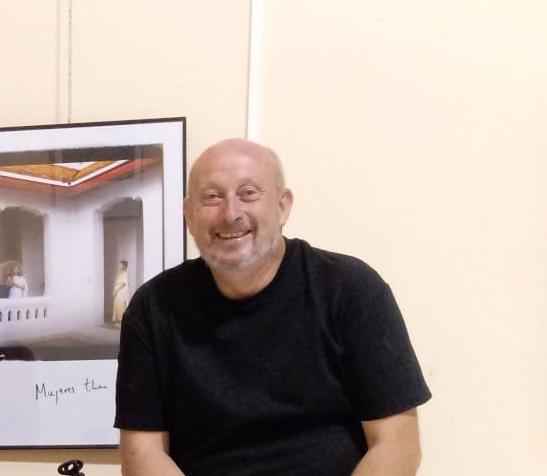
With you Antonio Pestana
An ornithologist since childhood, an award-winning nature photographer, and an expert in landscape interpretation, he has spent decades exploring the mountains of Andalusia and leading groups on educational and wildlife observation trips.
She regularly works with schools, designing wildlife observation activities adapted for primary and secondary school students. She also collaborates with companies and associations on birdwatching tours, teaches nature photography courses, and participates in the design of natural areas.
Antonio Pestana
Antonio Jesús Pestana Salido (Cabra, Córdoba, 1970) is an Andalusian ornithologist and nature photographer, specializing in birds and the interpretation of the Mediterranean landscape. From childhood, he has been involved in the study and observation of wildlife, and has spent decades exploring the natural areas of Andalusia, especially the Subbética region of Córdoba.
He is a nationally awarded nature photographer, winner of the first prize in the Carl Zeiss nature photography competition (4th edition) with a digiscoping image of a common crossbill, in addition to other recognitions in specialized bird photography competitions.
As a field ornithologist, he has participated in bird monitoring and conservation projects, especially for birds of prey and steppe birds, and has served as provincial coordinator in Córdoba for the Montagu's and hen harrier censuses. He is also president of the Abanto naturalist association, dedicated to the dissemination and conservation of natural heritage.
He is the author of several books on Iberian fauna and popular culture published by specialized publishers, including "Iberian birds in popular culture" and "Iberian diurnal birds of prey in popular culture," works that compile proverbs, beliefs and traditions related to birds in popular culture.
In addition to his work as an author and photographer, he develops outreach and environmental education activities, leading nature outings, giving bird photography workshops and collaborating with educational centers, associations and nature tourism projects.
She regularly works with schools, designing wildlife observation activities adapted for primary and secondary school students. She also collaborates with companies and associations on birdwatching tours, teaches nature photography courses, and participates in the design of natural areas.