
A birdwatching hide It's a camouflaged hide that allows you to observe wild animals without them noticing you're there. It's used in environmental education, birdwatching, and nature photography, and is one of the most effective ways to approach wildlife without disturbing it.
Unlike other types of observation points, the hide is designed to be completely inconspicuous, even at very close range to the birds. Thanks to this, it's possible to observe natural behaviors that are not normally seen when the animals detect a human presence.
In this article we explain what a hide is, what it is for, what it is like inside and why it is a key tool for observing and respecting nature.
1. What does the word “hide” mean?
The word hide It comes from English and means to hide or conceal oneself.
In nature it is used to talk about a a place from which we can observe animals without disturbing them. The idea is not to chase them or run up to them, but to go unnoticed.
If you try to approach a shy bird on foot, it will usually fly away because it thinks it might be in danger. However, if you remain hidden, still, and silent, the bird will continue with its normal activities: it will look for food, sing, or perch nearby without alarm.
A hide mimics that "not drawing attention" behavior. It's a hiding place designed to allow observation without disturbing what's happening outside.
2. What is a birdwatching hide?
A bird hide is a camouflaged shelter or hut placed in nature to allow observation of wildlife without disturbing it.
It is sometimes mistaken for a bird observatory, but the hide is smaller and designed to go unnoticed at a very short distance from the animals.
On the outside, it's usually made of wood, branches, or colors similar to the surroundings. Sometimes it simply looks like a pile of logs or a small hut blending into the landscape.
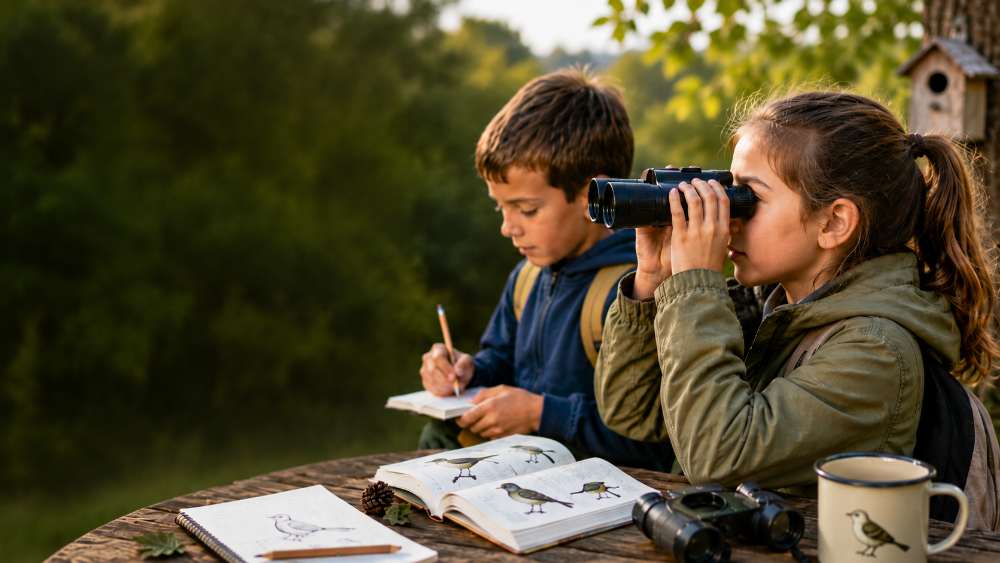
Inside, it has narrow slits for looking through. Binoculars or a camera can be used from there. From the outside, however, there is almost no perceptible movement or human presence.
Thanks to this hiding place, the birds don't feel watched. They eat, preen, argue amongst themselves, or care for their young as if no one were observing.
A hide is not a place to play or make noise. It's a place to be still and let nature take its course.
3. What is a hide used for?
The hide allows you to observe the animals at a short distance without changing their behavior.
Many birds are very wary. When they detect people nearby, they fly away. From a hide, you can observe behaviors that normally go unnoticed: how they forage, how they preen their feathers, or how they feed their chicks.
It also teaches you to observe patiently. Inside, there's no rush. Sometimes it seems like nothing is happening, and then suddenly an interesting scene appears.
That's why it's a widely used tool in nature photography. Because they're hidden, there's no need to chase the animals or force them to approach.
Thanks to this, you can observe scenes that are not normally seen when animals detect a human presence.
4. What a hide is like inside
The interior is usually simple. Just enough to sit and wait comfortably.
There's usually a bench or some chairs. That's all you need, because the important thing is to stay still.
The walls have elongated slits for observing without being seen. Some open very slowly. Others have round holes for extending a camera lens or binoculars without sticking your head out.
Inside there is usually less light than outside. This darkness prevents silhouettes or movements from being seen from the outside.
The less you move and the less noise you make, the easier it will be for the animals to approach.
5. Where are the hides placed?
They're not placed just anywhere. They're installed where animals already pass through naturally.
A common habitat is lagoons and ponds. The water attracts many birds to drink and bathe.
They are also placed in open fields or forest clearings, near crop edges or little-used paths.
Sometimes they position themselves in front of pre-prepared feeders or perches. Since the hide is now part of the landscape, the animals accept it as normal.
It is placed in areas where animals already pass through regularly.
6. What animals can we see from here?
It's not just the big birds you see. Often, the most interesting thing is the small movements.
Small birds usually appear first: sparrows, robins, blue tits or great tits, coming and going nonstop, sometimes just a few meters from the hide.
With some luck, you might see birds of prey gliding or perched, watching over the terrain.
And it's not all birds. Depending on the location, you might see squirrels, rabbits, or even a fox crossing in the distance.
Since they don't perceive our presence, everything happens normally, as if no one were watching.
7. Basic rules inside a hide
For it to work, you have to go unnoticed.
It's best to speak very quietly. Any loud noise could scare the animals away.
It is also important to avoid sudden movements because Birds detect any change in their environment. Slow gestures attract less attention.
Nothing should be protruding from the openings. Any unusual shape could alert the birds.
If everyone remains silent and patient, the animals feel safe and come closer.
8. Why does he protect birds?
When a bird gets scared and runs away, it wastes energy and stops doing important things like eating or taking care of the nest.
That doesn't happen from a hide. Since they can't see us clearly, they don't need to escape.
This way they can continue with their daily routine without interruption. They're not "posing," they're living.
From a hide it is possible to observe the real behavior of the animals, without altering it.
Looking without disturbing is also a way to care for nature.
9. Tips for using a hide for the first time
If it's your first time in a hide, these tips will help you make the most of the experience:
- Enter quietly and without sudden movements
- Avoid brightly colored clothing
- Stay still for as long as possible
- Be patient: the animals may take a while to appear.
The more inconspicuous you are, the easier it will be to observe natural behaviors.
10. Classroom activity: building a mini-hide
A small hide can be made with cardboard boxes.
Simply join several boxes together, cut horizontal slits to look through, and leave space inside to sit.
The outside can be decorated with green and brown colors or by gluing on dried leaves and branches.
Placed in a quiet corner of the courtyard, students can enter in turns and observe in silence.
Then the differences between looking hidden and looking openly are compared.
This explains why, when we stop attracting attention, more things start to happen.
11. What will the students learn?
- What is a birdwatching hide?
- How to observe animals without interfering with their behavior
- The importance of silence and patience
- Respecting wildlife space is part of environmental education
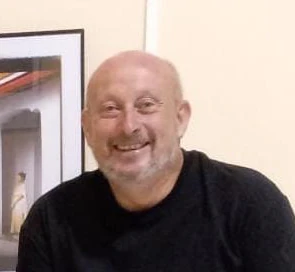
Antonio Pestana
Antonio Jesús Pestana Salido (Cabra, Córdoba, 1970) is an Andalusian ornithologist and nature photographer, specializing in birds and the interpretation of the Mediterranean landscape. From childhood, he has been involved in the study and observation of wildlife, and has spent decades exploring the natural areas of Andalusia, especially the Subbética region of Córdoba.
He is a nationally awarded nature photographer, winner of the first prize in the Carl Zeiss nature photography competition (4th edition) with a digiscoping image of a common crossbill, in addition to other recognitions in specialized bird photography competitions.
As a field ornithologist, he has participated in bird monitoring and conservation projects, especially for birds of prey and steppe birds, and has served as provincial coordinator in Córdoba for the Montagu's and hen harrier censuses. He is also president of the Abanto naturalist association, dedicated to the dissemination and conservation of natural heritage.
He is the author of several books on Iberian fauna and popular culture published by specialized publishers, including "Iberian birds in popular culture" and "Iberian diurnal birds of prey in popular culture," works that compile proverbs, beliefs and traditions related to birds in popular culture.
In addition to his work as an author and photographer, he develops outreach and environmental education activities, leading nature outings, giving bird photography workshops and collaborating with educational centers, associations and nature tourism projects.
She regularly works with schools, designing wildlife observation activities adapted for primary and secondary school students. She also collaborates with companies and associations on birdwatching tours, teaches nature photography courses, and participates in the design of natural areas.