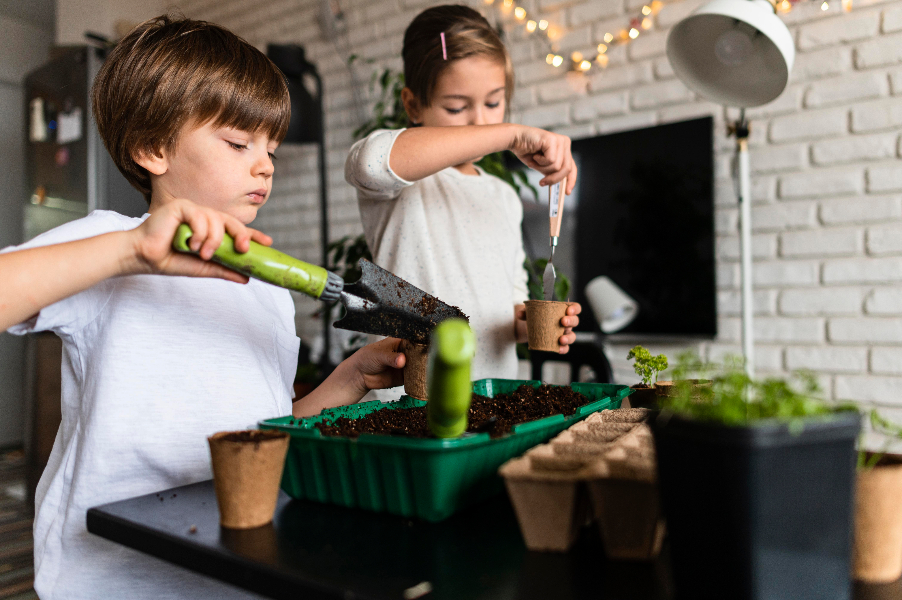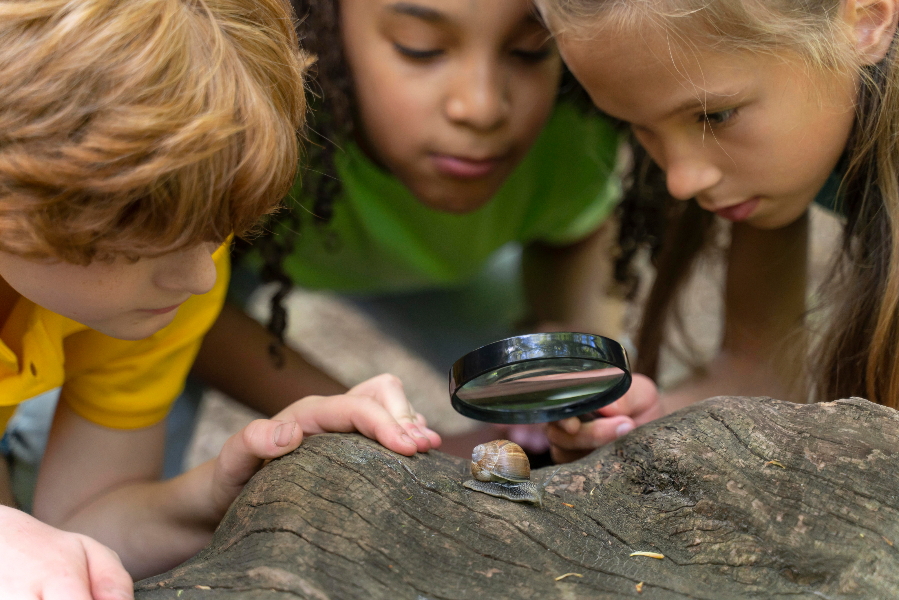


Christmas is usually filled with lights, rushing, shopping, and screens. But, if we think about it, it's also one of the best times of the year to curb, Go out into the countryside and give the children something that can't be wrapped: time together in nature. Instead of more hours in front of the mobile phone, tablet or TV, we can propose experiences that awaken their curiosity, their creativity and their capacity for wonder.
Outdoor activities not only help them to move more and sleep better, They also foster attention, self-esteem, empathy, and a connection with the environment. When a child touches the bark of a tree, listens to a robin, or discovers a footprint in the mud, they are not just playing: they are building a deep relationship with nature that will stay with them for life.
In this article I propose 7 nature activities to do at Christmas with children, without screens, Simple and adaptable to different ages, these ideas are designed for families and groups who want to experience a more peaceful, mindful holiday season, connected to nature, whether in the Sierra Subbética mountains or any nearby natural area. All you need is warm clothing, a desire to explore… and to put your screens on hold for a few hours.
Build a “wishing tree” with natural elements
This is a perfect activity to kick off the Christmas holidays by connecting with nature and working on emotional development. Children feel like they are participating in a small, symbolic ritual that blends creativity, nature, and personal expression.
Materials needed
- Dry leaves, small pinecones, twigs or fallen fruit that we find on the ground.
- Wool yarn, thin rope or biodegradable twine.
- Scissors (for adult use only).
- A main stick or branch that will act as a “tree”.
- Optional: small recycled cardboard cards.
Important: All natural material must be collected from the ground. Nothing should be uprooted from living plants.
How to do it step by step
- Choose a place together on the route or in the park Where to do the activity: an area of the pine forest, a clearing in the woods, or even your own garden.
- Look for fallen natural elements: leaves with pretty shapes, small pinecones, curious twigs, empty acorns…
- Create a small tree or natural mobile by driving the main branch into the ground or supporting it between stones.
- Write down your wishes (one per child or several) on recycled cards: they can be wishes for nature, for the family, for the new year or for the world.
- Tie each wish to a leaf, a twig, or a pinecone. with a woolen thread or thin string.
- Hang everything from the “tree” letting the children decide the height, order, and composition.
- Please take a moment of silence. so that each person can share their wish if they want.
Educational value
- Emotional expression: It helps children put words to what they feel.
- Creativity: transforms natural elements into symbols.
- Environmental respect: teaches how to collect without damaging.
- Family bond: a simple activity that strengthens the connection between adults and children.
Create animal footprints with plaster or clay
Winter is one of the best times of year to find wildlife tracks: the mud, dampness, and soft soil leave behind footprints that usually go unnoticed. Turning those tracks into little "treasures" is a very exciting activity for children, who feel like real trackers.
Materials needed
- A small jar of plaster powder o natural modeling clay.
- A glass or container for mixing with water.
- A spoon or stick for stirring.
- A plastic or cardboard ring (cut from a bottle or roll).
- A small spatula or card to lift the mold.
- Cloth bag for transporting the material.
Recommendation: If you don't want to use plaster, natural clay works very well and is more sustainable.
How to find footprints in winter
- Seeks wet trails, muddy areas, stream banks, animal crossings, or road edges.
- The most common footprints in the Subbética region:
- Fox
- Wild boar
- Rabbit
- Badger
- Birds such as blackbirds or robins
Invite the children to observe slowly: the activity is both searching and discovering.
How to make the mold step by step
- Locate a clear footprint and clear of stones or branches.
- Place the hoop around the footprint pressing lightly.
- Mix the plaster with water until it has the texture of liquid yogurt.
- Pour the mixture inside the ring, covering the footprint without disturbing the soil.
- Wait 20–30 minutes until it hardens (ideal while you continue exploring).
- Carefully lift the mold, using a card or spatula.
- Let it finish drying at home and write down the species and the date.
Educational value
- Develop observation and mindfulness.
- It encourages the scientific curiosity and interest in local wildlife.
- Teach children to interpret signs from the environment.
- Reinforce respect: There is no chasing, no bothering, only observation..
Short route to discover aromatic winter plants
Winter doesn't mean there's "nothing to see" in the mountains. On the contrary: many aromatic plants retain their scent, shape, and color year-round, making them a perfect activity for children: exploring, touching, smelling, and distinguishing.
In the Subbética and Sierra Horconera regions, it is common to find easily recognizable species that fit in very well with family activities.
Aromatic plants that are easy to identify in winter
- Rosemary: thin leaves and intense smell, perfect for children to recognize it immediately.
- Thyme: small, very aromatic, ideal for scent challenges.
- Curly lavender (if the area allows it): it provides a sweet aroma even in cold months.
- Broom and gorseThey are not aromatic, but they are interesting because of their shape and texture.
- Wild fennel: its stem retains an aniseed aroma even in winter.
Mini-challenge “Find and smell”
Get the children actively involved with a short game:
- “Find a plant that smells strong.”
- “Find a plant with leaves longer than your fingernail.”
- “Find a bush that is taller than you.”
- “Find something that smells like lemon/mint/pine.”
- “Find two plants that smell different.”
It's a fun way to learn without it being noticeable that they are learning.
How to do the route
- Choose a short route (1–2 km) close to the usual natural environment.
- Prepare a small guide or list of plants for the children to mark.
- Teach them play without startingSimply brush the leaves lightly.
- Assign small tasks:
- “You’re going as a scent explorer.”
- “You are in charge of finding different shades of green.”
Safety tips
- Avoid areas with active hunting.
- Bring water, even if it's cold.
- Do not touch unknown plants if you are not 100% sure of their identification.
Educational value
- She works sensory observation.
- It strengthens the bond with the immediate environment.
- Power the knowledge of local flora.
- Promotes respect for the natural environment.
Christmas wreath workshop using local materials
Creating Christmas wreaths with natural elements is a very enriching activity: it allows children to be creative, learn about local plants, and understand the importance of harvesting them responsibly. Plus, they end up with a decorative object they've made themselves, perfect to take home or give as a gift.
Materials needed
- Flexible twigs (from pruning or collected from the ground).
- Dry leaves, small pinecones, fallen fruit, bark or moss NOT collected from living rock.
- Jute twine, thin rope or wool.
- Scissors and a base ring (can be made with braided branches).
- Optional: recycled cardboard, burlap, small reused ribbons.
Golden rule: Never cut live branches in the forest. Only use pruning debris, fallen material, or recycled materials.
How to make the crown step by step
- Form the base ring with flexible twigs, braiding them together and securing them with string.
- Choose the decorative elements During a walk: pinecones, leaves with curious shapes, acorn shells…
- Sort the material by color or size to facilitate design (a very motivating activity for younger children).
- Decorate the hoop placing the elements in a balanced way, securing them with jute twine.
- Personalize the crown with a small message written on recycled cardboard: “Happy Nature”, “Merry Christmas”, “Connected with the forest”…
- Hang it up at home or in the classroom and explain how the materials were collected without damaging the environment.
Sustainable version
To promote environmental values, you can suggest:
- Wear reused tapes from other Christmases.
- Integrate handmade paper Made with recycled cardboard.
- Add aromatic natural elements like rosemary (only if picking is permitted).
Educational value
- It encourages the artistic creativity.
- Strengthens the environmental awareness and responsible harvesting.
- Develops the fine motor skills and planning.
- It promotes the creation of objects with emotional value.
Forest bathing for families (children's version)
Forest bathing is a simple practice that encourages slow walking, breathing, and connecting with the environment through the senses. Adapting it for children is a fantastic way to help them reduce stress, regulate emotions, and enjoy silence in a world full of stimuli. At Christmas, when everything is noisy and hectic, this activity becomes a gift.
How to explain it to children
Tell them they're going to do something very special:
“Today we are going to become peaceful explorers. We are going to walk slowly to listen to what the forest wants to tell us.”
That gets them into the swing of things.
Proposed route
- A short, flat trail.
- A stretch with pine trees, holm oaks or gall oaks.
- An area where you can hear wind, leaves, or birds.
- A final point where they can sit (stone, log, lookout point).
Step-by-step sensory activities
- Hear:
- “How many forest sounds can you hear?”
- “Which one is the furthest away?”
- “Which one is the softest?”
- Smell:
- Gently rub rosemary or thyme leaves (without plucking them).
- Smell the damp earth or the bark of a pine tree.
- Tap:
- Compare textures: rough bark, soft moss, cold rock.
- Step on dry leaves to feel the crunch.
- Look:
- Look for shades of green, brown, gray, or gold.
- Observe curious shapes: branches, old nests, shadows.
- Breathe:
- Take 3 deep breaths “as if you were blowing out a very large candle”.
- A magical moment of silence:
- Just stand still for a minute and listen.
- Children are often surprised by what they discover.
Closing of the activity
When you reach the final point:
- Ask them how they feel.
- Ask them to choose "something from the forest" that they want to remember.
- Take a small group photo (optional, mobile for adults only).
Educational value
- It favors the mindfulness.
- It reduces stress and improves emotional well-being.
- Enhance the sensory connection with the environment.
- Strengthen family bonds in a calm, screen-free environment.
Photo safari with mobile phone in airplane mode
A photo safari is one of the most fun activities for children because it combines exploration, creativity, and challenge. By placing the mobile phone in airplane mode, The main objective is achieved: to use technology just to create, not to get distracted.
It's a perfect activity for short walks on holidays, and it works equally well in the countryside, in a park, or even in the garden of the rural home where you are staying.
How to introduce it to children
Tell them something like:
“Today we are going to become nature photographers. We don’t need the internet, just our eyes wide open to find incredible things.”
With this, they're now in game mode.
What to look for: the safari challenge
Propose a list of items they should photograph, for example:
- Something very small, like a leaf, moss, or the pattern of bark.
- Something with a curious shape, like a rock, a root, or a bent branch.
- A color of winter, such as dark green, brown, or slate gray.
- An interesting shadow, under a tree or among stones.
- A texture, like the bark of a pine tree or the shine of a wet rock.
- A living being, like a bird, an insect, a fungus, or a snail.
- A wide landscape that catches their attention.
Tip: If you want to motivate them even more, you can turn it into a "photo bingo".
Mini-games to maintain attention
- Secret photo: Each child takes a picture without saying what it is, and the others have to guess what it is.
- Team photo: Two children are looking for the most similar photo possible (colors, shapes...).
- Photo in 30 seconds: find something interesting in half a minute of time.
Closing of the activity
Upon completion:
- Each child chooses their own favorite photo.
- Explain why you chose her.
- You can create a “Natural Christmas Album” saving the best ones.
- Print some out to hang at home or in the classroom.
Educational value
- Power the observation and curiosity.
- It enhances creativity and visual expression.
- It allows you to work with the natural environment in a playful and conscious way.
- Avoid unproductive use of screens, directing technology towards a creative purpose.
Construction of winter bird feeders
When the cold weather arrives, many small birds find less food available. Building homemade bird feeders not only helps these species but also allows children to observe them closely and better understand how they survive the winter. It's a simple, useful, and very exciting activity for them.
Simple and recycled materials
You can choose one of these types of feeders:
A) With toilet paper rolls:
- Empty rolls
- Peanut butter or honey (to help the seeds stick)
- Mixed seeds for birds
- Rope or wool
B) With a reused plastic bottle:
- Clean bottle
- Wooden sticks (skewer type)
- Cutter or scissors (adults only)
- hanging rope
C) With orange or grapefruit peels:
- Half an empty orange
- Seeds
- hanging rope
- A stick to make the optional stand
Advice: It is always better to opt for recycled or biodegradable materials.
How to assemble it step by step (example: cardboard roll)
- Spread the roll with a thin layer of peanut butter or honey.
It will serve as an adhesive for the seeds. - Roll the roll over a bowl of seeds until it is well covered.
- Pass a rope through the inside so I can hang it up.
- Hang it on a tree at mid-height, in a quiet place without too much wind.
- Watch together which birds visit it throughout the days.
Birds that may appear in winter in the Subbética region
- Robin
- Great tit
- Crested tit / common
- European greenfinch
- Goldfinch
- Blackcap warbler
- Common finch
The children really enjoy identifying who is coming for "breakfast".
Animal welfare standards
- Do not use bread or leftover food (it can be harmful).
- Keep the feeder clean and dry.
- Place it away from cat areas.
- Renew seeds every few days.
Educational value
- Understanding of natural cycle and winter survival.
- Development of the scientific observation.
- Promotion of respect for local wildlife.
- Promoting recycling and the responsible use of materials.
Safety tips and best practices in winter
While outdoor activities at Christmas are easy and suitable for almost all ages, winter requires some extra precautions. These tips will ensure a safe, comfortable, and environmentally friendly experience.
Appropriate clothing and equipment
- Layers, not thick garments: thermal t-shirt, sweatshirt and coat.
- Closed and non-slip footwear, especially if the ground is wet.
- Hat, gloves and buff to prevent heat loss.
- Lightweight backpack with water, nuts and tissues.
Reminder: Even if it's cold, Children also need to stay hydrated.
Safety during the route
- Choose short routes (1–2 km) and without steep inclines.
- Always inform a responsible adult of the route if you are traveling in a school group.
- Stop if any child is cold or gets more tired than usual.
- Avoid flooded areas or stream crossings if it has rained recently.
- Do not enter private property without permission.
Environmental respect standards
- Never pick branches, flowers or live plants.
- Collect only fallen items: pinecones, leaves, loose bark.
- Do not disturb the wildlife:
- Do not chase animals.
- Avoid shouting near shelter areas.
- Keep your distance from nests.
- Bring a bag to collect any own waste.
Climate and forecast
- Check the weather forecast before you go out.
- Avoid going out in strong winds, storms, or dense fog.
- Always carry a charged mobile phone (even if it's in airplane mode for children).
Organization with children
- Assign small roles:
- “Water Manager”
- “Responsible for looking at the path”
- “Ranger” to remind you of the rules
- Make short stops to prevent them from getting cold.
- Make sure everyone walks together: prevent them from scattering.
Conclusion
Enjoying nature at Christmas is much more than a family activity: it's a way to restore the true meaning of the season. While screens, shopping, and the hustle and bustle compete for our attention, the forest, the mountains, or a simple nearby trail remind us of something essential: being together, breathing and looking slowly.
Each of these activities—a wishing tree, a wreath made of branches, a footprint hunt, or a photo safari—is an opportunity for children to discover that the natural world is always there, waiting to be explored. And when we give them time to touch, smell, listen, and observe, we are giving them a gift more important than any toy: the possibility of building a deep connection with nature.
Hopefully, these suggestions will help you experience a more peaceful, mindful, and connected Christmas. And if you'd like these moments to become guided, educational, and meaningful experiences, in Explore Nature We'd be happy to accompany you.
Nature is the best place to find each other. And at Christmas, even more so.

Antonio Pestana
Antonio Jesús Pestana Salido (Cabra, Córdoba, 1970) is an Andalusian ornithologist and nature photographer, specializing in birds and the interpretation of the Mediterranean landscape. From childhood, he has been involved in the study and observation of wildlife, and has spent decades exploring the natural areas of Andalusia, especially the Subbética region of Córdoba.
He is a nationally awarded nature photographer, winner of the first prize in the Carl Zeiss nature photography competition (4th edition) with a digiscoping image of a common crossbill, in addition to other recognitions in specialized bird photography competitions.
As a field ornithologist, he has participated in bird monitoring and conservation projects, especially for birds of prey and steppe birds, and has served as provincial coordinator in Córdoba for the Montagu's and hen harrier censuses. He is also president of the Abanto naturalist association, dedicated to the dissemination and conservation of natural heritage.
He is the author of several books on Iberian fauna and popular culture published by specialized publishers, including "Iberian birds in popular culture" and "Iberian diurnal birds of prey in popular culture," works that compile proverbs, beliefs and traditions related to birds in popular culture.
In addition to his work as an author and photographer, he develops outreach and environmental education activities, leading nature outings, giving bird photography workshops and collaborating with educational centers, associations and nature tourism projects.
She regularly works with schools, designing wildlife observation activities adapted for primary and secondary school students. She also collaborates with companies and associations on birdwatching tours, teaches nature photography courses, and participates in the design of natural areas.