

Silence in the classroom can be a useful pedagogical tool when used to observe, reflect, and formulate responses, not as a form of punishment or control. When implemented effectively, it helps students improve their attention, regulate their participation, and better understand what they are learning.
In many school settings, silence has been associated with group control or discipline, when in reality it can be used as a pedagogical resource with a clear purpose. Well-managed moments of silence improve attention, encourage reflection, and help students understand before speaking.
This article addresses the value of silence in the classroom. Throughout the text, educational situations are analyzed in which observing, waiting, and learning are directly related, showing how silence can become a conscious and applicable teaching resource in the classroom.
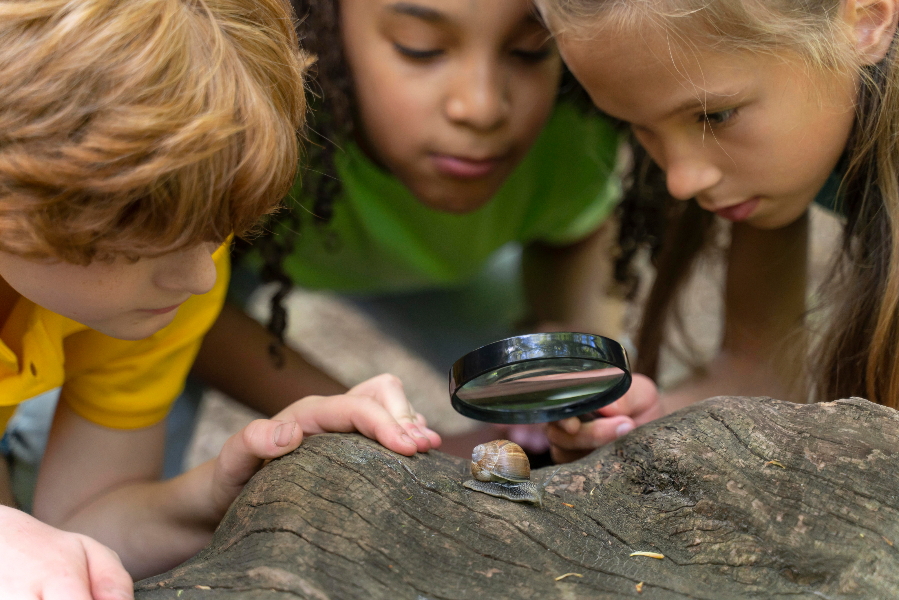
This approach can also be applied to nature observation and learning activities. At Explora Natura we design environmental education activities for educational centers where observation, waiting, and attention to the environment are part of the learning process.
The ideas that follow are based on real classroom situations and the conscious use of silence as an educational resource, not as a disciplinary rule.
Understanding the value of silence in education involves understanding how it influences attention, participation, and the quality of learning.
1. What do we understand by silence in the educational context?
In education, silence is not defined as the absence of noise, but as a pedagogical decision that introduces brief, intentional pauses into classroom activity. These pauses allow students to process information, observe attentively, and organize their thoughts before participating. Silence, in this sense, is an integral part of the learning process.
It is necessary to distinguish between educational silence and imposed silence. Pedagogical silence has a specific purpose and is used at certain moments in the teaching process, such as observation, reflection, or task completion. Imposed silence, on the other hand, is based on a logic of control and does not guarantee learning. This distinction is fundamental to understanding its educational value.
When silence is used for educational purposes, it transforms how students participate and argue. Contributions become more thoughtful, impulsive responses decrease, and the quality of reasoning improves. Silence doesn't eliminate participation; rather, it structures it and makes it more meaningful in the classroom.
This intentional use of silence is part of effective classroom management geared towards learning.
2. Why silence in the classroom improves school learning
Silence is key to learning because it introduces a necessary waiting period between receiving information and formulating a response. In the classroom, many cognitive processes Important skills, such as understanding, organizing ideas, or making decisions, require time and a reduction of constant stimuli and interruptions to develop with quality.
When students have moments of silence, they can focus their attention on a specific task without competing with external interruptions. This type of sustained attention is essential for understanding texts, solving problems, observing in detail, or reflecting on a question before answering. Without silence, these processes become fragmented.
Silence also plays a key role in regulating thought. It helps students review what they have understood, identify doubts, and reformulate ideas before expressing them. In this sense, silence does not slow down learning, but rather structures it and makes it more conscious. Without pauses in silence, these processes become fragmented and lose depth.
From an educational perspective, learning is not just about immediate participation, but about knowing when to observe, when to think, and when to intervene. Silence provides this balance and becomes a necessary element for deeper and more meaningful learning in school.
3. Observe: learn to look before intervening
Observation is a fundamental learning skill, but in the classroom, it only develops when conditions are created that make it possible. Silence serves a specific purpose here: it allows students to focus their attention on what is happening before responding or intervening. Without this prior time, observation is replaced by impulsive responses.
Learning to observe involves pausing and focusing attention on specific elements. In classroom situations, this translates to carefully examining a text before commenting on it, analyzing a problem before solving it, or listening to an explanation without immediately responding. Silence facilitates this first step in learning.
When students observe silently, impulsivity decreases and the quality of their understanding improves. Information is processed more deeply, and connections are established that don't emerge when participation is automatic. This process enhances the accuracy of responses and the quality of subsequent contributions.
In the school setting, observing before intervening doesn't limit participation, but rather enhances it. Silence creates a framework in which student participation is based on understanding rather than reaction, making observation an active part of learning.
4. Waiting: time as part of learning
In the classroom, much learning doesn't solidify at the moment of the response, but rather in the preceding time when students organize their thoughts. The waiting period provides the necessary space for information to be processed before it becomes a verbal response.
When waiting time is eliminated, the classroom rewards speed over understanding. Answers appear before thought has been organized, leading to superficial and repetitive responses. In contrast, allowing a few seconds of silence after a question changes the type of participation: more students participate, and the answers tend to be better constructed.
This waiting period improves the quality of responses and increases group participation. This mental work is not visible, but it is essential for solid learning. Without waiting, this process cannot take place.
Incorporating waiting as a regular part of classroom work teaches students that thinking is an integral part of schoolwork. Students learn that an immediate response is not expected, but rather a thoughtful one. In this way, time ceases to be an obstacle and becomes an educational resource within classroom management.
5. Learning: what is built from silence
Silence is not an end in itself, but a condition that allows certain learning to take root. When the classroom incorporates moments of silence with a clear purpose, students have the necessary time to understand, connect ideas, and construct their own responses based on what they have learned.
Learning through silence means that students stop depending on the immediate intervention of the teacher or other classmates. In these moments, thought is organized autonomously, information received is reviewed, and decisions are made about how to use it. This process fosters deeper understanding, reduces rote repetition, and improves personal elaboration.
Silence also contributes to more stable learning. Ideas developed after a period of reflection are better remembered and applied more accurately in subsequent situations. It's not about memorizing content, but about understanding it well enough to use it judiciously.
In teaching practice, learning through silence means recognizing that knowledge is not built solely through constant participation, but also through individual reflection. Silence creates a space where students can think, understand, and make sense of what they have learned before expressing it.
6. How to work on silence in the classroom without imposing it
Silence in the classroom only works when it's integrated into the activity, not when it's imposed as a prerequisite. Reading a text, solving a problem, observing an image, or preparing an answer all require silence for a specific reason. When students understand that silence helps them perform the task better, it ceases to be perceived as an external imposition. This use of silence is part of a conscious classroom management approach focused on learning.
An effective practice is to limit the silence in terms of time and the specific task being performed.
Explicitly indicating that a brief period of reflection will be taken before responding makes silence a recognizable part of schoolwork. This anticipation reduces tension in the classroom and helps maintain attention without the need for constant reminders.
The way teachers manage their own intervention is crucial. When teachers wait before correcting, don't immediately fill in answers, and respect students' reflection time, they demonstrate that thinking is an integral part of the learning process. This modeling has a greater impact than any verbal rule about silence.
Silence becomes established when it is used regularly and predictably. Introducing pauses for reflection at similar times, such as before answering or at the beginning of a task, allows students to anticipate these periods and use them naturally. In this way, silence is integrated into the classroom dynamic without generating resistance.
Working with silence without imposing it ultimately means always linking it to a specific cognitive action. When silence has a clear function within the activity, it ceases to be associated with control and becomes part of the normal functioning of the classroom.
7. Common mistakes when working with silence in education
One of the most frequent mistakes is confusing educational silence with a tool for controlling the group. When silence is used solely to maintain order or reduce noise, it loses its pedagogical value, and students perceive it as an imposition unrelated to learning. In these cases, silence does not foster reflection or understanding, but rather generates resistance or disengagement.
Another common mistake is introducing silence into the activity without a clear purpose. Asking for silence without explaining its function or when it's necessary leads to students not understanding its purpose. Educational silence only makes sense when it's linked to a specific task, such as thinking of an answer, observing, or understanding an explanation.
It is also a mistake to excessively prolong periods of silence or to use them in a way that is not appropriate for the group. Silences that are too long or poorly placed can lead to a loss of attention or discomfort. Pedagogical silence should always be linked to a clear cognitive activity.
Another common mistake is for teachers to disregard the periods of silence they themselves suggest. Interrupting quickly, finishing answers, or anticipating students' thoughts conveys the opposite of the intended message. Consistency between what is asked of students and what is actually done is key for silence to have educational value.
Finally, treating silence as an isolated strategy limits its effectiveness. When it is not regularly integrated into the classroom dynamic, silence is perceived as exceptional or artificial. Its true value emerges when it is a regular part of the learning process and is used consistently over time.
8. Conclusion
The value of silence in education lies not in the absence of action, but in its capacity to improve the quality of learning. When consciously integrated into the classroom dynamic, it allows for more attentive observation, reflection before intervening, and the construction of more solid learning experiences.
Throughout this article, we have shown how silence, associated with observation, waiting, and reflection, improves comprehension, organizes participation, and fosters student autonomy. It is not about imposing it as a rule, but rather using it as part of the educational process, always linked to a specific task.
When silence is structurally integrated into the classroom, it ceases to be an occasional resource and becomes a stable pedagogical tool. Its pedagogical value lies in its intentional use within classroom management, as an active part of the teaching and learning process.
Integrated with intention and coherence, pedagogical silence becomes an effective tool to improve attention, reflection, and school learning.
Frequently asked questions about silence in education
Silence enhances classroom learning when used as a time for observation, reflection, and formulating responses. It's not about imposing it as a control measure, but rather integrating it as a phase of the learning process that fosters understanding and organized thinking.
No. Educational silence is used for a pedagogical purpose and is linked to a specific task. Imposed silence seeks to control the group and does not guarantee learning.
Silence is especially useful before answering a question, when starting a task, during observation, and after an explanation. At these times, it fosters understanding and reflective thinking.
No. When done correctly, silence improves the quality of participation, as it allows for more thoughtful, better-argued interventions, and participation from a greater number of students.
Yes. Silence can be used at all educational stages if it is adapted to the students' level and used with a clear intention within the learning process.

Antonio Pestana
Antonio Jesús Pestana Salido (Cabra, Córdoba, 1970) is an Andalusian ornithologist and nature photographer, specializing in birds and the interpretation of the Mediterranean landscape. From childhood, he has been involved in the study and observation of wildlife, and has spent decades exploring the natural areas of Andalusia, especially the Subbética region of Córdoba.
He is a nationally awarded nature photographer, winner of the first prize in the Carl Zeiss nature photography competition (4th edition) with a digiscoping image of a common crossbill, in addition to other recognitions in specialized bird photography competitions.
As a field ornithologist, he has participated in bird monitoring and conservation projects, especially for birds of prey and steppe birds, and has served as provincial coordinator in Córdoba for the Montagu's and hen harrier censuses. He is also president of the Abanto naturalist association, dedicated to the dissemination and conservation of natural heritage.
He is the author of several books on Iberian fauna and popular culture published by specialized publishers, including "Iberian birds in popular culture" and "Iberian diurnal birds of prey in popular culture," works that compile proverbs, beliefs and traditions related to birds in popular culture.
In addition to his work as an author and photographer, he develops outreach and environmental education activities, leading nature outings, giving bird photography workshops and collaborating with educational centers, associations and nature tourism projects.
She regularly works with schools, designing wildlife observation activities adapted for primary and secondary school students. She also collaborates with companies and associations on birdwatching tours, teaches nature photography courses, and participates in the design of natural areas.