

1. Birdwatching in summer: a simple activity to enjoy as a family
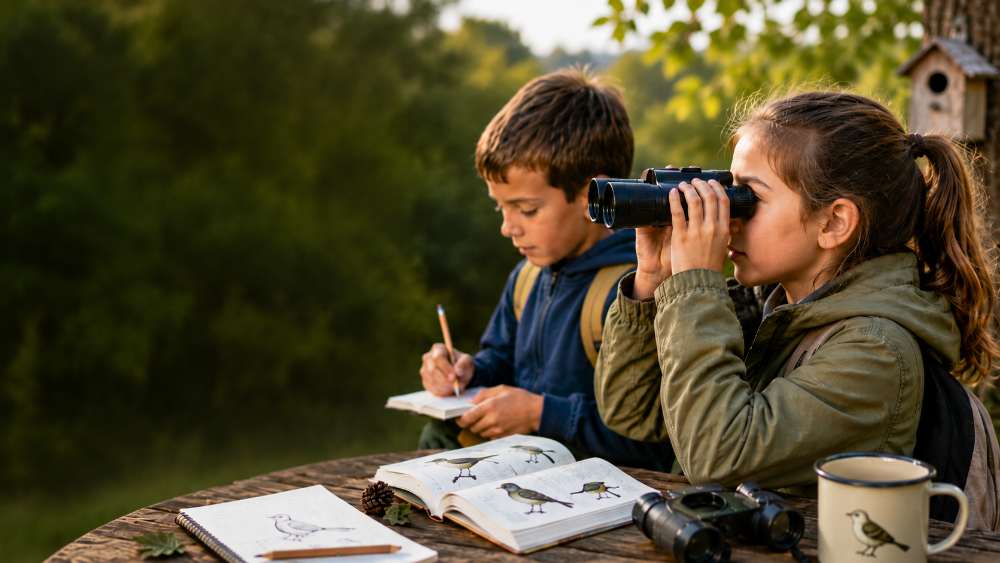
Birdwatching in summer is one of those simple activities that can transform an ordinary walk into a small family adventure. You don't need to be an expert, know many names, or carry any special equipment. Often, simply walking a little slower, looking up at the trees, rooftops, or sky, and paying attention to the sounds and movements around you is enough. In this article, you'll find 10 birds that are easy to spot in Spain during the summer, making any outing in nature richer, more entertaining, and also more educational.
During the holidays, children spend more time outdoors. A walk in the countryside, a visit to a village, an afternoon in a park, a hike along a river, or an outing to a natural area can be great opportunities to start noticing birds. Some are very common and are near us almost every day, although they often go unnoticed.
Birdwatching also has a very interesting educational value. It helps children develop attention, patience, and curiosity. It encourages them to ask questions, compare colors and sizes, listen more calmly, and discover that nature isn't always far away: sometimes it's on a wire, in a square, in a garden, in an olive grove, or flying over a street.
Furthermore, it's an activity that's well-suited to families, schools, camps, and children's groups. It can be approached as a game, a small investigation, or simply a different way to enjoy summer outdoors. The important thing isn't to identify every species from day one, but to learn to see things with fresh eyes. And although this article focuses on summer, spring also offers many opportunities for birdwatching with children, especially due to the activity of many species during the breeding season.
In this article, we'll explore 10 birds that are easy to spot in Spain during the summer with children. These are common, easily recognizable species, perfect for introducing children to birdwatching in a simple, respectful, and fun way.
2. Why summer is a good time to get started in birdwatching
Summer is an especially good time to start birdwatching with children. The days are longer, there's usually more time for walks, and many families take advantage of their holidays to go out into the countryside, visit towns, go to rivers, take easy hikes, or spend more time in parks and open spaces.
One of the advantages of summer is that you don't need to organize a big trip to enjoy this activity. Sometimes, birds appear in very ordinary places: a sparrow on a terrace, a swallow flying near a house, a swift crossing the sky at dusk, a stork in a bell tower, or a hoopoe walking along a country lane.
It's also a great time because many birds are very active during the early morning and late afternoon. These times, besides being more pleasant due to the temperature, allow you to hear their songs, observe their flights, watch them forage, or discover how they move through the landscape.
For children, summer offers a natural opportunity to learn without feeling like they're in a classroom. Birdwatching can be part of a family outing, a camping activity, a school trip, or a quiet afternoon outdoors. There's no need to memorize names or identify every species; simply start noticing what previously went unnoticed.
However, it's important to keep the heat in mind. To enjoy birdwatching in summer, it's best to avoid the hottest hours of the day, bring water, look for shady areas, and adjust your pace to the group. This will make the experience more comfortable, safe, and enjoyable for everyone.
Getting started with birdwatching during the summer can be a simple way to introduce children to nature. It helps them look more attentively, listen more calmly, and discover that even familiar places can be teeming with life.
3. Basic tips for birdwatching with children in summer
Birdwatching with children doesn't require extensive preparation, but it's helpful to keep in mind a few simple recommendations to ensure a comfortable, safe, and respectful experience. The goal isn't to turn the outing into an identification lesson, but rather to enjoy the surroundings and learn gradually.
The first thing is to choose the right time of day. In summer, the early morning and late afternoon are usually the best times for birdwatching. It's cooler, the walk is more pleasant, and many species are more active. In contrast, the middle of the day can be uncomfortable for children and also less interesting for birdwatching.
It's also important to walk slowly and take short breaks. Many birds are detected more by sound or quick movement than by being clearly seen from the start. Stopping for a few minutes by a tree, a fountain, a shady spot, or a quiet path can help you discover birds that would go unnoticed if you were walking quickly.
Binoculars can be very useful, but they're not essential. If you have them, it's best if they're lightweight and easy to handle. Otherwise, you can start simply by observing nearby, visible birds: sparrows, blackbirds, storks, swallows, egrets, or swifts. The important thing at the beginning is to spark curiosity, not to achieve perfect identification.
It's a good idea to bring water, a hat, sunscreen, and comfortable clothing. On a family outing, school trip, or camping trip, the well-being of the group is essential. If the children are tired, hot, or bored, it will be harder for them to stay focused. That's why it's best to approach observation as a short, flexible activity adapted to the pace of each age group.
Another important tip is to always keep your distance. Birds should be observed without chasing them, without approaching nests, and without trying to touch chicks or young birds. If you find a young bird on the ground, it's best not to pick it up unless there is an obvious danger, such as a nearby road or the immediate presence of a domestic predator. Often, the adults are still nearby even if we don't see them.
Finally, it helps a lot to turn observation into a small challenge: find three different birds, listen to a song, locate a nest from afar, find a bird perched on a wire, or draw the species that caught their attention the most. This way, the children participate actively, and the outing becomes a more fun and memorable experience.
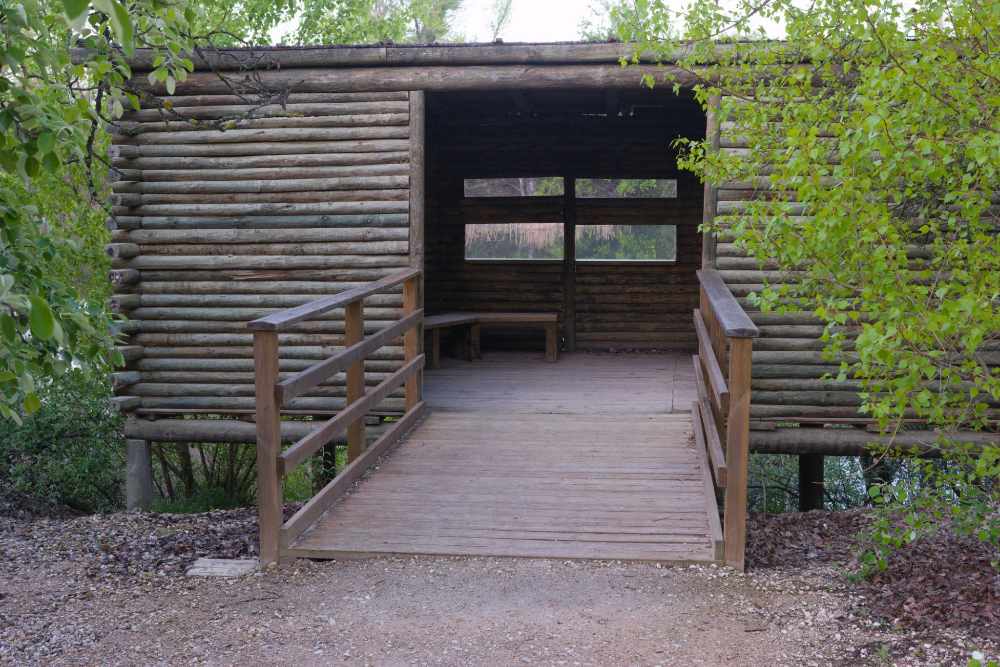
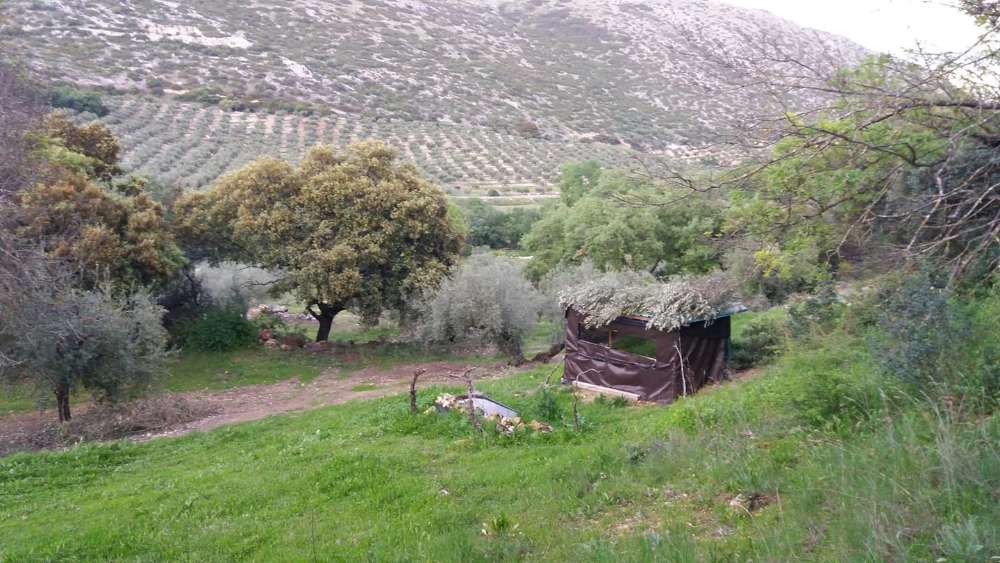
In school settings, a Educational trip to a photographic hide It can be a very interesting way to observe birds while maintaining a safe distance.
With some basic guidelines and a calm attitude, birdwatching in summer can be a simple, educational and very enjoyable activity to share with family or in a group.
4. 10 birds easy to see in summer in Spain with children
Spain boasts a wide variety of birds, but when introducing children to birdwatching, it's best to start with common, easily recognizable species. The goal isn't to search for rare birds or create a comprehensive list, but rather to learn to observe gradually: paying attention to their size, colors, flight patterns, where they appear, and the sounds they make.
The following birds can be seen in many places in Spain during the summer. Some are common in towns and cities; others appear in fields, olive groves, open areas, riverbanks, or natural spaces. All of them can help turn a family outing, school trip, or camping trip into a small experience of discovery.
4.1. House Sparrow: the closest neighbor
The house sparrow is one of the most familiar and ubiquitous birds. It can be seen in towns, cities, parks, terraces, squares, agricultural areas, and around houses. Precisely for this reason, it's an ideal species for introducing children to birdwatching: you don't have to go far to find it.
Although we're very used to seeing them, sparrows can be quite fascinating if we take the time to observe them carefully. Children can notice how they move along the ground, how they search for food, how they gather in small groups, or how they perch on rooftops, wires, and bushes. They can also compare the appearance of males and females, as they are not exactly the same.
The house sparrow helps convey an important idea: nature isn't always in faraway or spectacular places. Sometimes it begins right next door, in the birds we see every day and barely notice.
4.2. Common Swallow: rapid flights near houses and fields
The barn swallow is one of the birds most associated with good weather. During spring and summer, it's easy to see them flying near houses, quiet streets, fields, farmhouses, stables, and open areas. Their quick and agile flight often fascinates children.
An easy way to recognize it is by observing its silhouette in flight, with long, pointed wings and a forked tail. It often flies near buildings, where it may build its mud nests. It is important to always observe them from a distance and not disturb them, especially during the breeding season.
With children, the swallow provides an opportunity to talk about migratory journeys, nest building, and the importance of insects in the diet of many birds. It also helps them understand that some animals live very close to people and are part of the landscape of towns and rural areas.
4.3. Common Swift: the acrobat of the sky
The common swift is very easy to spot in summer if you look up, especially in towns and cities. It is often seen flying at high speed over rooftops, squares, and streets, frequently in groups and emitting characteristic cries.
For children, the swift can be a very fun species to watch because it's almost always in motion. Unlike other birds, the swift spends much of its life in the air. Its fast flight, its turns, and the way it crosses the sky make it a true acrobat.
A simple activity is to stop at sunset and observe the sky for a few minutes. Children can try to follow the birds' movements with their eyes, count how many they see flying by, or compare them to swallows. This way, they learn to differentiate birds by the way they fly, not just by their colors.
4.4. Common blackbird: easy to see in gardens, parks and orchards
The common blackbird is another species well-suited for beginners in birdwatching. It can be found in gardens, parks, orchards, wooded areas, quiet patios, and nearby green spaces. It is often seen walking or hopping along the ground, searching for food among the grass or leaves.
The adult male is easily recognizable by its black plumage and orange beak. The female, on the other hand, has more subdued, brownish tones. This difference can help children learn that within the same species, not all individuals always look the same.
The blackbird is also interesting for its song. At certain times of day, especially at dawn or dusk, it can be heard from trees, rooftops, or other high places. Observing and listening to it helps introduce children to a basic concept: to discover birds, you not only have to look, you also have to learn to listen.
4.5. European Bee-eater: colorful, migratory and very eye-catching
The European bee-eater is one of the most beautiful birds you can see in Spain during the summer. Its vibrant colors, with shades of green, blue, yellow, and red, make it a real eye-catcher when you get a good look at it. It can be a particularly special species for children, as it almost looks like a tropical bird.
It is usually found in open areas, fields, embankments, rural roads, riverbanks, and warm landscapes. It often perches on wires, dry branches, or small vantage points from which it observes its surroundings before swooping down to catch insects in flight. If you listen carefully, you can also detect it by its distinctive call when flying in groups.
The bee-eater is a very interesting species for explaining the relationship between birds and insects to children. As its name suggests, it can feed on bees, wasps, and other flying insects, although it's always best to explain this simply and without creating aversion to any animal. Each species plays a role in the natural balance.
It also provides an opportunity to discuss migratory birds, as it spends the summer in Spain and then undertakes long journeys to warmer climates. Observing a bee-eater can be a good way to explain that many birds don't always live in the same place, but rather move around depending on the time of year, the weather, and the availability of food.
With children, it's best to observe it from a distance, without approaching potential breeding areas or disturbing any perched groups. Its vibrant colors, flight patterns, and behavior make it one of the most appealing species for beginners in birdwatching during the summer.
4.6. Hoopoe: an unforgettable crest
The hoopoe is one of those birds that children often remember easily when they see it for the first time. Its crest, its long, curved beak, its orange tones, and its wings with black and white stripes make it a very recognizable species.
It can be observed in open areas, rural roads, olive groves, pastures, cultivated fields, large parks, and areas near towns. It is often seen walking on the ground while foraging, probing the soil or grass with its beak.
Its flight is also very distinctive, with an undulating motion that seems to rise and fall gently. Children can enjoy trying to recognize it not only by its colors but also by its unique way of moving.
The hoopoe allows us to talk about insectivorous birds, how some species look for food on the ground, and the importance of conserving open areas, old trees, walls, fields, and rural landscapes where many birds find refuge and food.
4.7. Goldfinch: small, colorful and very active
The goldfinch is a small, cheerful bird, very striking because of its colors. Its reddish face, the black and white markings on its head, and the yellow stripes on its wings make it an easy species to recognize when observed with a little attention.
It is commonly seen in fields, field edges, parks, orchards, paths, areas with thistles, and open spaces with low vegetation. It often moves in small groups and may be found perched on nearby plants, bushes, wires, or trees.
To observe it with children, a good idea is to focus on its colors and behavior. It's a restless bird that moves quickly and often searches for seeds on wild plants. This allows for a simple explanation of the relationship between birds and plants.
The goldfinch also helps to show that not all striking birds are large. Some of the most beautiful species we can see in summer are small and inconspicuous, but they are very much present if we learn to look carefully.
4.8. Common kestrel: a small, easily recognizable bird of prey
The common kestrel is a small bird of prey that is quite common in fields, agricultural areas, farmhouses, towers, posts, secondary roads, and open spaces. Children can find it very exciting to discover that there are also birds of prey that are easy to spot near towns and everyday landscapes.
One of its most characteristic hunting methods is hovering in the air, rapidly beating its wings while observing the ground. This behavior, known as hovering, is very conspicuous and makes it easy to identify, even from a distance.
It can also be seen perched on posts, wires, isolated trees, or rural buildings. From there, it surveys the surrounding area in search of small animals, insects, or reptiles. Observing it helps explain the importance of birds of prey in the natural balance.
With children, the kestrel is a good species to teach them that not all birds of prey are large eagles. Some are small, approachable, and very useful for agricultural ecosystems because they are part of the natural food chain.
4.9. Cattle egret: white, close and linked to the countryside
The cattle egret is a medium-sized, white bird, very visible in fields, meadows, livestock areas, cultivated fields, riverbanks, and open spaces. In many parts of Spain, it is easy to see it walking near livestock or following tractors in search of food.
For children, it's usually an easy species to spot because its white color stands out against the landscape. Furthermore, it often appears in groups, making it easy to see from paths, rural roads, or open areas without having to get too close.
Its name helps explain its behavior. It is traditionally associated with livestock because it takes advantage of the insects and small animals that move when cows, sheep, or other animals walk through the fields. It is a good example of how some birds interact with other animals and with human activities.
The cattle egret also illustrates that birds don't only live in forests or mountains. Many species find food and shelter in agricultural landscapes, meadows, pastures, and nearby rural areas.
4.10. White stork: large, conspicuous and very familiar
The white stork is one of the best-known and easiest-to-recognize birds in Spain. Its large size, black and white plumage, long red beak, and enormous nests make it an ideal species to observe with children.
It can be seen in bell towers, towers, poles, tall buildings, fields, meadows, riverbanks, and wetlands. In many towns, it is a common sight, especially when it occupies nests visible from nearby squares or streets.
With children, the white stork offers ample opportunity to discuss many topics: nests, raising young, migration, the coexistence of birds and people, and the importance of conserving wetlands and fields where they can find food. It's also easy to observe its slow and elegant flight, with its neck and legs outstretched.
A simple activity involves looking for a nest from a safe distance and observing what's happening around it: whether adults are entering or leaving, whether sounds can be heard, whether movements are seen, or whether the storks are flying towards feeding areas. This should always be done without disturbing the nest or getting too close.
Because of its size, its presence in towns and its ease of identification, the white stork is one of the best birds to awaken children's curiosity for bird watching in summer.
5. Where to look for birds in summer depending on the environment
A simple way to start birdwatching with children is to pay attention to the type of place you're in. You don't need to travel great distances: many common species appear in very close proximity, from an urban park to a rural road or a livestock area.
In parks and cities, it's easy to start with familiar birds like the house sparrow, the common swift, or the blackbird. Sparrows tend to frequent squares, terraces, gardens, and areas with people. Swifts are best observed by looking up at the sky, especially at dusk, when they fly quickly over rooftops and streets. Blackbirds, on the other hand, are usually found in gardens, wooded areas, or lawns, walking on the ground in search of food.
In villages, rural roads, and open fields, pay attention to rooftops, power lines, walls, olive groves, crops, and areas with scattered trees. Barn swallows, hoopoes, and common kestrels are frequently seen in these environments. Swallows often fly near houses and rural buildings; hoopoes are frequently spotted walking on the ground; and kestrels may be seen perched on posts or hovering in the air while foraging for food.
In wetlands, riverbanks, meadows, and livestock areas, birds are often more visible because many move about in open spaces. Cattle egrets can be seen near livestock, crops, or tractors, while white storks are easy to spot in nests, bell towers, posts, or fields near wetlands. These are large or striking species, ideal for observing with children from a distance.
It's also worth looking at the field edges, areas with thistles, vegetable gardens, and low vegetation, where small, colorful birds like the goldfinch might appear. In these places, it's best to walk slowly, pause, and observe the bushes, dead plants, wires, and nearby branches.
Thinking about the surroundings makes observation easier and more enjoyable. Children not only learn to recognize birds, but also to connect them with the places where they live, feed, or rest.
6. How to turn bird watching into a family game
Birdwatching with children works much better when it's presented as a game, not a chore. It's not about learning difficult names or identifying every species on the first outing, but about sparking curiosity and making each trip a small challenge.
A simple idea is to create a list of birds seen during the walk. It can be a very basic list, with familiar names or even descriptions at the beginning: "small brown bird," "black bird with an orange beak," "large white bird," "bird that flies very fast." Later, with the help of a guide, a fact sheet, or an adult, you can try to identify some of them.
You can also play games that involve observing colors, shapes, and behaviors. Children can notice if the bird is big or small, if it walks on the ground or perches on a wire, if it flies alone or in a group, if it has a long beak, a forked tail, or any striking colors. This type of observation helps children learn without having to memorize.
Another very useful suggestion is to listen before you look. For a minute, the group can remain silent and try to locate bird sounds. Afterward, each child can point to where they think the song is coming from, whether it sounds close or far away, and whether it is repetitive, soft, loud, or fast. It's a simple way to train attention and discover that many birds are first detected by hearing.
Drawing can also be a valuable tool. When they return home, to the classroom, or to camp, children can draw the bird they liked best, even if it's not perfect. The important thing is to remember some details: the color, the size, the shape of the beak, where it was, or how it moved. Little by little, these drawings can become part of a small field notebook.
To make it more fun, you can propose small family challenges: find three different birds on a walk, see a stork in its nest, listen for a blackbird at dusk, locate a swallow in flight, or discover a bird perched on a wire. Each challenge should be simple, realistic, and respectful of the animals.
Turning birdwatching into a game helps children participate actively. This way, the outing isn't experienced as a long lecture, but as a small adventure where looking, listening, drawing, and sharing discoveries are all part of the fun. Furthermore, if you want to bring this experience into the classroom, it can also be complemented with... Bird activities for elementary school adapted to different ages.
7. Common mistakes when birdwatching in summer with children
Birdwatching in summer with children should be a pleasant, peaceful, and respectful experience. However, there are some common mistakes that can make the outing uncomfortable for the group or harmful to the birds. With a few simple guidelines, it's easy to avoid them.
One of the most common mistakes is going out during the hottest hours of the day. In summer, midday and the early afternoon are usually the least recommended times. The heat can be very tiring for children, and many birds reduce their visible activity. It's better to choose the early morning or late afternoon, when the temperature is milder.
It's also best to avoid getting too close to nests, chicks, or young birds. While it might seem like a good opportunity to see them up close, this proximity can cause stress or make the adults fly away. If you find a chick on the ground, don't pick it up impulsively. Many young birds leave the nest before they can fly well and continue to be fed by their parents nearby.
Another common mistake is making too much noise or running towards the birds to get a better look. Sudden movements often frighten them and make the observation very short-lived. It's better to teach children to approach calmly, keep a safe distance, and enjoy the moment without chasing the animal.
It can also be frustrating to want to identify everything from day one. At first, it's normal to see a bird and not know exactly what it is. That's perfectly fine. You can describe its size, color, flight pattern, or where it was. Gradually, these observations help you learn and recognize species with more confidence.
Finally, it's important not to feed birds indiscriminately. While it might seem like a kind gesture, offering bread, food scraps, or other food can be harmful to them and disrupt their natural behavior. The best way to help birds is to respect their space, care for their environment, and not leave any trash behind.
Avoiding these mistakes makes birdwatching safer, more educational, and more respectful. Children learn that enjoying nature isn't about constantly interfering, but about observing, listening, and understanding without disturbing it.
8. Conclusion: learning to see nature with different eyes
Birdwatching in summer with children is a simple way to connect with nature without much preparation. A walk in the countryside, a visit to a village, an afternoon in a park, or a hike along a riverbank can become a small discovery experience if we learn to look more closely.
Birds are much closer than we sometimes think. A sparrow on a terrace, a swallow by a house, a swift crossing the sky, a hoopoe on a path, or a stork on a bell tower can spark questions, conversations, and shared moments with the family.
The most important thing isn't recognizing every species or knowing all their names from day one. What's truly valuable is learning to observe calmly, listen to the sounds of the environment, respect personal space, and enjoy the process. Every bird seen, every song heard, or every behavior discovered can become a small lesson in the great outdoors.
For families, teachers, camps, or children's groups, birdwatching can be an educational, peaceful, and highly rewarding activity. It helps develop curiosity, patience, attention, and respect for living beings, while also allowing for a more mindful enjoyment of summer.
Ultimately, observing easily spotted birds in Spain during the summer with children is an invitation to see the world with fresh eyes. Sometimes, all it takes is looking up, walking slowly, and letting nature surprise us.