


Why is spring the best time for birdwatching?
Spring is one of the best times for birdwatching with children because the environment is full of easily identifiable signs. You don't need to know much about birds or organize a big outing: often, simply spending a few minutes in the yard, a nearby park, or by a hedge and paying attention is enough.
At this time of year, birds become more noticeable. They sing more frequently, move around in search of food, carry nesting materials, and appear in places where they previously went unnoticed. For children, this makes all the difference: they aren't just waiting to see what happens, but instead encountering movement, sounds, and small scenes they can observe firsthand.
Spring also helps because everything changes so quickly. There are more insects, flowers bloom, trees burst into leaf, and the sounds of the environment become more varied. So, birdwatching isn't just about identifying a bird, but about discovering what's happening around it.
The key is this: not to look for a long list of species, but to learn to observe, listen and ask simple questions.
In this guide you will see how to approach bird watching with children in spring step by step, with easy-to-apply suggestions both in the classroom and on an outing to the local environment.
Quick summary for birdwatching with children
Birdwatching with children is easier than it seems. You don't need to know every species or plan a complicated outing. The important thing is to choose the right time, set a simple goal, and leave time to observe.
- Start in a nearby location: The schoolyard, a park, a school garden or a quiet green area are sufficient for a first observation.
- Leave during peak activity times: Early in the morning or late in the afternoon there is usually more activity, more singing and more opportunities to see birds.
- Look before you name things: First, it's a good idea to look at what they are doing, where they are, how they move, or whether they are alone or in a group.
- Propose a simple challenge: Find three different birds, listen to two songs, find a bird in flight, or draw the one that catches your eye the most.
- Use basic materials: A notebook, a pencil and, if available, a simple pair of binoculars are enough to get started.
The activity works best when children feel they are discovering something for themselves, not when they have to guess names or complete a perfect list.
What birds can you see in spring with children?
In spring, many birds can be observed in everyday settings: patios, parks, gardens, school gardens, or nearby paths. To start with children, it's best to choose common species that are easy to spot and have clear behaviors.
Urban birds: the easiest to start with
They are a good first reference point because they are usually nearby, easily visible, and allow observation without long waits.
- House sparrow: It usually moves in small groups, looks for crumbs or seeds, and goes in and out of hedges, roofs, or areas with bushes.
- Pigeons and doves: In urban and landscaped environments, several easily comparable species can be observed. The rock dove, or domestic pigeon, is the most common in squares, courtyards, and buildings; the larger wood pigeon is frequently seen in parks and wooded areas; and the more slender collared dove is often seen on wires, rooftops, and in gardens. These birds are very useful for working with children because they allow for comparisons of size, flight patterns, gait, and group behavior.
- Blackbird: It is usually seen on the ground, walking or hopping. The black male with an orange beak is quite recognizable.
- Swallows, martins and swifts: In spring, it's also worth observing the birds that fly over streets, patios, and fields in search of insects. The barn swallow is usually recognized by its long, forked tail; the common house martin is more compact and is often seen near buildings where it builds its mud nests; and the common swift, although not a swallow, is often mistaken for one because it also flies fast and high. This is a good opportunity to teach children that not all the birds we see crossing the sky are the same: some glide, others make quick turns, and others spend almost all their time in flight.
These birds are ideal for beginners because they allow children to focus on what's important: observing carefully and describing what they see.
Birds of parks and gardens
In parks, gardens, and areas with more vegetation, a greater variety of birds is usually found. Here, observation becomes richer because colors, songs, and movements among branches all come into play.
- Carbonero: Small, active and easy to spot because of its contrasting colors and quick movements among trees.
- Tit: It is also small and very restless. It often attracts attention because of its bluish and yellowish tones.
- Robin: Recognizable by its orange breast. It often appears near hedges, paths, or quiet areas of the garden.
- Magpie: Larger and more conspicuous. Its black and white plumage and curious behavior often quickly capture children's attention.
- Bunting: It can be observed on trees, shrubs, or in areas where seeds are present. Its greenish color aids in identification by simple features.
In these kinds of spaces, children begin to refine their observation skills: they compare sizes, listen to different songs, and discover that not all birds behave the same way.
Birds of open fields or nearby natural environment
If the outing extends to a rural road, a greenway, an agricultural area, or a more open space, different species may appear. They won't always be seen up close, but they do allow for observation of more varied flights, silhouettes, and behaviors.
- Washerwoman: It is usually seen walking on the ground, often near paths, wetlands, or open spaces. Its wagging tail is an easy clue to recognizing it.
- Hoopoe: It is very striking because of its crest and undulating flight. When it appears, it often becomes one of the great discoveries of the outing.
- Kestrel: It can be observed hovering in the air, flapping its wings, while searching for prey. It's a good species to talk about birds of prey without overcomplicating things.
- Lark: harder to see up close, but interesting for its song and its presence in open areas.
- Partridge: It can appear in fields, along roadsides, or in cultivated areas. It is useful for observing how some birds move along the ground and camouflage themselves.
You don't need to see all these species. The important thing is to gradually expand your surroundings and compare which birds appear in each location.
How to bring it up with children
With children, it's best to avoid turning the activity into a name-testing exercise. Identifying species is fine, but it shouldn't be the main focus of the outing.
It works best to work with simple questions:
- Is it a large, medium, or small bird?
- What color do you see first?
- Is it on the ground, on a branch, on a roof, or flying?
- Does she move alone or in a group?
- Is it singing, looking for food, jumping, walking, or flying?
This approach allows everyone to participate, even those who don't know any species. First, they learn to describe what they see; the names will come later, much more naturally.
Where to go birdwatching with children
To go birdwatching with children, you don't need to look for a spectacular natural setting. In fact, nearby, safe, and familiar places often work best because they allow you to repeat the activity and compare what happens on different days.
The important thing is to choose an environment where children can stop, listen, and observe without rushing. It could be the school playground, a neighborhood park, a school garden, or a nearby path. Each space offers something different.
Schoolyard
It is the simplest starting point, especially if you are working from an educational center.
Although it may seem like a limited space, there is usually more activity than meets the eye:
- Sparrows searching for food on the ground
- Pigeons or doves entering and leaving rooftops or nearby trees
- Blackbirds in areas with grass, hedges or quiet corners
- Chants that are repeated at the same time of day
- Birds that cross the patio in flight, although they don't perch.
The playground allows for brief, repeated observations without requiring a long outing. This is very helpful: the children can check if the same birds appear, if the sounds change, or if there is more activity in the morning than after recess.
Nearby park
A park adds variety without overly complicating the activity.
With more vegetation, shaded areas, benches, hedges, large trees, or fountains, there are also more opportunities for observation:
- Birds perched on branches or lampposts
- Species that forage on the ground
- Songs coming from trees and shrubs
- Differences between solitary birds and birds in groups
- Behaviors such as pecking, jumping, bathing, or chasing
It's a good intermediate step between the yard and a trip to a more natural environment. It also allows for comparison activities: what birds are seen in the yard, which ones appear in the park, and where there is more activity.
School garden
The school garden is a particularly interesting environment because it concentrates life in a small space.
The presence of plants, seeds, insects, disturbed soil, and shelter areas makes it a very useful place to observe birds and relate them to other elements of the ecosystem.
- Insects can attract insectivorous birds
- The seeds or fruits can serve as food
- Nearby hedges, trees, or structures offer shelter
- The changes of spring are visible week by week.
- It's easy to relate birds, plants, insects, and soil.
Here, birdwatching can be connected to science, gardening, seasons, food, or biodiversity. It's not just about seeing which birds appear, but about understanding why that space is useful to them.
Greenway or nearby natural environment
When you want to expand the experience, a greenway, a rural path, a riverbank or a nearby natural environment can work very well.
There's no need to organize a long excursion. A short walk, with several well-chosen stops, is usually enough to observe more variety and work on your attention while moving.
- There may be greater diversity of birds
- Sounds can be heard with less urban noise.
- Different flights, tracks, silhouettes, and songs appear
- Open areas, trees, paths, and margins can be compared.
- Children learn to observe as they walk and to stop when something catches their attention
This type of outing allows you to broaden your perspective without losing sight of the simple. The important thing is not to cover a lot of distance, but to choose good stopping points.
Key idea
The best place to observe birds with children is not always the most natural, but the one that allows you to stop, listen and return another day to compare.
A nearby, accessible and familiar space can become a good observatory if children learn to notice what happens every day.
When to go birdwatching: timing makes all the difference
Choosing the right time to observe birds makes a big difference to the experience. In spring, there may be birds all day long, but they don't always behave the same way: there are times with more singing, more flying, and more activity near the ground, trees, or rooftops.
With children, this is important because a short outing at a good time usually works better than a long outing at a time with little activity.
Early morning
The first hour of the morning is usually the best time for birdwatching.
After nightfall, many species begin to move around in search of food, to mark their territory, or to communicate with other individuals. This is also when their songs are most clearly heard, especially in parks, gardens, school gardens, or wooded areas.
In this area it is easier to observe:
- Birds searching for food on the ground
- Songs coming from trees and hedges
- Flights between rooftops, branches, or open areas
- More movement before the noise of the day increases
For an activity with children, there's no need to get up too early. Sometimes it's enough to take advantage of the first part of the school morning or plan the outing before the hottest and busiest times.
Late afternoon
Late afternoon is also a good time, especially if you can't go out in the morning.
When the temperature drops and the environment calms down, many birds become active again. Some search for food before nightfall, others move to roosting areas, and still others resume singing or moving among trees and buildings.
In this section you can observe:
- Birds that start moving again after the middle of the day
- Flights towards trees, rooftops or shelter areas
- More activity when the heat subsides
- A quieter environment for listening to and comparing sounds
It is a very useful option for family outings, extracurricular activities or afternoon proposals in spring.
Windless days
The weather also plays a role. A clear day isn't always the best if it's windy.
When the wind blows strongly, many birds seek shelter, move less, and sing less frequently. Furthermore, it is more difficult for children to hear, locate sounds, or maintain attention if the environment is unpleasant.
In contrast, calm days tend to make observation easier:
- The singing can be heard better
- It is easier to detect movement in branches, roofs, or bushes.
- The birds are being seen more naturally
- Children can listen and point out where each sound is coming from.
You don't have to wait for a perfect day, but it is advisable to avoid, if possible, the hours of high wind, heavy rain or strong heat.
How to explain it to children
A simple way to explain it is to relate it to your own routines:
Birds also have times of day when they are more active. In the morning they forage and sing more. In the afternoon, when the heat subsides, they become more active again. If it is very windy, they hide or it is harder to hear them.
They understand that birdwatching depends not only on the location but also on the time of day. Choosing a good time helps you see more, hear better, and enjoy the outing at a relaxed pace.
Basic equipment for birdwatching with children
To go birdwatching with children, you don't need to buy specialized equipment or pack a complicated backpack. In fact, the lighter the activity, the better it usually works: children can move around, observe, draw, and discuss without relying too heavily on equipment.
A few simple materials are all you need to get started.
Field notebook
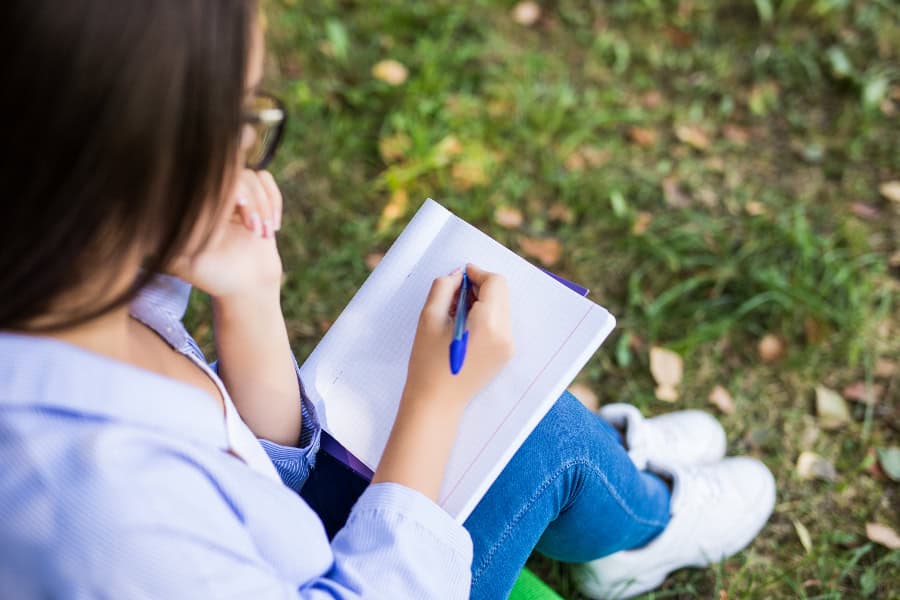
The field notebook It is the most useful tool, because it turns observation into something that can be remembered and compared.
It doesn't have to be a special notebook. A regular notebook, a printed worksheet, or some sheets of paper held in a binder will do. The important thing is that the children can easily record what they've seen.
It can be used for:
- Draw the bird you observed
- Note colors, sizes, or shapes
- Write down where you were: ground, tree, roof or air
- Record what it did: sang, flew, walked, looked for food
- Compare what was observed on different days
The notebook helps them not just to think "I saw a bird", but to start noticing details.
Pencil or colored pencils
Drawing is one of the best ways to train your eye.
When a child tries to draw a bird, even if they do it simply, they begin to pay attention to details that previously went unnoticed: whether the tail was long or short, whether the beak was thin, whether the chest was a different color, or whether the legs were barely visible.
It's not about making pretty drawings, but about observing more closely. That's why it's a good idea to bring a pencil, eraser, and some basic colored pencils. That's all you need to mark the main color, a striking patch, or the bird's overall shape.
Binoculars, if there are any
Binoculars can be helpful, but they shouldn't dictate the activity.
They're useful for observing birds without getting too close and allow you to see details like the color of their breast, the shape of their beak, or their movement among the branches. Even so, it's best to use them calmly with children: first look with the naked eye, locate the bird, and then try to focus on it.
For groups of children, simple, sturdy, and easy-to-use binoculars are best. If there are only one or two pairs, they can be used in turns. And if there are no binoculars, that's perfectly fine: you can still observe the birds' flight, songs, movements, and general behavior.
Simple guide or fact sheets of common birds
A visual guide or some cards can be very useful, as long as they don't turn the start into a race to name names.
Ideally, use simple materials with few species and clear drawings or photographs. A fact sheet with common birds from the area is better than a technical book full of difficult-to-distinguish species.
They can be used for:
- Compare the observed bird with an image
- Recognize common species in the yard, park, or garden
- Check after the outing what birds you might have seen
- Learn names little by little, without losing focus on observation
The guide should be a support, not the center of the activity.
Key idea
The best material is that which facilitates observation without stealing the spotlight from the experience.
A notebook, a pencil, and a well-thought-out activity are often more useful than a lot of equipment. If children learn to observe carefully, listen, and record what they discover, the activity is already working.
How to observe birds with children step by step
For birdwatching to work with children, it's best to frame it as a short, clear, and easy-to-follow activity. Simply going out with the idea of "seeing birds" can be too broad for a group of children. Instead, when there's a specific mission, children know where to focus their attention and participate more actively.
The outing doesn't need to be long. A well-prepared 20 or 30 minute observation can yield better results than an extensive activity without a specific objective.
Step 1: Prepare a simple mission
Before you go out, define a small and easy-to-understand challenge.
For example:
- See three different birds
- Listen to two different songs
- Finding one bird perched and another flying
- Find one bird on the ground and another in a tree
- Draw the bird that most catches your attention
The mission doesn't have to be difficult. Its purpose is to guide the eye. If the challenge is clear, children concentrate better, and the activity doesn't depend solely on the appearance of a specific species.
Step 2: Stop, look, and listen
Before looking for names, it's worth taking a break.
For a few minutes, the group can remain still and observe their surroundings. It might be difficult at first, but it usually works very well if framed as a small challenge of silence: listening before speaking and pointing before moving.
They can look at:
- Where do the songs come from?
- If there are birds on the ground, in trees, on rooftops, or in the air
- Whether they fly alone, in pairs, or in groups
- If they approach areas with food, water, shade, or shelter
- If they always repeat the same route
This step teaches something important: birdwatching is not just about looking quickly, it's also about waiting, listening, and letting the environment show activity.
Step 3: Look for simple clues
After observing, some basic features can be identified. It's not necessary to guess the species correctly the first time; in fact, with children it's better to start by describing rather than naming.
The most useful clues are:
- Size: small, medium or large
- Main color: brown, black, white, yellow, green, gray
- Place: ground, branch, roof, cable, air, or near water
- Motion: walks, jumps, glides, flaps its wings rapidly, stays still
- Behavior: sings, forages, pecks, flies in groups, enters a hedge
This approach avoids frustration. Even if they don't know if they've seen a sparrow, a greenfinch, or a great tit, they can still describe what it was doing, where it was, and what features stood out.
Step 4: Record what you observed
After observing and listening, it's a good idea to keep a brief record. This is the part that transforms the outing into a learning experience and allows you to compare observations made on different days.
They can do it very easily:
- Draw the bird or its silhouette
- Note the color that stood out the most
- Write where they saw her
- Indicate whether you were alone, in a couple, or in a group.
- Note what you were doing at that moment
- Add the time and location of the observation
You don't need to fill out a perfect form. Simply gather some details that will help you remember the experience and revisit it later.
Step 5: Share what you've discovered
At the end of the activity, take a few minutes to discuss what was observed. This closing is important because it helps to organize the experience, as the children hear what their classmates have seen.
Some useful questions are:
- Which bird have we seen the most times?
- Which one was the hardest for us to observe?
- Where was there more movement: ground, trees, rooftops, or air?
- What sound did we hear first?
- Which behavior has surprised us the most?
This final moment reinforces the main idea: birdwatching is not just about knowing names, but about discovering how they live, how they move, and how they use their immediate environment.
Activities to do with children during observation
Birdwatching works best when children have something specific to look for. There's no need to prepare a lengthy activity or turn the outing into an endless exercise. Simply choose a straightforward activity, explain the task clearly, and allow time for observation.
Ideally, choose one or two activities per outing. This way, the children aren't focused on "completing tasks," but rather on observing, listening, and discussing what they discover.
Bird Safari
A bird safari involves searching for small scenes, not just individual species. It's a great activity to start with because any common bird can do the trick: a sparrow on the ground, a pigeon on a rooftop, a swallow in flight, or a blackbird among the hedges.
You can prepare a simple list with clues like these:
- A bird perched in a tree
- A bird walking on the ground
- A bird flying over the yard or park
- A bird that is singing
- A bird looking for food
- A bird that moves in a group
- A bird entering or leaving a bush, roof, or shelter area
This activity helps to shift the focus. Children stop just asking "what's its name?" and start noticing what the bird is doing.
Bird Bingo
Bird bingo works very well in groups because it maintains attention without requiring absolute silence the entire time. It can be used in a playground, a park, a school garden, or during a short walk.
The form doesn't have to be complicated. It's best to include elements that are easy to observe, for example:
- A song
- A small bird
- A large bird
- A bird on the ground
- A bird on a roof or a lamppost
- A bird flying
- A dark-colored bird
- A bird that moves in a group
- A feather on the ground
Each time they see one of those elements, they mark or draw it. Instead of only rewarding whoever completes the bingo first, it might be more interesting to discuss at the end which squares were easy, which were more difficult, and where there was the most activity.
Important: If "nest" is included in the description, it should be treated with care. Nests should not be touched or approached too closely. They can be observed from a distance or discussed if they appear naturally, but they should never be the focus of persistent searching.
Listen to and imitate singing rhythms
This activity does not involve calling to the birds or playing calls to attract them. The idea is to listen carefully and describe what you hear.
You can ask the children to compare the sounds using simple criteria:
- Is it a high or low singing voice?
- Is it short or long?
- Does it happen often?
- Does it sound loud or soft?
- Does it come from a tree, a hedge, or a roof?
Then they can reproduce the rhythm by clapping, tapping their legs, or making up syllables. For example, if a sound is repeated three times, they can trace that pattern without trying to exactly copy the bird.
It is a very good way to work on active listening and to demonstrate that birdwatching also involves closing your eyes for a moment and paying attention to the surroundings.
Draw observed birds
Drawing is one of the best ways to get children to look at things more closely. It doesn't matter if the drawing is pretty or not; what's important is that they have to look at things before they draw.
You can suggest that they observe specific details:
- The overall shape of the body
- The color of the chest or head
- If the beak appears thin, short, or strong
- Whether the tail is long, short, or forked
- Whether the legs are very visible or hardly visible
- Whether the bird was on the ground, on a branch, or flying
Then, the drawing can be compared to a simple guide or with a fact sheet of common birds. Not to correct it as if it were an exam, but to look for similarities: "it had a dark chest", "the tail was long", "it was always on the ground".
Advice for teachers and families
When out with children, it's often more effective to do a few things well. A simple activity, a few minutes of observation, and a short closing activity usually yield better results than several activities in a row.
It's also wise to leave room for the unexpected. If a hoopoe appears, a blackbird flies close, or a flock of swifts crosses the sky, it's worth pausing the planned activity and seizing the moment. Often, the best learning happens precisely when it wasn't on the activity sheet.
Common mistakes when birdwatching with children
Birdwatching with children can be a very rewarding activity, as long as it's adapted to their pace. It shouldn't be presented as a small-scale adult outing.
These are some common mistakes that can make the activity lose its appeal, even in a place with many birds.
Wanting to see too many species
One of the most common mistakes is turning the outing into a list of species to find or identify. In practice, that usually generates more pressure than curiosity.
With children, it works best to observe a few birds and make the most of them. A blackbird searching for worms in the grass, a pigeon carrying a twig, a sparrow entering a hedge, or a swallow crossing the yard can all lead to many questions.
The goal is not to return with a long list, but for the children to learn to say: “it was on the ground”, “it moved by hopping”, “it carried something in its beak” or “it flew very fast”.
Making the activity too long
Another common problem is making the outing too long. Even if the group starts with enthusiasm, attention quickly wanes if nothing noticeable is happening or if the activity turns into a walk without clear breaks.
To begin with, a 20- or 30-minute observation session with a specific objective and a brief conclusion usually works best. If the group is small or already experienced, it can be extended a little longer, but there's no need to force it.
It's better to leave wanting to repeat the experience than to end up with tired, distracted children or children wanting to come back.
Explaining too much instead of observing
When a bird appears, it's easy to fall into the temptation of explaining everything: name, diet, migration, habitat, differences between male and female… But if the explanation comes too soon, children stop observing and begin to listen passively.
During the outing, a good question usually works better than a long explanation.
For example:
- Where is the bird?
- What do you think he's looking for?
- Does it move the same way as the pigeon we saw earlier?
- Are you alone, with a partner, or in a group?
- What detail would help you remember her later?
The information can come later, by comparing drawings, reviewing a worksheet, or discussing what was observed. First, it's best to let them look.
Not adapting the environment to the group
Not all spaces work equally well with children. A very open area, with few birds visible, too much noise, or an uncomfortable path can cause the activity to lose its appeal from the start.
For a first outing, nearby, safe places with easily visible birds usually work best: the school playground, a park with trees, a school garden, or a quiet green area. They don't have to be spectacular places; they just need to allow you to stop, listen, and observe without too much trouble.
The best environment is not always the most natural, but the one that helps the group stay alert and enjoy the experience.
Getting too close or unknowingly bothering someone
This point is important, especially in spring. Some birds may be breeding, building nests, or feeding chicks, and a poorly planned observation can disturb them, even unintentionally.
It is worth remembering some simple rules:
- Do not touch nests, eggs, or chicks, and avoid handling feathers or remains.
- Don't chase birds to get a better look.
- Do not get too close if the bird seems nervous or moves away.
- Do not use sounds or calls to attract them
- Observe from a distance and always leave an escape route
This care is also part of the learning process. Observing birds doesn't mean interfering, but rather looking with respect and understanding that we are entering, even if only for a moment, their space.
How to spark children's interest in birds
Interest in birds often appears when children discover that there is life happening very close to them: a sparrow entering a hedge, a blackbird looking for food on the ground, a swallow crossing the yard, or a song that is repeated from the same tree every morning.
Therefore, rather than providing a lot of information, it's better to create situations where they can observe, ask questions, and be amazed. Birdwatching works best when it's experienced as an active activity, not as a long lecture outdoors.
Turn observation into a game
The game helps maintain focus and relieves pressure. It's not about guessing names or completing a perfect sheet, but about having a reason to look more intently.
You can set up small missions like these:
- Find a bird that is singing
- Seeing one bird perched and another flying
- Find one dark-colored bird and one light-colored bird.
- Locate a bird that is eating or pecking at the ground
- Discover one bird that moves alone and another that travels in a group.
When an activity becomes challenging, children tend to notice more details. They begin to compare, point out, listen, and explain what they have seen in their own words.
Propose simple and achievable challenges
Challenges work best when they are specific, brief, and achievable. If they are too difficult, they lead to frustration; if they are too open-ended, children don't know where to focus their attention.
Some useful examples:
- Today we are going to listen to three different sounds
- Let's draw the bird we see most often
- Let's discover where there is more movement: ground, trees, rooftops, or air
- Let's compare which birds appear in the morning and which ones we see in the afternoon
- Let's look for a clue that birds use this place: a feather, a song, a footprint, or an area where they feed.
The challenge doesn't have to take up the entire outing. It can simply be the starting point to give direction to the observation.
Repeat the observation on different days
Curiosity grows when children return to the same place and discover that things don't always happen the same way.
A schoolyard, park, or garden may seem the same every day, but they change a lot if you observe them carefully. Sometimes there are more songs, a new species appears, birds move to a different area, or the wind makes them hide more.
By repeating the activity, children may notice changes like these:
- A bird they had never seen before
- More activity in the early morning
- Differences between a windy day and a calm day
- Birds that always use the same tree, hedge, or roof
- Spring-related behaviors, such as carrying twigs or foraging more frequently
This repetition helps us understand that birdwatching is not an isolated activity. It's a way of following small stories that change from day to day.
Leave room for surprise
On an outing with children, not everything has to be planned. In fact, often the most interesting things appear unexpectedly: a swift flying very low, a magpie carrying something in its beak, a blackbird singing from an antenna, or a group of sparrows bathing in a puddle.
It's worth taking advantage of those moments, even if they interrupt the planned activity. A simple question can open up a lot of possibilities:
- What do you think he's doing?
- Why would he have chosen that place?
- Have we seen it here before?
- What detail caught your attention the most?
To spark interest, the most important thing is for children to feel they are discovering something real for themselves. A good observation, even if it lasts only a few minutes, can leave a deeper impression than a very thorough explanation.
Frequently asked questions about birdwatching with children
At what age can children start birdwatching?
It can be started from a very early age, even in preschool, as long as the activity is brief, visual and simple.
With young children, there's no need to talk about species or use technical names. Simply listen to birdsong, look for birds on the ground or in trees, observe colors, and talk about what they're doing.
More specific challenges can be introduced in Primary school., such as comparing sizes, drawing observed birds, or recording what they see in a field notebook.
Do you need to know about birds to do this activity?
No. You don't need to be an expert to go birdwatching with children.
In fact, it often works best to start with curiosity: look, listen, ask questions, and describe what you see. Identifying the species can come later, with the help of a simple guide or a visual guide.
The important thing is to learn to observe better.
Which birds are easiest to observe with children in spring?
The easiest birds to start with are usually those that live close to us and are frequently seen: sparrows, pigeons, turtledoves, blackbirds, magpies, swallows, martins and swifts.
In parks and gardens you may also find tits, blue tits, robins or greenfinches, depending on the area and the type of vegetation.
For a first outing, it is advisable to choose common birds and observe simple behaviors: whether they walk on the ground, whether they fly in groups, whether they sing, whether they look for food, or whether they perch on trees, roofs, or lampposts.
What should we do if we don't see any birds?
Even if no birds are seen up close, the activity can continue.
Other clues can be sought:
- Songs or sounds
- Feathers or debris on the ground, without disturbing them
- Ancient nests observed from afar
- Footprints or traces
- Places where they could feed or take refuge
You can also take the opportunity to talk about why there is less activity that day: wind, noise, inappropriate time, rain, heat, or the presence of many people.
Not seeing birds also teaches something important: in nature, not everything happens when we want it to, and learning to wait is part of observation.
Conclusion: birdwatching is learning to see
Birdwatching with children in spring is a simple and direct way to introduce them to nature. You don't need a long hike or specialized equipment: a yard, a park, a school garden, or a nearby path can become a great spot for observation if you choose the right time and set a simple goal.
The most valuable thing is not that children learn many species names, but that they begin to observe more attentively. Hearing a song, following the flight of a swallow, distinguishing a pigeon from a turtle dove, seeing a blackbird searching for food, or discovering that a sparrow always returns to the same hedge are small experiences that help them better understand their surroundings.
Spring makes it easier because everything is in motion. The sounds change, more insects appear, the birds are more active, and each outing can offer something different. That's why it's worth repeating the observation over several days, even if only for a few minutes.
Ultimately, birdwatching isn't just about seeing birds. It's about learning to pay attention, waiting patiently, and discovering that the nature around us changes every day, even though it often goes unnoticed.
Do you want to work on bird watching with your students?
At Explora Natura, we design environmental education activities tailored to schools, families, and groups. We organize simple, safe, and engaging outings so children can learn to observe birds, interpret their surroundings, and connect with nature without disturbing the wildlife.
Tell us what kind of activity you need and we'll help you organize a proposal tailored to your group.
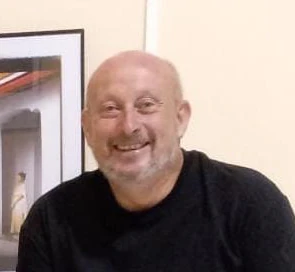
Antonio Pestana
Antonio Jesús Pestana Salido (Cabra, Córdoba, 1970) is an Andalusian ornithologist and nature photographer, specializing in birds and the interpretation of the Mediterranean landscape. From childhood, he has been involved in the study and observation of wildlife, and has spent decades exploring the natural areas of Andalusia, especially the Subbética region of Córdoba.
He is a nationally awarded nature photographer, winner of the first prize in the Carl Zeiss nature photography competition (4th edition) with a digiscoping image of a common crossbill, in addition to other recognitions in specialized bird photography competitions.
As a field ornithologist, he has participated in bird monitoring and conservation projects, especially for birds of prey and steppe birds, and has served as provincial coordinator in Córdoba for the Montagu's and hen harrier censuses. He is also president of the Abanto naturalist association, dedicated to the dissemination and conservation of natural heritage.
He is the author of several books on Iberian fauna and popular culture published by specialized publishers, including "Iberian birds in popular culture" and "Iberian diurnal birds of prey in popular culture," works that compile proverbs, beliefs and traditions related to birds in popular culture.
In addition to his work as an author and photographer, he develops outreach and environmental education activities, leading nature outings, giving bird photography workshops and collaborating with educational centers, associations and nature tourism projects.
She regularly works with schools, designing wildlife observation activities adapted for primary and secondary school students. She also collaborates with companies and associations on birdwatching tours, teaches nature photography courses, and participates in the design of natural areas.



Pingback: Bird activities for elementary school students | Explore Nature