

1. Introduction: why work on environmental education from Primary School
Environmental education in primary school allows children to discover their surroundings in a much more personal and participatory way. Contact with nature, observation, and hands-on experiences awaken a curiosity that is rarely fostered solely through books. It is this curiosity that leads them to ask why the seasons change, what animals live near the school, where water comes from, what happens to waste, and how our actions affect the landscape.
Environmental education is not just about talking about recycling or holding a one-off event for World Environment Day. It encompasses many more aspects of learning and allows us to work on biodiversity, responsible consumption, water conservation, our relationship with living beings, food, climate, landscape, health, and living in harmony with our immediate environment.
In primary school, this approach is particularly interesting because it connects very well with children's natural way of learning: observing, touching, asking questions, comparing, playing, exploring, and experimenting. A trip to the countryside, a school garden, birdwatching in the playground, an investigation into classroom waste, or a walk around the neighborhood can become very meaningful educational experiences.
Furthermore, environmental education helps develop responsible habits from an early age. It's not about instilling fear or burdening children with major problems, but about teaching them that they can better understand their environment and participate in small acts of care: not littering, respecting animals and plants, saving water, observing without disturbing, and appreciating nearby natural spaces.
Therefore, incorporating environmental education in Primary school is not about adding more content, but about opening up a way of learning that is more connected to real life: observing carefully, asking questions, taking care of what is close by and understanding that we are part of the environment in which we live.
2. What do we understand by environmental education in Primary School?
Environmental education in primary school is a way of teaching children to understand, value, and care for the environment in which they live. It is not limited to learning the names of plants, animals, or ecosystems, nor is it solely about recycling. Its aim is to help students understand how people relate to nature and how our daily decisions influence the environment.
At this stage, environmental education should be accessible and practical. Often, it's enough to start with very simple questions: what birds do we see from the yard, why are there insects on some plants, what happens to the trash we generate, how does a tree change throughout the year, where does the water we use come from, or what can we do to better care for a park, a riverbank, or a nearby path?.
One of its strengths is that it can be naturally integrated into different areas of the curriculum.
- Natural Sciences: allows the study of living beings, ecosystems, water, climate, or biodiversity.
- Social Sciences: helps to understand the landscape, land use and the relationship between people and the environment.
- Language: can lead to field diaries, descriptions, debates or small investigations.
- Artistic Education: offers the possibility of working through drawing, photography or creation with natural elements.
- It can even be present in Physical Education through outdoor games, orienteering activities, or cooperative dynamics in nature.
It's also important to understand that environmental education doesn't only happen inside the classroom. The schoolyard, a school garden, a park, a plaza, a park, or any nearby natural space can become a valuable learning environment. Often, the best educational resources are much closer than they seem and offer numerous opportunities to observe biodiversity, discover changes in the landscape, or reflect on caring for the environment.
Therefore, environmental education in primary school should combine knowledge, experience, and action. Children learn best when they observe directly, ask questions, participate in activities, and understand that their small decisions have an impact on the world around them.
When properly planned, environmental education is not an isolated activity, but rather a way to connect school learning with everyday life. More than simply transmitting knowledge, it helps students observe with curiosity, ask questions, understand what is happening around them, and actively participate in caring for the environment.
3. Benefits of environmental education for learning
One of the main benefits of environmental education in primary school is that it makes learning more meaningful. When students connect what they are studying with something they can observe, touch, or experience, the content ceases to be abstract ideas and begins to make sense.
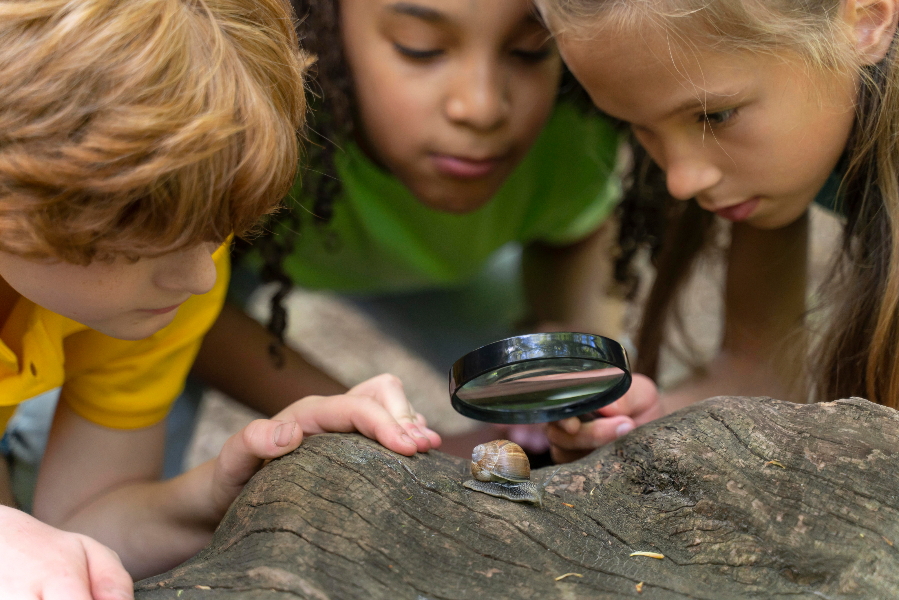
For example, explaining an ecosystem solely with a picture from a book is not the same as going outside to observe a nearby schoolyard, riverbank, garden, or park. There, they can discover plants, insects, birds, tracks, temperature changes, shaded areas, litter, or signs of human activity. This experience helps them better understand how living things interact with their environment.
Environmental education naturally sparks curiosity. Students begin to ask questions: why some plants grow in one place and not another, what animals live near the school, how the landscape changes after rain, why there are more birds in some areas than others, or what happens when we leave trash in the environment. This curiosity is the starting point for many learning experiences.
Another important benefit is that it develops observation skills. Many activities encourage students to stop, compare, describe, listen, and notice small details. These skills not only help us understand nature better, but are also useful for comprehending texts, organizing ideas, explaining processes, solving problems, and arguing more clearly.
Furthermore, environmental education promotes active learning. Games, outings, simple experiments, field notebooks, classroom projects, and small research projects allow students to participate, observe, make decisions, record information, and share their discoveries, rather than simply receiving explanations.
These kinds of experiences also improve memory and comprehension. What is experienced directly is usually remembered better than what is only heard about. A child may forget the definition of an ecosystem, but remember for a long time the day they saw a heron on a field trip, found footprints in the mud, or discovered how much trash there was in the playground after recess.
Therefore, environmental education in primary school should not be seen as a supplement, but as a tool to connect school subjects with reality. When learning stems from observation and experience, it becomes more relevant, more lasting, and much easier to understand.
4. Emotional and social benefits for boys and girls
Environmental education in primary school not only contributes to learning content related to nature. It can also have a very positive impact on students' emotional and social development, especially when it is implemented through hands-on activities, outdoor excursions, cooperative games, or collaborative projects.
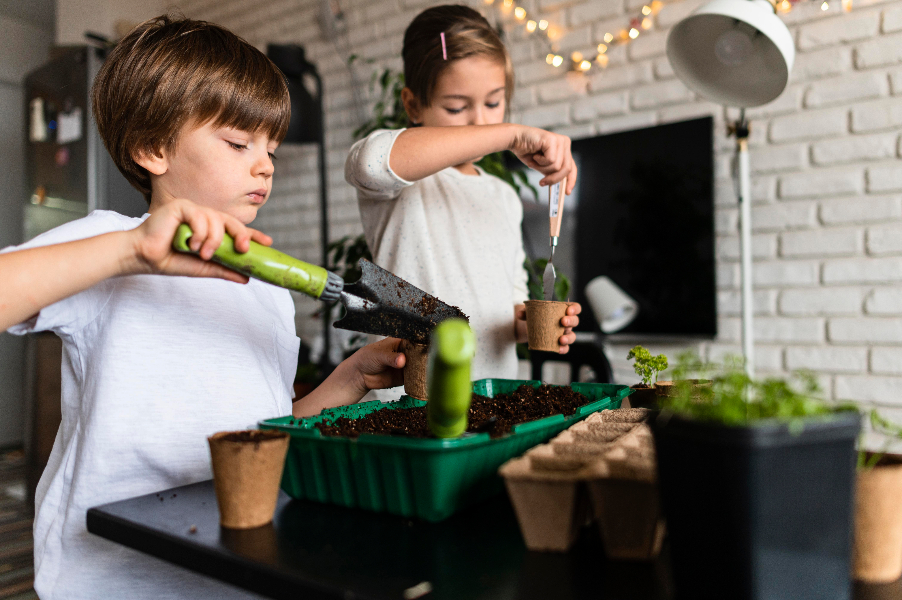
One of its clearest benefits is that it fosters autonomy. When students observe their surroundings, look for clues, make small decisions, care for a plant, participate in a school garden, or record their discoveries in a field notebook, they feel actively involved in the learning process. They don't just listen: they explore, interpret, and contribute.
This type of experience also boosts confidence. Many students who don't participate much in the classroom may feel more comfortable in outdoor activities, where there is more movement, observation, and varied tasks. Some excel at looking for details, others at explaining what they see, drawing, orienting themselves, taking care of materials, or helping the group.
Environmental education also fosters coexistence. Many nature-related activities require cooperation: organizing into teams, dividing tasks, listening to different opinions, taking turns, caring for a shared space, or solving small challenges together. In this way, social skills develop naturally, without needing to be turned into a theoretical lesson.
Contact with the environment also helps reduce disconnection from nature. Many children spend a large part of their time indoors or in front of screens and have fewer and fewer opportunities to calmly observe a tree, an insect, a bird, a footprint, or the changing seasons. Environmental education allows them to recover this direct relationship with the natural world through simple and engaging experiences.
Another interesting aspect is that it can foster a more relaxed relationship with learning. An activity in the playground, a park, the countryside, or a school garden changes the usual classroom rhythm. Students move around, observe, ask questions, and participate in a different way, which usually translates into greater attention, motivation, and willingness to learn.
In short, environmental education offers experiences that help students feel more capable, more connected to their environment, and more involved with the group. Learning to care for nature also means learning to live together, collaborate, and observe the world around us with greater respect.
5. Health and wellness benefits
Environmental education in primary school contributes to the physical and emotional well-being of students. Many of its activities take place outdoors and involve movement, contact with open spaces, and a more direct relationship with nature. All of this helps to balance the time children spend indoors or in front of screens.
One of its most obvious benefits is that it encourages movement naturally. Walking in a natural environment, participating in observation games, exploring the schoolyard, tending a school garden, or going on an educational field trip allows physical activity to be incorporated into learning. It's not necessarily about playing sports, but about walking, exploring, and discovering the environment while learning.
Outdoor activities also promote attention. When students observe birds, look for different leaves, listen to sounds, follow tracks, or compare elements of the landscape, they need to concentrate on what is in front of them. This attention arises from curiosity and direct experience, not just from an explanation in the classroom.
Contact with nature also fosters moments of calm. In a natural setting, the pace is usually different from that of the classroom. Listening, waiting, observing in silence, or pausing to contemplate a detail helps to reduce the intensity of the moment and promotes emotional regulation. For many students, this type of activity offers a more peaceful and engaging way to learn.
Another important aspect is the positive relationship that develops with the environment. When children enjoy a trip to the countryside, playing in nature, or engaging in an observation activity, they begin to associate natural spaces with pleasant experiences. This emotional connection is fundamental so that caring for the environment is not perceived as an obligation, but as something relevant and meaningful.
Environmental education also allows for the development of everyday habits related to well-being. Aspects such as nutrition, responsible consumption, water conservation, waste management, mobility, and the use of public spaces can be addressed through real and relatable situations. In this way, well-being ceases to be understood solely as an individual matter and becomes linked to caring for the environment as well.
Overall, environmental education helps students move more, observe more attentively, find moments of calm, and develop a more balanced relationship with nature. Learning outdoors not only provides knowledge but also promotes well-being, social interaction, and a more conscious way of relating to the environment.
6. Benefits for environmental awareness and responsible habits
One of the main goals of environmental education in primary school is for students to understand that their actions have an impact on the environment. It's not about burdening children with major environmental problems, but about helping them discover that they can observe, understand, and care for what is closest to them.
Environmental awareness often begins with small, everyday actions. Caring for a classroom plant, not leaving trash in the playground, respecting an anthill, turning off a tap, observing a bird without disturbing it, or picking up litter during a field trip are simple actions that contribute to building a more responsible relationship with the environment.
At these ages, it's especially important to start with what's close at hand. Before discussing global problems in the abstract, it's much more helpful to observe what's happening at school, in the neighborhood, in a park, on a riverbank, or on a familiar path. When students understand that the environment isn't something distant, but rather the place where they live, play, and learn, the message takes on a much more tangible meaning.
Environmental education also helps us understand the consequences of our decisions. Students can see what happens when we litter, why it's important to save water, how noise affects animals, the role insects play in a garden, and why we shouldn't uproot plants during an outing. These are simple lessons that are fundamental for developing a responsible attitude.
Another benefit is that it allows students to move from theory to action. It's not enough to know that we need to care for nature; we need to experience concrete ways of doing so. Separating waste, reducing material consumption, reusing objects, participating in a school garden, observing local biodiversity, or collaborating on improving a space within the school transforms learning into an active experience.
Cultivating these habits from primary school onwards makes caring for the environment a natural part of daily life. If children learn from a young age to respect living beings, value water, avoid waste, and observe without harming, they are much more likely to maintain these attitudes over time.
Therefore, environmental education should not be limited to conveying general messages like "we must take care of the planet." Its true value lies in helping students understand what they can do in their immediate surroundings, why those actions are important, and how small gestures, repeated every day, can make a real difference.
7. How to work on environmental education in Primary school in a practical way
Environmental education in primary school yields better results when it's based on experience. It's not necessary to prepare complex activities or have access to large natural spaces. The school itself, the playground, a nearby park, a neighborhood street, a school garden, or a field trip can all become excellent educational resources.
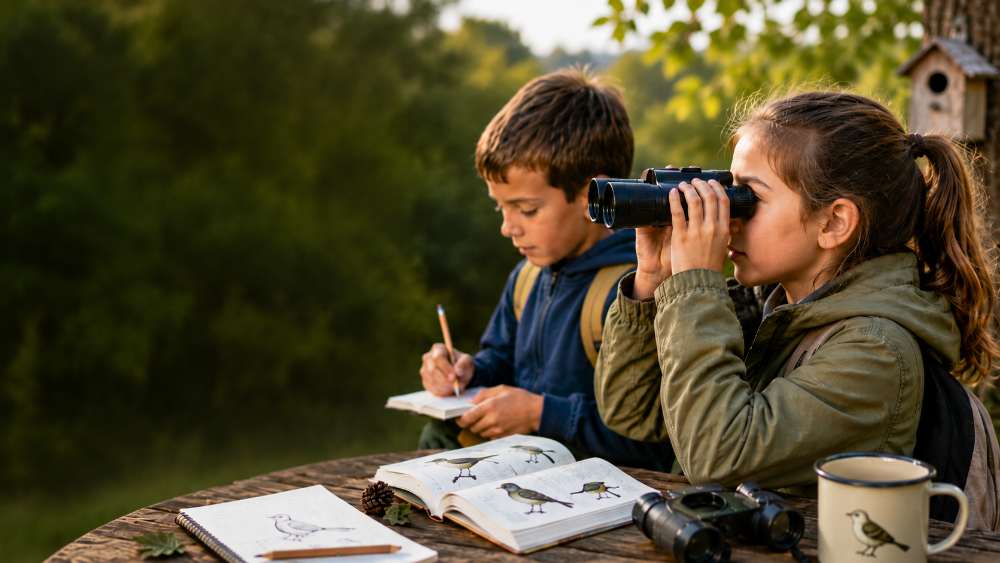
A good way to begin is through observation activities. Students can notice the birds that appear near the school, the plants in the playground, the insects in a garden area, the leaves that fall in autumn, the sounds of the surroundings, or the changes that occur after it rains. These small observations develop attention, awaken curiosity, and help students appreciate their immediate environment.
Outdoor games and activities are another highly effective tool. Color hunts in nature, sound maps, environmental scavenger hunts, orienteering games, and sensory activities allow for active learning. In addition to motivating students, they transform environmental education into a participatory and engaging experience.
Another possibility is to develop classroom or school-wide projects. A school garden, a field notebook, a waste reduction campaign, a study on playground biodiversity, research on water consumption, or the improvement of a green space involve different subject areas and grade levels. This type of initiative provides continuity to learning and prevents environmental education from being limited to one-off activities.
Field trips are especially valuable because they allow students to connect classroom learning with real-world experiences. Visiting a riverbank, a nature park, an agricultural area, a pasture, a wetland, or any nearby natural space offers the opportunity to observe flora and fauna, interpret the landscape, ask questions, and better understand the relationship between people and the environment.
For these activities to be truly educational, they should be designed with clear objectives and adapted to the age of the group. An activity for the first years of primary school requires different planning than one for older grades. Sensory activities, symbolic play, and guided observation tend to work best with younger children. As they progress through the grades, activities such as record-keeping, small research projects, debates, or projects to improve their environment can be incorporated.
Just as important as the activity itself is the moment of sharing the experience. After an outing, a game, or an observation, taking a few minutes to discuss what they discovered, what surprised them, or what ideas they took away from the experience helps to consolidate learning.
Working on environmental education in a practical way means turning the everyday environment into an educational resource. Every yard, park, path, or natural space can become an opportunity to observe, ask questions, better understand the place where we live, and learn to care for it.
8. Common mistakes when approaching environmental education in Primary School
One of the most common mistakes when teaching environmental education in primary school is reducing it solely to recycling. Separating waste and reusing materials are important actions, but environmental education encompasses much more. It also includes biodiversity, water, responsible consumption, landscape, fauna, flora, food, energy, climate, health, and our relationship with the environment.
Another aspect to avoid is planning isolated activities without continuity. A talk, a field trip, or a workshop can be very interesting, but they become much more valuable when integrated into classroom work. For example, a visit to a natural area can be prepared beforehand with questions, observation of images, or information gathering, and then supplemented with drawings, texts, discussions, or small projects.
Too much theory can also diminish the effectiveness of these proposals. In primary school, students learn best when they can observe, compare, ask questions, play, and experiment. If environmental education is limited to lengthy explanations about environmental problems, it can easily lose its appeal. What's truly important is that children have experiences that help them understand.
Another risk is instilling fear instead of responsibility. Constantly talking about catastrophes, destruction, or guilt can generate anxiety or disengagement. It's necessary to explain environmental challenges, but adapting the message to the age of the group and always offering ways to take action. Students need to discover that they can care for what's around them, not feel responsible for problems they can't solve.
It's also important to adapt the activities to the age and level of the group. An activity that's too childish might bore older students, while one that's overly complex might frustrate younger ones. Adjusting the language, duration, level of independence, and type of challenge increases the likelihood that the experience will be truly enriching.
Finally, it's worth dedicating a few minutes to closing each activity. Sometimes very engaging games, outings, or workshops are organized, but the final reflection is neglected. A brief group discussion, an open-ended question, a drawing, an observation sheet, or a guided conversation helps to consolidate what has been learned and give meaning to the experience.
Avoiding these mistakes allows environmental education in primary school to be more coherent, useful, and meaningful. More important than simply doing a lot of activities is designing them with purpose, connecting them to everyday life, and helping students better understand the environment they are part of.
9. Environmental education in Primary Schools: an opportunity for schools and families
Environmental education in primary school doesn't have to be confined to the classroom. One of its greatest strengths is that it connects school learning with families and the immediate environment. When students observe, investigate, or care for spaces that are part of their daily lives, learning takes on a much more real meaning.
Families can participate in many simple ways. A walk in a park, birdwatching, a short hike on the weekend, caring for a plant, reducing waste at home, or a visit to a nearby natural area are all experiences that reinforce what is learned at school. It's not about organizing large-scale activities, but about keeping alive curiosity and an interest in discovering the world around them.
Similarly, the school can take advantage of the resources around it. The playground, the school garden, the trees on the grounds, a landscaped area, a riverbank, a path, or a neighborhood park can all be transformed into learning spaces. Often, the best educational resources are found in places that students see every day but rarely observe closely.
This connection between school, family, and environment means that environmental education is no longer perceived as an abstract concept. It becomes much easier to understand the importance of conserving water, reducing waste, respecting flora and fauna, or valuing biodiversity when all of this is related to places that are part of everyday life.
Another way to reinforce this learning is to develop shared projects. A cleanup campaign, a family field notebook, a wildlife observation day, an activity in the school garden, or a project on the biodiversity of the neighborhood can involve students, teachers, and families in a common goal.
For these initiatives to have real educational value, they should be planned with clear objectives, adapted to the age of the group, and include time for sharing what has been learned. In this way, the outing, workshop, or project ceases to be a one-off experience and becomes part of a more comprehensive learning process.
When schools and families work together, environmental education gains strength. Students discover that caring for nature is not just a school subject, but a way to connect with their environment, enjoy it, and actively participate in its conservation.
10. Conclusion: Educating to observe, care, and participate
Environmental education in primary school is an opportunity for students to discover the world with a more attentive and curious eye. It's not just about learning about plants, animals, recycling, or ecosystems, but about understanding our relationship with the environment and discovering that our actions, however small, also have an impact.
When approached practically, personally, and in an age-appropriate way, environmental education sparks curiosity, develops observation skills, fosters responsibility, and strengthens the connection with nature. A walk in the schoolyard, a trip to the countryside, a school garden, an outdoor game, or an observation activity can become lasting experiences that stay with students long after the classroom.
This approach provides learning experiences that go beyond the curriculum. Children learn to collaborate, respect the rhythms of other living beings, care for shared spaces, ask questions, and participate in small actions that improve their environment. These experiences help develop more conscious, responsible, and engaged individuals.
Therefore, incorporating environmental education from primary school onwards should not be seen as a one-off activity, but rather as a way of educating for life. Every observation, every outing, and every small project helps build a closer relationship with nature and develop habits that can be maintained throughout life.
Ultimately, educating for respect for the environment means teaching people to observe, understand, and act. These three skills are essential for new generations to enjoy nature, value it, and actively participate in its conservation.
Frequently asked questions about the benefits of environmental education in primary school
Why is environmental education important in primary school?
Environmental education helps students better understand the environment in which they live and develop a more respectful relationship with nature from an early age. Through hands-on activities, games, observation, field trips, and projects, children learn to value natural resources, care for the spaces around them, and adopt responsible habits in their daily lives.
What are the benefits of environmental education for children?
Environmental education fosters curiosity, observation, autonomy, responsibility, and teamwork. Furthermore, it enhances our connection with nature, promotes active learning, and makes school subjects more relevant and easier to understand by relating them to real-life experiences.
How can environmental education be taught in primary school?
This can be achieved through activities such as observing the environment, outdoor games, school gardens, field notebooks, educational outings, and projects on biodiversity, responsible consumption, water conservation, or waste management. The most important thing is that the activities are practical, age-appropriate, and relevant to the students' immediate surroundings.
Is environmental education only about recycling?
No. Recycling is only one part of environmental education. It also encompasses biodiversity, fauna and flora, water, landscape, responsible consumption, food, energy, climate, health, and our relationship with natural and urban spaces.
What environmental education activities can be done with elementary school children?
There are many simple and easy-to-implement proposals: observing birds in the yard, identifying leaves and trees, creating a field notebook, searching for natural sounds, analyzing classroom waste, taking care of a school garden, participating in cooperative games, or taking an observation trip to a nearby natural space.
What does an environmental education field trip contribute to learning?
An environmental education field trip allows students to connect classroom learning with real-world experiences. They can directly observe plants, animals, landscapes, and wildlife tracks, interpret their surroundings, and gain a deeper understanding of many concepts that would be more abstract in the classroom. This makes learning more meaningful and easier to remember.
How can families participate in environmental education?
Families can reinforce this learning through simple actions such as taking walks in nature, birdwatching, caring for plants, reducing waste, saving water, or visiting parks and natural areas. The important thing is not to organize large-scale activities, but to maintain curiosity and an interest in discovering and caring for the environment.
At what age can environmental education begin?
Environmental education can be introduced from the earliest stages of childhood and adapted to each grade level in primary school. Games, stories, observation, simple experiments, field trips, classroom projects, and small actions to care for nature allow these topics to be addressed progressively and in accordance with the students' development.
What are the objectives of environmental education in primary school?
Its main objective is to help students understand their environment, develop responsible habits, and foster a respectful relationship with nature through age-appropriate hands-on experiences. Furthermore, it helps develop skills such as observation, critical thinking, cooperation, and active participation.
Do you want to bring environmental education to your school?
At Explora Natura we organize environmental education activities for schools, families and groups who want to learn through observation, experimentation and direct contact with nature.
We design proposals adapted to each educational stage and the objectives of each center: interpretive outings, workshops, games in nature, activities on biodiversity, wildlife observation, field notebooks and other outdoor experiences that turn the environment into a learning space.
If you are looking for an environmental education activity for Primary school, we would be happy to help you design a practical, participatory proposal adapted to the needs of your students.
Estimated reading time: 22 minutes

Antonio Pestana
Antonio Jesús Pestana Salido (Cabra, Córdoba, 1970) is an Andalusian ornithologist and nature photographer, specializing in birds and the interpretation of the Mediterranean landscape. From childhood, he has been involved in the study and observation of wildlife, and has spent decades exploring the natural areas of Andalusia, especially the Subbética region of Córdoba.
He is a nationally awarded nature photographer, winner of the first prize in the Carl Zeiss nature photography competition (4th edition) with a digiscoping image of a common crossbill, in addition to other recognitions in specialized bird photography competitions.
As a field ornithologist, he has participated in bird monitoring and conservation projects, especially for birds of prey and steppe birds, and has served as provincial coordinator in Córdoba for the Montagu's and hen harrier censuses. He is also president of the Abanto naturalist association, dedicated to the dissemination and conservation of natural heritage.
He is the author of several books on Iberian fauna and popular culture published by specialized publishers, including "Iberian birds in popular culture" and "Iberian diurnal birds of prey in popular culture," works that compile proverbs, beliefs and traditions related to birds in popular culture.
In addition to his work as an author and photographer, he develops outreach and environmental education activities, leading nature outings, giving bird photography workshops and collaborating with educational centers, associations and nature tourism projects.
She regularly works with schools, designing wildlife observation activities adapted for primary and secondary school students. She also collaborates with companies and associations on birdwatching tours, teaches nature photography courses, and participates in the design of natural areas.